How to Teach Orton-Gillingham Syllable Types
If your child can read short words but falls apart on longer ones, syllable types may be the missing piece. This guide shows a simple Orton-Gillingham way to teach them at home.

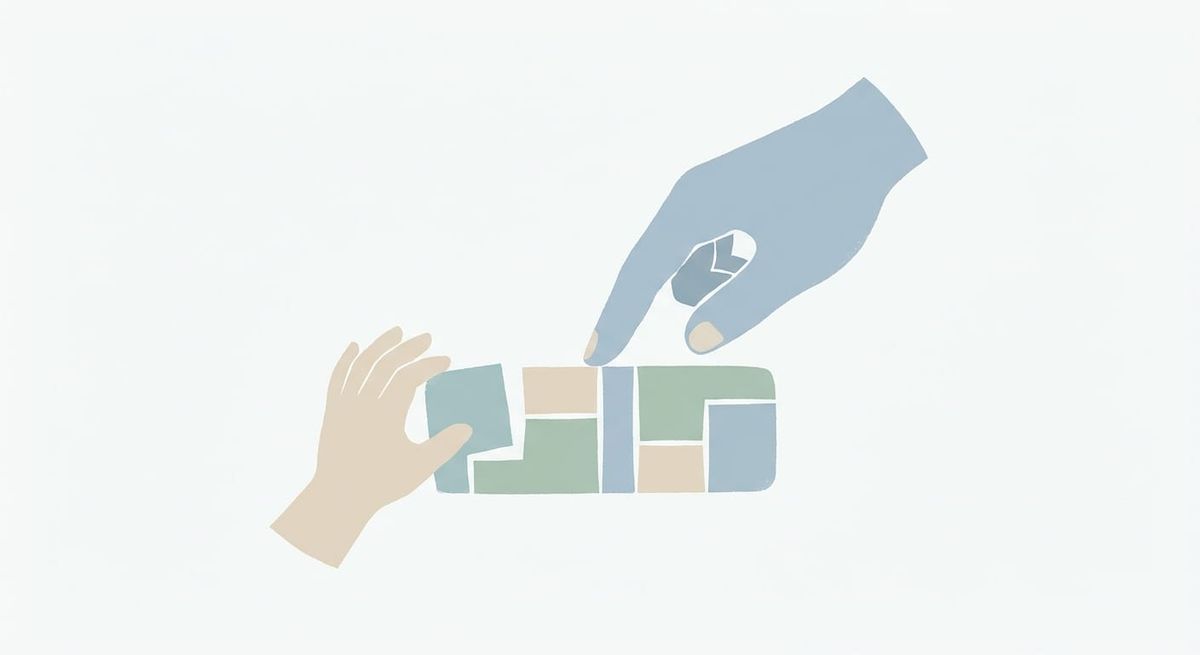
If your child can read cat, shop, or make but freezes on longer words like sunset, robot, or inside, you are not imagining the gap. Many kids make progress with single-syllable patterns and then hit a wall when words get longer.
That is often the point where syllable types start to matter.
If you want to teach Orton-Gillingham syllable types at home, the goal is not to dump six rules on your child at once. It is to help your child notice reliable vowel patterns inside bigger words so reading feels less like guessing.
What are syllable types, and why do they help?
In an Orton-Gillingham approach, syllable types help children predict how a vowel is likely to sound. That matters because longer words stop feeling random when a child can break them into parts.
For example:
- closed syllable: nap, picnic
- open syllable: go, robot
- silent e: make, inside
- vowel team: boat, playground
- r-controlled: car, winter
- consonant-le: table, little
You do not need to teach all of these right away. Start with the types that connect to patterns your child already knows.
For many children, that means this rough order:
- closed syllables
- open syllables
- silent e syllables
- vowel team syllables
- r-controlled syllables
- consonant-le syllables
The order does not need to feel rigid. What matters is that your child has some confidence with simpler word patterns before moving into longer ones.
Working on syllable types?
ReadGenie helps struggling readers improve their reading, spelling and handwriting with Orton-Gillingham practice at home. Your child reads out loud, the app listens, and it helps with the exact sound they missed.
Try ReadGenie free for 7 daysOr get the app on the App Store or Google Play
When is a child ready for syllable types?
A child is usually ready when they can read simple one-syllable words with some accuracy but struggle once the word gets longer.
You might notice things like:
- sounding out each letter but losing track halfway through
- guessing based on the first sound
- reading robot as rabbit
- skipping chunks of the word
- getting stuck unless someone reads the word first
That does not mean your child needs a long lecture on syllables. It just means they may be ready for a more organized way to look at word parts.
A simple test is this: if your child can read short-vowel words, digraphs, and silent e words in isolation, but cannot transfer those skills into two-syllable words, syllable type work may help.
How do you teach Orton-Gillingham syllable types at home?
Keep it simple. Teach one type at a time and connect it to words your child can already partly decode.
1. Start with a pattern your child already knows
If your child knows short vowels, begin with closed syllables.
You might say:
"In this kind of syllable, the vowel is closed in by a consonant, so it usually makes its short sound."
Then practice with words like:
- nap
- basket
- magnet
- sunset
You are helping your child see that sunset is not one giant scary word. It is sun plus set.
2. Mark and divide the word together
Write a two-syllable word. Say it aloud. Then help your child find the vowels and divide the word.
For example, with robot:
- find the vowels: o and o
- split the word: ro / bot
- identify the syllables: open + closed
- read each part, then blend it
This kind of guided word study is often more useful than asking a child to guess and retry.
3. Use a small word set
Do not teach ten new words at once. Pick three to five words that match the same pattern.
If you are teaching open and closed syllables, you might use:
- robot
- hotel
- tulip
- music
Read them, tap them, mark them, and come back to them the next day.
4. Move from reading to spelling
After your child reads a few words, dictate one back.
For example, say tulip and ask:
- "How many syllables do you hear?"
- "What is the first syllable?"
- "Is it open or closed?"
Spelling helps your child hold the pattern more firmly than reading alone.
What if syllable types make your child more confused?
That usually means one of two things: either too many types were introduced too quickly, or the child is not solid enough on earlier phonics patterns yet.
If that happens, go back to one type and one routine.
Try this:
- teach just one syllable type for several days
- use only a few examples
- review old patterns before adding new ones
- stop before your child gets overloaded
You do not need your child to memorize definitions perfectly. You want them to notice patterns and use them while reading.
A real-world example
A fourth grader might read fantastic as a blur of sounds, then give up halfway through. But if he already knows closed syllables, you can slow the word down:
- fan
- tas
- tic
Now the word has structure.
Later, with a word like music, he may learn that mu is open, so the u says its long sound, and sic is closed. That gives him a reason for the pronunciation instead of making him rely on memory alone.
That shift is often where longer words start to feel more manageable.
Simple ways to practice at home
Here are a few low-stress ways to practice syllable types:
- Use index cards with two-syllable words and sort them by pattern.
- Highlight vowels before reading a longer word.
- Cover one syllable at a time so the whole word feels less overwhelming.
- Ask one noticing question like, "Is that first syllable open or closed?"
Keep practice short. Ten calm minutes is usually better than pushing through thirty frustrated ones.
Where do syllable types fit in the bigger Orton-Gillingham sequence?
Syllable types are not a replacement for phonics basics. They build on them.
If you are not sure what should come before or after this step, you might also find this helpful: What Order to Teach Orton-Gillingham at Home
Final thoughts
If your child struggles most with longer words, syllable types can give them a much clearer path in. The key is to teach them slowly, one pattern at a time, and tie them to words your child can actually read.
You do not need to make it fancy. You just need a routine that helps your child see that bigger words are made of readable parts.
Make practice at home easier
Short daily sessions of reading, spelling and handwriting practice, built with Orton-Gillingham teachers. It works alongside tutoring and school support. The first 7 days are free.
Try ReadGenie free for 7 daysOr get the app on the App Store or Google Play