Bridge to Terabithia Reading Level: 810L, AR 4.6, Guided Reading T
Bridge to Terabithia by Katherine Paterson is Lexile 810L, AR level 4.6 with 5 AR points and Guided Reading T. A typical 4th to 6th grader can read it alone, and with the audiobook it works for a 5th to 7th grader who reads a year or two behind.

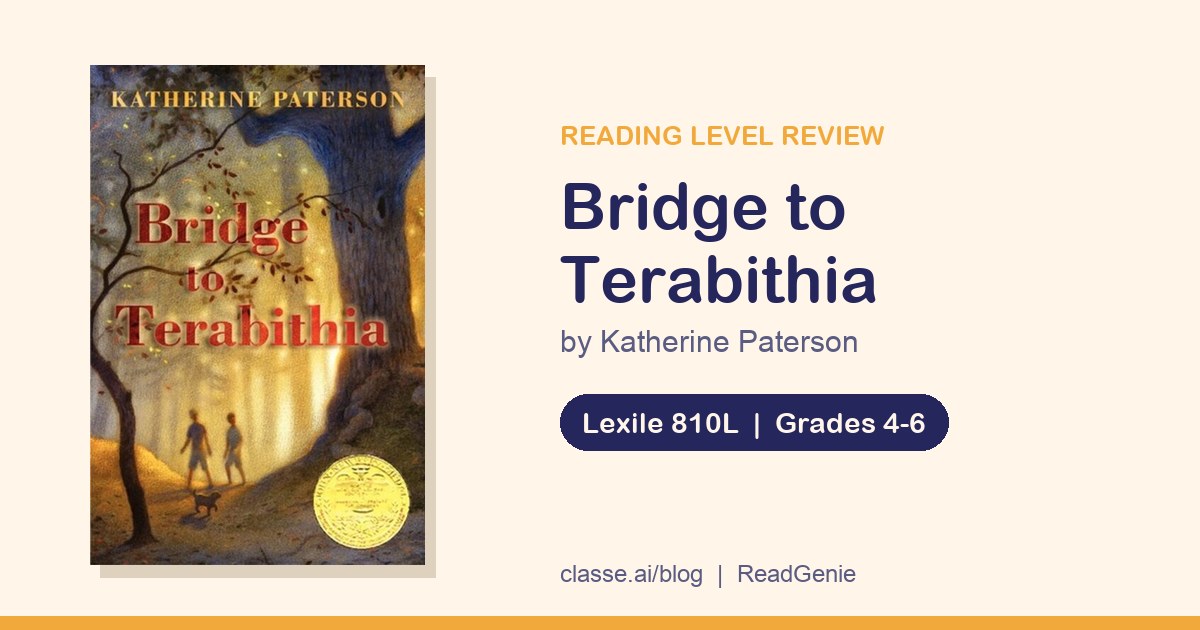
Bridge to Terabithia by Katherine Paterson has an 810L Lexile measure, an AR (ATOS) book level of 4.6 worth 5 AR points, and a Guided Reading level of T. A typical 4th to 6th grader can read it alone. It is short for a novel schools assign, so it also works for a 5th to 7th grader who reads a year or two behind, especially with the audiobook. A main character dies near the end, and most families save it for age 9 or older.
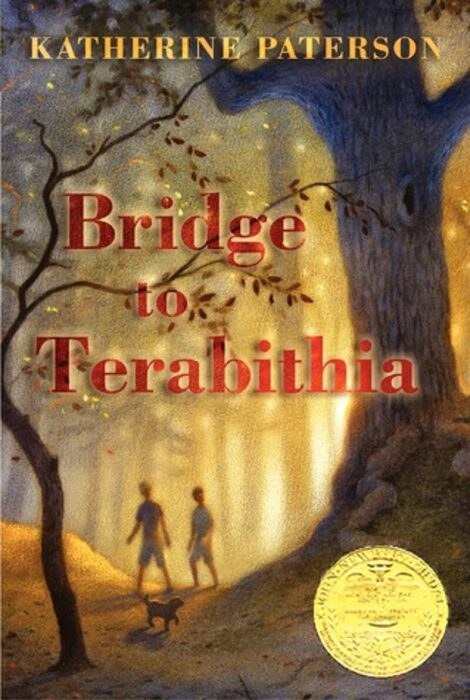
Jess Aarons is ten and the only boy among five kids on a small farm in rural Virginia. He has spent the whole summer getting up early to run, because he plans to be the fastest kid in the fifth grade. Then a new girl, Leslie Burke, wins the first race of the year. Instead of becoming rivals, they become best friends and make up Terabithia, a secret kingdom in the woods that they reach by swinging over a creek on a rope. The book won the Newbery Medal in 1978 and still turns up on class reading lists. Kids remember it for the friendship first.
Bridge to Terabithia reading level at a glance
| Lexile measure | 810L (TeachingBooks) Also listed as 800L (Booksource, HarperCollins paperbacks 9780064401845 and 9780060734015) |
|---|---|
| ATOS / AR book level | 4.6 (TeachingBooks) |
| AR points | 5 (TeachingBooks) |
| Guided Reading (Fountas & Pinnell) | T (Booksource) |
| Grade level equivalent | 7 (Booksource) |
| Flesch Reading Ease (0-100) | 87.9 ReadGenie estimate |
| Flesch-Kincaid grade | 4.0 ReadGenie estimate |
| Interest level | Grades 4-8 (Booksource) |
| Approximate grade band | Grades 4-6 (ages 9-12) ReadGenie |
| Length | 192 pages, ~32,888 words |
| Format | Middle grade novel |
| Good for struggling readers? | ★★★★★ 4/5 |
| Dyslexia-friendly rating | ★★★★★ 3/5 |
We couldn't find a published DRA level for this book.
Is Bridge to Terabithia a struggle for your child right now? ReadGenie gives struggling readers short daily Orton-Gillingham practice at home, out loud, with help on the exact sound they missed.
Try ReadGenie and get this book freeScores checked 2026-11-22. Different leveling systems don't always agree, so we show each published value with its source and mark our own estimates. Links to every source are under How we rate books.
What grade level is Bridge to Terabithia?
The published levels agree on roughly 4th to 6th grade for reading on your own.
An AR level of 4.6 means the text is about as hard as what a typical student reads in the sixth month of 4th grade. An 810L Lexile sits a little higher, in the band most charts give to late 4th and 5th grade. Booksource lists a Lexile 10 points lower, which makes no real difference. Guided Reading level T is a common 5th grade level in classrooms, and Booksource gives a Grade Level Equivalent of 7. The spread comes from what each system counts. Lexile and AR mostly measure sentence length and how common the words are. Guided Reading and grade equivalents also weigh how much a reader has to understand, and the second half of this book asks a lot emotionally.
Our own readability check on chapter 1 and the start of chapter 2 lands close to a 4th grade reading load. Chapter 1 reads easier than that, because Jess's morning with his sisters is mostly short, sharp dialogue. The pages after that use longer sentences, and that pattern holds as the story deepens.
So our estimate for independent reading is grades 4 to 6. At about 32,900 words it is a quick novel, and it is worth 5 AR points. When a class reads it in 4th grade, it is often read aloud or in small groups.
Is Bridge to Terabithia good for struggling readers?
Yes, with some support. We rate it 4 out of 5 for struggling readers in grades 5 to 7.
The reading level sits about a grade below the age the book is written for. A 6th grader reading at a 4th grade level gets a real, respected middle-grade novel, the kind older siblings and parents remember, not a book that looks young. Once Leslie shows up and the two of them start building Terabithia, the story carries most kids along.
The sentences are manageable. Across our sample they average about 12 words, and close to half have 8 words or fewer. Long words are rare, with only about 3 percent of the words running three syllables or more, and most of those are everyday ones like something, probably and usually.
There are a few real hurdles:
- No pictures to help with meaning
- Chapters of about 2,500 words, which usually take two sittings
- Rural speech and 1970s farm life, like milking the cow before school, that need a quick explanation
- A slow first chapter about chores and sisters before the friendship starts
- A sudden loss near the end that is hard to read alone
A struggling reader whose class is reading it will do well with a name card, the audiobook for longer chapters, and an adult nearby for the last three chapters. A child reading well below a 3rd grade level should listen to it first.
Is Bridge to Terabithia good for kids with dyslexia?
Overall: ★★★★★ 3/5
| Factor | Score | Why |
|---|---|---|
| Sentence length | 3/5 | The sample averages 12.1 words per sentence. Chapter 1 runs shorter at 11 words, and 45% of all sentences have 8 words or fewer, but the narration has long sentences between the dialogue. |
| Vocabulary load | 3/5 | Only 3% of words have three or more syllables, mostly everyday ones like something and probably, with a few harder words like peculiar, obediently and anticipation. |
| Decodability | 3/5 | Most words follow common patterns, but names like Terabithia, Aarons and Burke, and spoken forms like Momma and the race sound baripity, need a preview. |
| Text density and layout | 2/5 | Standard paperback pages of small type with long paragraphs between stretches of dialogue. |
| Pictures that carry meaning | 1/5 | Text only in the story pages of the publisher's sample. |
| Chapter length | 3/5 | Thirteen chapters across about 32,900 words, so most run around 2,500 words, about 15 to 20 minutes for a slower reader. |
| Engagement for reluctant readers | 3/5 | Chapter 1 is chores, sisters and a boy who wants to run fast. The story takes off once Leslie arrives and the two build Terabithia. |
| Audiobook / read-along support | 5/5 | An official unabridged HarperCollins audiobook read by Robert Sean Leonard, easy to find in library apps. |
We rate it 3 out of 5 for dyslexic readers. The words themselves are mostly friendly, but the book is a plain paperback with no pictures and fairly long chapters, and those are the parts that wear a dyslexic reader down.
Vocabulary is easier than the reputation suggests. Most words are high-frequency ones, and the harder ones, like peculiar and obediently, show up only now and then. Names are the bigger snag. Terabithia itself is five syllables, and Leslie made it up, so it can't be guessed from anything a child already knows. Practice it before the first page. Aarons, Burke and Edmunds come up often too.
Sentence length is mixed. Dialogue is quick and short, but the narration between conversations runs longer, and the pages after chapter 1 average more words per sentence than the opening does.
The layout is where it gets tiring. Pages are small type with long paragraphs, and with 13 chapters in about 32,900 words, most chapters take a slower reader 15 to 20 minutes. Stopping at a scene break halfway through keeps each sitting short.
Audio is the best support. HarperCollins publishes an unabridged audiobook read by Robert Sean Leonard, and most library apps carry it. Reading along while listening lets a dyslexic reader stay with the story, which is the whole point of this book, without stalling on every long name. A Spanish edition is also available for bilingual families.
Words and phonics patterns to practice first
Most of what a reader meets in the opening chapters uses patterns from a 2nd or 3rd grade phonics program. For an older child, that makes it a good place to see those patterns working in a story they actually care about.
The suffixes -ed and -ing come up constantly, since the story is told in the past tense with plenty of action. Tired, worked, started, liked, stopped and looked cover the three sounds of -ed, and stopped shows the doubling rule. Going, running, morning, coming, looking and watching cover -ing, with running as another doubling example.
Consonant blends appear in grade, still, creek, climbed, stopped and brown. Digraphs show up in she, that, with, mouth, shirt and which. R-controlled vowels come in her, for, shirt, year, morning and started. Vowel teams appear in school, mouth, head, down, been and creek, and head is a good reminder that ea has more than one sound. Silent e words like like, grade, time, place, make and face are quick wins. Consonant-le ends little, table, people, double, tremble and possible. The -ly suffix shows up in only, early, usually, slowly, properly and sleepily.
Before the first page, pre-teach Terabithia, Aarons, Leslie, Burke, Momma, Edmunds, Perkins, peculiar, obediently and hippopotamus as whole words. Tap out Terabithia by syllables, Ter-a-bith-i-a, until it comes easily. If suffixes and longer words are where your child stalls, short daily Orton-Gillingham practice on exactly those patterns, like the practice ReadGenie gives at home, makes a novel like this much less tiring.
How to read Bridge to Terabithia with your child
Read chapter 1 together. It sets up Jess's family, his running and his love of drawing, and it is the slowest chapter in the book, so sharing it gets your child past the part most likely to stall them.
Make a small card with the main names: Jess, Leslie, May Belle, Miss Edmunds and Janice Avery. Your child can use it as a bookmark and check it instead of stopping mid-sentence.
Plan for one chapter every two nights. At that pace the 13 chapters take about four weeks, and each sitting stays around 10 minutes.
Read the last three chapters together, or play them on the audiobook while your child follows along. This is where the loss happens and where Jess works through it. Your child shouldn't be alone with it, and a lot of kids want to talk while it is fresh.
When your child finishes, watch the 2007 movie and talk about how Terabithia on screen compares with the one they imagined.
Using Bridge to Terabithia in the classroom or tutoring
For teachers, the book is strong for tracking how a character changes, and for talking about friendship, imagination and grief. Have students draw or map Terabithia as Jess and Leslie build it, adding to the map chapter by chapter. Give struggling readers the audiobook so they can join whole-class discussion on the same day as everyone else. Let families know before the class reaches the last three chapters, and plan time to talk.
For tutors, pre-teach Terabithia by syllables along with Aarons, Burke and Edmunds before the first session. Chapter 1 gives plenty of -ed and -ing practice with words like worked, stopped, running and watching. Sorting the -ly words from the early chapters, such as slowly, usually and properly, is a good way to show how a suffix changes a word's job.
Content notes for parents
The center of the book is a death. Leslie dies in an accident near the end. It happens off the page and isn't described in detail, and the final chapters follow Jess through shock, anger and grief. There is mild swearing, including damn, hell and bitch, and Jess often says Lord, which is one reason the book has been challenged in some schools. A seventh grade bully picks on younger kids, and Jess and Leslie get back at her with a fake love note. Jess's father is strict and the family worries about money. There is also some talk about church, God and whether someone who doesn't believe can go to heaven. Nothing in it is romantic. Common Sense Media rates it for age 9 and up.
Should your child read it?
If your child is in 5th to 7th grade and reads a year or two behind, Bridge to Terabithia is a good choice, especially with the audiobook and an adult nearby for the ending. A strong 3rd or 4th grade reader can manage the words, but think about whether they are ready for the loss, and read the end together if you go ahead. If they read below a 3rd grade level, try Because of Winn-Dixie first, or listen to Bridge to Terabithia and read it later.
Make the next book easier
Short daily sessions of reading, spelling and handwriting practice, built with Orton-Gillingham teachers. It works alongside tutoring and school support. The first 7 days are free. Join today and we'll mail your child Bridge to Terabithia for free.
Try ReadGenie and get your free bookStarts with a free 7-day trial. Book mailed after your first paid month. US only, one per family.
FAQ
What age is Bridge to Terabithia for?
Most kids read it between 9 and 12. Booksource lists an interest level of grades 4 to 8, and Common Sense Media rates it for 9 and up because a main character dies. Younger strong readers can handle the words, but the ending is easier with a child who is ready to talk about loss.
How many AR points is Bridge to Terabithia?
Bridge to Terabithia is worth 5 AR points, with an AR (ATOS) book level of 4.6. The quiz number is 11. It is a modest point value for a novel, since the book is about 32,900 words.
What is the Bridge to Terabithia Lexile level?
Bridge to Terabithia has a Lexile measure of 810L. Most Lexile charts put that in late 4th to 5th grade, a little below the age the book is written for.
What guided reading level is Bridge to Terabithia?
Booksource lists Guided Reading level T. Teachers usually use level T in 5th grade, which lines up with the AR and Lexile levels.
Is Bridge to Terabithia appropriate for 3rd grade?
The words are a stretch for most 3rd graders, since the AR level is mid 4th grade. The bigger question is the ending, where a child dies. For a 3rd grader, it works best as a read-aloud with a parent or teacher, and many families wait until 4th or 5th grade.
Is Bridge to Terabithia sad?
Yes. It starts as a happy friendship story, and then Leslie dies in an accident near the end. The last chapters are about Jess's grief and how he carries Terabithia forward, so it ends with hope, but most kids find it sad and want to talk about it.
Get Bridge to Terabithia free
ReadGenie helps struggling readers improve their reading, spelling and handwriting in short daily sessions at home. Join and we'll mail your child this book for free.
Claim your free bookStarts with a free 7-day trial. Book mailed after your first paid month. US only, one per family.
What to read next
- Because of Winn-Dixie by Kate DiCamillo (easier). A gentler story about a lonely kid, a new friend and loss, with shorter chapters and a lighter load.
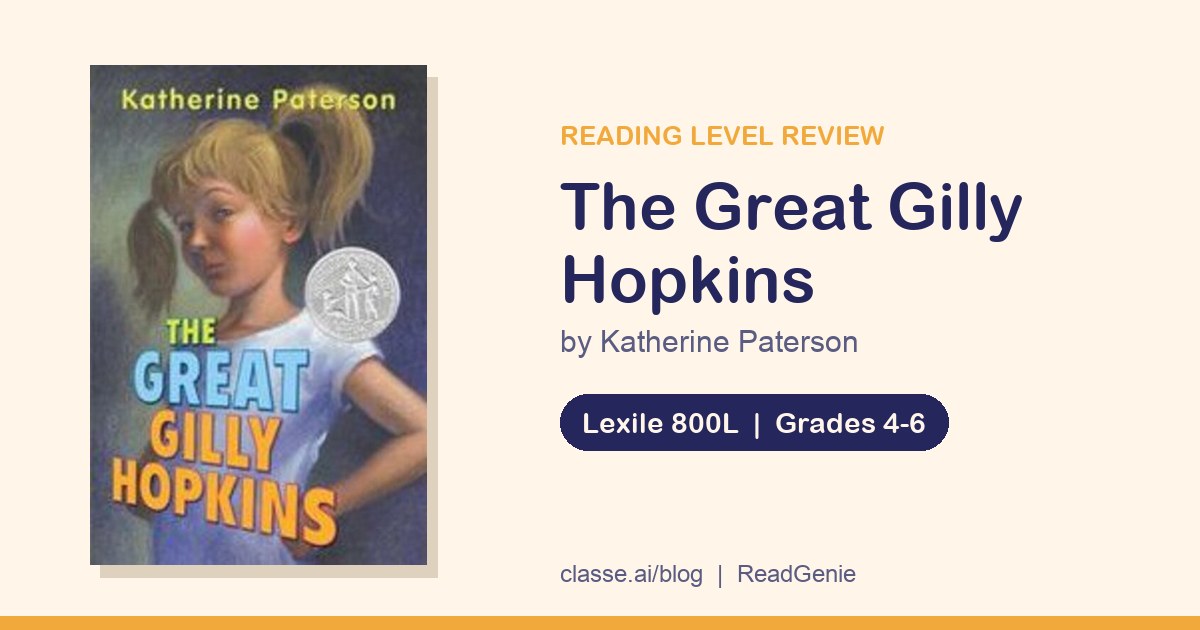
- The Great Gilly Hopkins by Katherine Paterson (similar). Paterson's other famous novel, with a funny, prickly heroine, at almost the same reading level.
- Wonder by R.J. Palacio (similar). Another classroom favorite about friendship and kindness at school, longer but with very short chapters.
- Hatchet by Gary Paulsen (similar). A boy alone in the woods working through a hard event, at a similar level with more action.
- Walk Two Moons by Sharon Creech (harder). A Newbery winner about a girl, a road trip and grief, longer with more layered storytelling.
Browse all of our reading-level book reviews.
How we rate books
Lexile, ATOS (Accelerated Reader), Guided Reading and DRA levels come from the companies that own them and from publishers. We link to where we found each one, and when a level isn't published we say so. Anything marked "ReadGenie estimate" is our own call, not an official level. Flesch scores come from a short public excerpt when the publisher offers one. The struggling-reader and dyslexia-friendly ratings are our judgment, based on eight things (sentence length, vocabulary, decodability, page layout, pictures, chapter length, how gripping the story is, and audiobook support). Treat them as a starting point. The right book is one your child can read with about 95% accuracy and wants to keep reading.
Sources
- TeachingBooks: Bridge to Terabithia (Lexile, ATOS, AR points, word count, grades, year published)
- Booksource: Bridge to Terabithia (HarperCollins paperback, 192 pages) (Guided Reading, Grade Level Equivalent, Lexile conflict, AR level, AR points, interest level, pages, edition)
- Booksource: Bridge to Terabithia (HarperCollins paperback, 208 pages) (Guided Reading, interest level)
- Reading Is Fundamental: Bridge to Terabithia (Lexile, grades, ages)
- OverDrive: Bridge to Terabithia ebook sample (HarperCollins) (Flesch excerpt, phonics patterns, tricky words, sentence length, chapter count and titles)
- OverDrive: Bridge to Terabithia audiobook (HarperCollins) (audiobook narrator)
- Common Sense Media: Bridge to Terabithia (content notes, age)
- Wikipedia: Bridge to Terabithia (novel) (Newbery Medal, movie adaptations, setting, illustrator)
- Open Library: Bridge to Terabithia (ISBNs)