The Maze Runner Reading Level: Lexile HL770L, AR 5.3, Guided Reading X
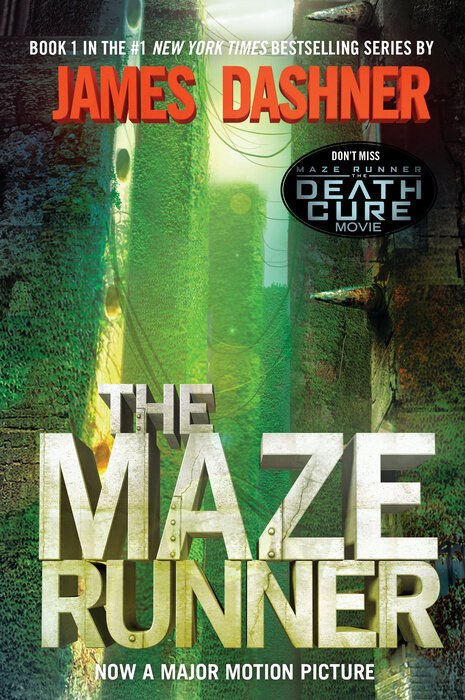
The Maze Runner by James Dashner is Lexile HL770L, AR level 5.3 with 15 AR points and Guided Reading X. The words sit around a 5th grade level while the story is written for ages 12 and up, so it suits middle schoolers who read below grade level, ideally with the audiobook.

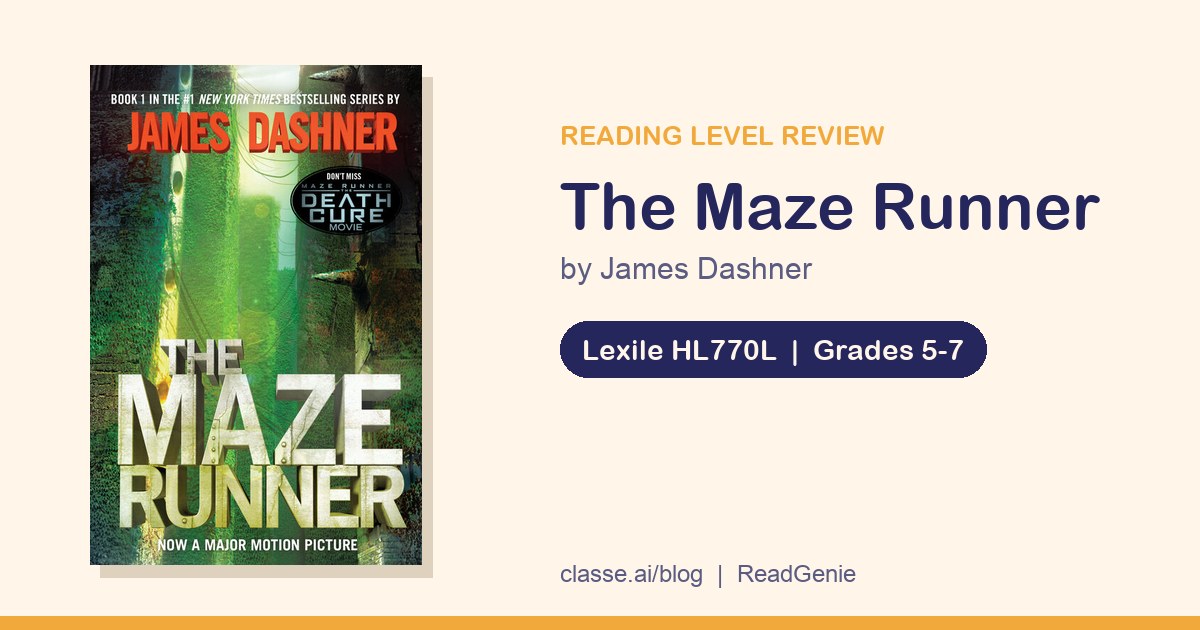
The Maze Runner by James Dashner has a Lexile measure of HL770L, an AR (ATOS) book level of 5.3 worth 15 AR points, and a Guided Reading level of X. The HL code means the words and sentences sit around a 5th grade level while the story is written for ages 12 and up, which makes it a strong pick for a middle schooler who reads below grade level. At just over 101,000 words it is long, so most struggling readers do best with the audiobook alongside.
Thomas wakes up in a dark, rising metal box with no memory except his own name. When it stops, he is pulled out into the Glade, a walled clearing run by teenage boys who all arrived the same way. Outside the walls is a giant maze that changes every night, and creatures called Grievers hunt anyone caught in it after dark. The day after Thomas arrives, the first girl ever sent up shows up with a message that everything is about to change. Kids like it because it is a mystery from the first page, the chapters are short, and the movie made the series famous with teens, which is why so many parents look up its level.
The Maze Runner reading level at a glance
| Lexile measure | HL770L (Penguin Random House) Also listed as 770L |
|---|---|
| ATOS / AR book level | 5.3 (Penguin Random House) |
| AR points | 15 (TeachingBooks) |
| Guided Reading (Fountas & Pinnell) | X (Penguin Random House) |
| Flesch Reading Ease (0-100) | 83.6 ReadGenie estimate |
| Flesch-Kincaid grade | 4.7 ReadGenie estimate |
| Interest level | Grade 7 and up (ages 12 and up) (Penguin Random House) Also listed as Grades 5-12 |
| Approximate grade band | Grades 5-7 (ages 10-13) ReadGenie |
| Length | 416 pages, ~101,182 words |
| Format | Young adult novel |
| Good for struggling readers? | ★★★★★ 3/5 |
| Dyslexia-friendly rating | ★★★★★ 3/5 |
We couldn't find a published DRA level or grade level equivalent for this book.
Is The Maze Runner a struggle for your child right now? ReadGenie gives struggling readers short daily Orton-Gillingham practice at home, out loud, with help on the exact sound they missed.
Try ReadGenie and get this book freeScores checked 2026-11-23. Different leveling systems don't always agree, so we show each published value with its source and mark our own estimates. Links to every source are under How we rate books.
What grade level is The Maze Runner?
The text reads at about a 5th grade level. The story and the length are meant for 7th grade and up. That gap is exactly what the HL in front of the Lexile number is telling you.
An AR level of 5.3 means the sentences and words are about as hard as what a typical student reads in the third month of 5th grade. The Lexile lands in the same range. Our readability check on all of chapter 1 came out a little lower still, because Dashner writes in short, plain sentences and keeps the big words rare.
HL stands for high-low. MetaMetrics, the company behind the Lexile, adds it to books that are written for older readers but measure at a lower level. That is good news for a parent of a 7th or 8th grader who reads a couple of years behind. This book is a teen story they can actually decode.
Guided Reading X sits in the 6th grade range on most school leveling charts. Fountas and Pinnell levels weigh more than sentence length. They also look at how much a reader has to infer, how many characters there are, and how mature the story is, and a mystery with deaths and a large cast pushes it higher than the AR level alone. The publisher lists it for grade 7 and up, ages 12 and up.
Is The Maze Runner good for struggling readers?
For struggling readers in middle school, often yes. We rate it 3 out of 5 for struggling readers, mainly because of its size, and it is one of the better long books for this group.
The writing is on the reader's side. Chapter 1 averages about 13 words per sentence, and only about 4 percent of its words have three or more syllables. The chapters are short, 62 of them at roughly 1,600 words each, so a child can finish one in a sitting and feel progress every night. The story never makes them wait. Thomas knows nothing, the reader knows nothing, and every chapter answers one question while raising another.
It also passes the embarrassment test. A 13-year-old reading below grade level can carry this book into class without anyone thinking it is meant for younger kids.
The trouble spots are real, though.
- Just over 101,000 words is a lot of decoding for a slow reader
- The Gladers' slang (shuck, klunk, shank, greenie) confuses some kids for the first few chapters
- A big cast of boys with short names, like Alby, Newt, Minho, Gally and Chuck
- Thomas is confused for a long stretch at the start, and so is the reader
A 7th or 8th grader reading a year or two behind will do well with the audiobook and a parent who reads the first chapter with them. A child reading below a 5th grade level on their own should listen to it, or start with a shorter dystopian story.
Is The Maze Runner good for kids with dyslexia?
Overall: ★★★★★ 3/5
| Factor | Score | Why |
|---|---|---|
| Sentence length | 3/5 | About 13 words per sentence in chapter 1, with plenty of short ones in the dialogue. |
| Vocabulary load | 4/5 | About 4 percent of words in chapter 1 have three or more syllables, such as predicament, recognition and frustration. |
| Decodability | 3/5 | Most words follow common patterns, but the Glade slang (shuck, klunk, shank, greenie) and names like Grievers and Gladers are new to every reader. |
| Text density and layout | 3/5 | Standard novel pages in a regular serif font, broken up by frequent dialogue. |
| Pictures that carry meaning | 1/5 | No illustrations in the standard edition. |
| Chapter length | 3/5 | 62 chapters averaging about 1,600 words, roughly 10 to 15 minutes each for a slower reader. Chapter 1 is under 1,000 words. |
| Engagement for reluctant readers | 5/5 | Starts in a rising elevator with no memory and never slows down for long. |
| Audiobook / read-along support | 5/5 | Unabridged Listening Library audiobook read by Mark Deakins, 650 minutes, per the publisher. |
We rate The Maze Runner 3 out of 5 for dyslexic readers. The language is easier than the book's size suggests, and the audio support is excellent, but there are no pictures and a lot of pages.
Vocabulary is the strongest part. Most words are everyday ones, and the longer words that do appear in chapter 1, such as predicament, recognition and frustration, are built from parts a child can learn to break apart. Sentence length is middle of the road. Dashner mixes very short sentences with longer ones that pile up what Thomas sees and feels.
Decoding is harder than it looks because of the made-up words. The boys in the Glade have their own slang, and words like shuck and klunk are new to every reader, dyslexic or not. Names like Gladers and Grievers are easier once a child knows they come from glade and grieve. Teach these before starting so they stop being speed bumps.
The standard paperback has full pages of serif text and no illustrations. Frequent dialogue breaks up the pages, which helps. The short chapters help more, since a slower reader can finish most of them in 10 to 15 minutes.
Audio is where this book really works for dyslexic readers. Listening Library publishes an unabridged audiobook read by Mark Deakins that runs about 10 hours and 50 minutes. Listening while following the print lets a child keep up with friends who are reading the series without spending all their energy on decoding.
Words and phonics patterns to practice first
Most of the longer words in The Maze Runner are built from patterns a child may already know. A reader who can find a suffix and split a word into syllables will move through it much faster.
Consonant-le endings show up all through chapter 1: double, single, people, possible, impossible, huddled. Teach that the consonant before -le joins it to make the last syllable (dou-ble, sin-gle, peo-ple).
The suffix -tion appears in many of the bigger words: direction, position, conversation, frustration, recognition. Teach that it says "shun" and comes at the end.
Past tense -ed makes three sounds, and this book is full of all three: backed and clutched end in a t sound, halted and hesitated add a syllable, appeared and echoed end in a d sound. Sort them into three groups.
The suffix -ly carries a lot of the description: completely, finally, roughly, strangely, only. Cover the -ly, read the base word, then add it back.
Digraphs sh, ch and th are everywhere in the opening scenes: harsh, flashed, chest, chains, breath, beneath. R-controlled vowels show up just as often: dark, corner, burnt, forth, arms, darkness.
Pre-teach these as whole words before chapter 1: Thomas, Glade, Gladers, Grievers, greenie, shank, shuck, klunk, Alby, Newt, Minho, Teresa, predicament and curiosity. If suffixes and syllable division are still shaky, short daily Orton-Gillingham practice on multisyllable words, like the lessons ReadGenie gives at home, makes a book this long much less tiring.
How to read The Maze Runner with your child
Read chapter 1 aloud together. It is under 1,000 words, the shortest way into the story, and it ends right as Thomas is pulled into the Glade, which hooks most kids.
Make a slang card. Write shuck, klunk, shank and greenie on a sticky note with a few words of meaning for each, and keep it in the book. Your child can check it instead of stopping to ask.
Set a goal of three or four short chapters a night. At that pace the book takes about three weeks, and the short chapters make every night feel finished.
Use the audiobook as a partner, especially once the Maze chapters start. Your child can follow the print while Mark Deakins reads, or read the first page of a chapter aloud before the recording takes over.
If your child is sensitive, tell them before the last part of the book that a character they like dies. Wait to watch the movie until the book is done, then talk about what the film changed.
Using The Maze Runner in the classroom or tutoring
For teachers, it works well as a literature circle book in 7th and 8th grade. Start a character chart for the Gladers in the first week, since the cast grows fast. Put the Glade slang and the jobs (Runners, Keepers, Builders) on an anchor chart. The 62 short chapters split cleanly into daily reading of about five chapters, which covers the book in three weeks, and students who need it can use the audiobook for homework chapters.
For tutors, pre-teach Thomas, Glade, Gladers, Grievers, Alby, Newt and Minho before the first session. Chapter 1 has plenty of consonant-le and -tion words for practice (double, single, people, direction, position, frustration). A good session pattern is to have the student read one short chapter aloud for fluency, then listen to the next one with the audiobook and talk about what Thomas has figured out.
Content notes for parents
The Grievers attack boys in the Maze, and several Gladers are killed or badly hurt. The boys punish one of their own by sending him into the Maze at night, which means he will not come back. Near the end, Chuck, a younger boy Thomas looks out for, is killed, and many readers find that the hardest part of the book. The boys use made-up words like shuck and klunk in place of swearing, so there is no real profanity. There is no romance beyond a close friendship. Most families find it fine for 12 and up.
Should your child read it?
If your child is in 7th grade or older and reads a year or two behind, this is one of the best long books to try, because the HL level means the words were kept simpler than the story. Pair it with the audiobook and it is very doable. A strong 5th or 6th grade reader can handle the words, but the deaths may be too much for some. If your child is younger, sensitive, or reading below a 5th grade level on their own, start with The City of Ember or Among the Hidden.
Make the next book easier
Short daily sessions of reading, spelling and handwriting practice, built with Orton-Gillingham teachers. It works alongside tutoring and school support. The first 7 days are free. Join today and we'll mail your child The Maze Runner for free.
Try ReadGenie and get your free bookStarts with a free 7-day trial. Book mailed after your first paid month. US only, one per family.
FAQ
How many AR points is The Maze Runner?
The Maze Runner is worth 15 AR points, with an AR (ATOS) book level of 5.3. That is a lot of points for one book because it is just over 101,000 words long.
What is The Maze Runner Lexile level?
The Maze Runner has a Lexile measure of HL770L. The HL means high-low, a book written for teens that measures at a lower reading level. On most Lexile charts it falls around 5th grade, lower than many parents expect for a teen novel.
What age range is The Maze Runner book for?
The publisher lists it for ages 12 and up, grade 7 and up. Most kids read it between 12 and 14. A younger child can often read the words, but the deaths and the scary Maze scenes suit readers who are 12 or older.
What grade level is The Maze Runner?
The reading level is about 5th grade by AR and Lexile, and about 5th to 7th grade overall in our estimate. The content is meant for 7th grade and up, which is where most schools use it.
Is The Maze Runner hard to read?
The sentences are not hard, and the chapters are short. The length and the made-up slang are the hard parts. A slow reader will need stamina, a slang card, or the audiobook to get through all 416 pages.
Get The Maze Runner free
ReadGenie helps struggling readers improve their reading, spelling and handwriting in short daily sessions at home. Join and we'll mail your child this book for free.
Claim your free bookStarts with a free 7-day trial. Book mailed after your first paid month. US only, one per family.
What to read next
- The City of Ember by Jeanne DuPrau (easier). Two kids search for a way out of an underground city that is running out of light, with less violence.
- Among the Hidden by Margaret Peterson Haddix (easier). A shorter dystopian story about a boy who must hide because he is a forbidden third child.
- The Hunger Games by Suzanne Collins (similar). Another fast teen dystopia where young people are forced into a deadly test run by adults who watch.
- The Giver by Lois Lowry (similar). A shorter classic about a boy who learns the truth about the community that controls his memories.
- The Scorch Trials by James Dashner (similar). Book 2, where Thomas and the Gladers face a new test in a burned-out desert.
- Lord of the Flies by William Golding (harder). The classic about a group of boys stranded without adults who build their own rules, with older vocabulary and longer description.
Browse all of our reading-level book reviews.
How we rate books
Lexile, ATOS (Accelerated Reader), Guided Reading and DRA levels come from the companies that own them and from publishers. We link to where we found each one, and when a level isn't published we say so. Anything marked "ReadGenie estimate" is our own call, not an official level. Flesch scores come from a short public excerpt when the publisher offers one. The struggling-reader and dyslexia-friendly ratings are our judgment, based on eight things (sentence length, vocabulary, decodability, page layout, pictures, chapter length, how gripping the story is, and audiobook support). Treat them as a starting point. The right book is one your child can read with about 95% accuracy and wants to keep reading.
Sources
- Penguin Random House: The Maze Runner (Lexile, ATOS, Guided Reading, pages, grades, ages, audiobook narrator and length, excerpt)
- TeachingBooks: The Maze Runner (AR points, word count, ATOS check, Lexile check, grades)
- Booksource: The Maze Runner (Guided Reading check, Lexile check, AR check, interest level)
- Random House: Maze Runner Trilogy readers guide (grades, content notes)
- Wikipedia: The Maze Runner series (chapter count)