What Happens at a Dyslexia Evaluation? A Parent Guide
If your child is being referred for testing, you may be wondering what happens at a dyslexia evaluation and how to make the process feel less overwhelming. This guide walks parents through what to expect before, during, and after the appointment.

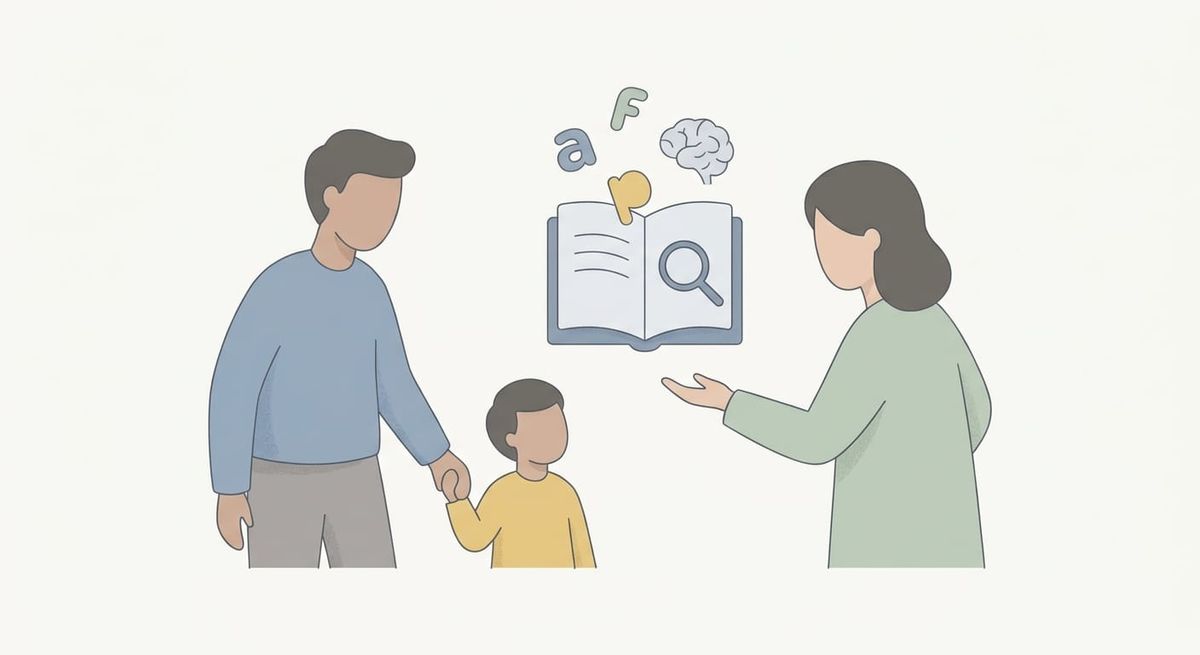
If your child is being referred for testing, it is completely normal to feel nervous. Many parents hear the words dyslexia evaluation and immediately wonder what the appointment will actually look like, how long it takes, and whether their child will feel stressed or embarrassed.
The good news is that a dyslexia evaluation is not a pass-or-fail test. It is a way to understand how your child learns to read, where reading is breaking down, and what kind of support will help most. If you have been asking what happens at a dyslexia evaluation, this guide will walk you through the process in clear, simple terms.
Why would a child be referred for a dyslexia evaluation?
A child is often referred for a dyslexia evaluation when reading continues to feel much harder than expected, even with practice or extra help. Parents may notice that their child guesses at words, avoids reading aloud, struggles to spell simple words, or seems bright in conversation but falls apart when print is involved.
A teacher might raise concerns. A pediatrician might suggest testing. Sometimes a parent is simply the first person to notice that something is not adding up.
An evaluation can help answer questions like:
- Is this just a reading delay, or could it be dyslexia?
- Which reading skills are weak right now?
- Does my child need school supports, tutoring, or both?
- What should we work on first?
That clarity is often the biggest relief.
What happens before the testing starts?
Before formal testing begins, the evaluator usually gathers background information. This helps them see the full picture, not just one test score.
They may ask about:
- your child’s reading history
- early speech or language development
- family history of dyslexia or reading struggles
- school concerns and report cards
- past interventions or tutoring
- attention, anxiety, or other learning concerns
You may be asked to fill out forms before the appointment. In some cases, the evaluator will also review school records or talk with your child’s teacher.
This part matters because dyslexia does not show up in exactly the same way in every child. Two children can both struggle with reading but need different kinds of support.
What does the actual dyslexia evaluation look like?
Most dyslexia evaluations happen one-on-one in a quiet room. The evaluator gives your child a series of structured tasks, often spread across one longer session or a few shorter sessions depending on age, attention, and the provider.
The tasks usually do not look like a typical school test. Your child may be asked to:
- read real words
- read made-up words
- spell words
- break words into sounds
- name letters or sounds quickly
- read short passages
- answer questions about what they read
- repeat words or remember verbal information
Some tasks feel easy. Others may feel more challenging. That is normal. The goal is not to trick your child. The goal is to figure out which parts of reading are strong and which parts need support.
A good evaluator will also watch how your child responds, not just whether an answer is right or wrong. For example, are they guessing? sounding words out? skipping small words? working very slowly? Those patterns can be just as important as the scores.
What are they looking for?
If you are wondering what happens at a dyslexia evaluation, this is the heart of it. The evaluator is looking for a pattern.
Dyslexia is usually linked to difficulties with skills such as:
- phonological awareness, or hearing and working with sounds in words
- decoding, or sounding out unfamiliar words
- spelling
- word recognition
- reading fluency
They are also looking at whether your child’s reading difficulty seems specific, persistent, and out of step with other abilities.
For example, a child may be curious, verbal, and able to explain big ideas out loud, but still struggle to read even simple text accurately. That kind of mismatch is often part of why parents start asking for answers.
Will my child know they are struggling during the evaluation?
Sometimes, yes. But many children actually feel relieved during testing.
Why? Because someone is finally slowing down enough to see where things are hard.
Instead of hearing “try harder” or “you know this,” they are working with someone whose job is to notice patterns and understand learning differences. For some kids, that feels safer than a classroom.
You can help by telling your child ahead of time:
- this is not a grade
- they do not need to study
- it is okay not to know every answer
- the goal is to figure out how their brain learns best
That small conversation can lower a lot of pressure.
What happens after the dyslexia evaluation?
After testing, the evaluator reviews the results and looks at the full pattern of strengths and weaknesses. Then you usually receive feedback in a meeting, a written report, or both.
That report may include:
- whether the findings are consistent with dyslexia
- which reading skills are most affected
- recommendations for school supports
- recommendations for intervention or tutoring
- ideas for classroom accommodations
This is often the point where parents finally get language for what they have been seeing for years.
Just as important, the report should help you know what to do next. A useful evaluation does not stop at naming the problem. It should point toward support.
A real-world example
Maya was a bright fifth grader who loved science and could explain complex ideas out loud, but she froze when asked to read even a short passage. Her parents had been told to give her more practice, but reading at home kept turning into tears.
During her dyslexia evaluation, the evaluator found that Maya had strong verbal reasoning but weak phonological awareness, slow decoding, and poor spelling. That helped explain why she could sound so capable in conversation yet struggle so much with print.
Once her family understood the pattern, they stopped treating reading struggles like a motivation problem. They started getting the right support, and reading practice became more focused and less frustrating.
Simple ways to prepare your child
You do not need to do intense prep for a dyslexia evaluation, but a few small steps can help.
1. Keep your explanation simple
Say something like, “You are meeting with someone who helps figure out why reading feels hard and what can help.”
2. Choose a good time of day if possible
If your child focuses better in the morning, ask whether testing can happen then.
3. Bring helpful records
Old report cards, teacher notes, intervention history, and previous testing can all give useful context.
4. Plan for a calm rest of the day
Testing can be tiring. If you can, keep the schedule light afterward.
What should parents do with the results?
Once you know what happens at a dyslexia evaluation, the next question is usually what to do after it.
Start by focusing on the most actionable parts of the report:
- What skills need direct instruction?
- What support should the school provide?
- Does your child need structured literacy intervention?
- What can you stop doing because it is not actually helping?
You do not need to solve everything at once. The goal is to turn the results into a practical plan.
You might also find this helpful: What Tests Are Used to Diagnose Dyslexia? A Parent Guide
Final thoughts
If you have been feeling nervous about testing, that makes sense. But in many cases, a dyslexia evaluation brings relief. It can replace guesswork with a clearer picture of what your child needs.
Understanding what happens at a dyslexia evaluation does not make every next step easy, but it can make the process feel far less overwhelming. And when you know what is getting in the way, it becomes much easier to choose the right support.
If your child needs extra reading practice while you are figuring out next steps, ReadGenie offers structured, supportive practice built around phonics, repetition, and decodable reading. You can explore it here: APPSTOREURL or GOOGLEPLAYURL.



