How to Teach CVC Words in Orton-Gillingham
If your child knows some letter sounds but still struggles to read simple three-letter words, CVC practice may be the missing step. This guide shows how to teach CVC words in Orton-Gillingham in a calm, structured way at home.

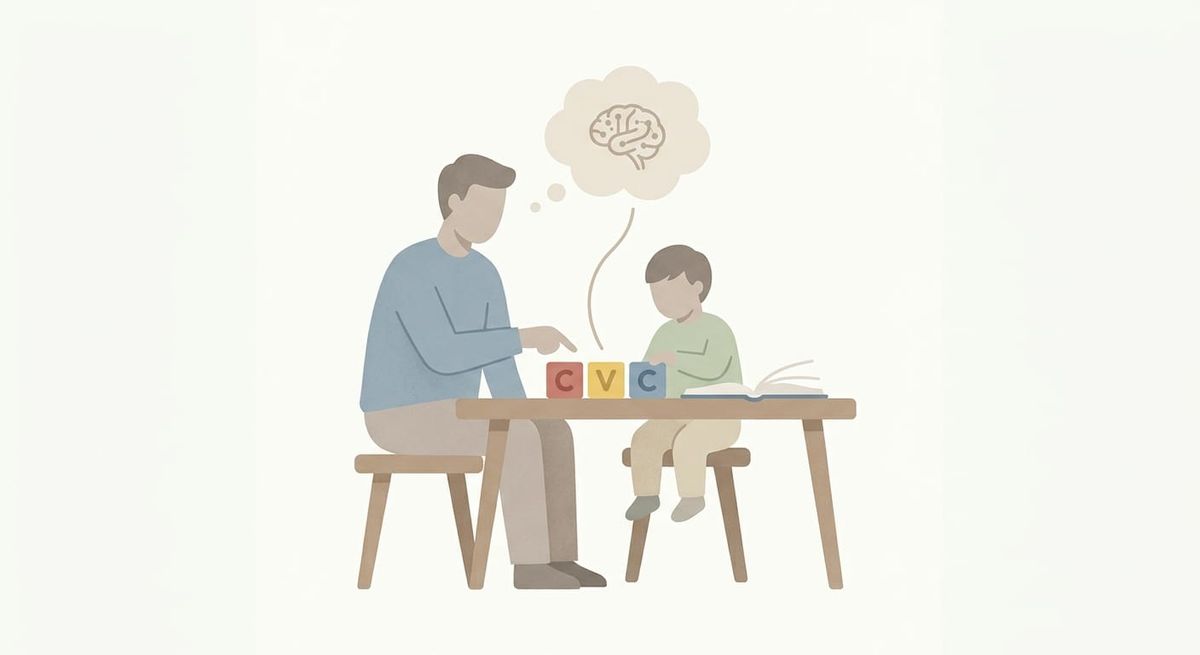
If your child knows a few letter sounds but still freezes on words like cat, sip, or hot, you are not doing anything wrong. Many struggling readers need more support learning how to blend sounds into real words.
That is where CVC practice comes in. If you are trying to teach CVC words in Orton-Gillingham, the goal is not to rush into lists or flashcards. The goal is to help your child read short vowel words in a clear, step-by-step way that builds accuracy and confidence.
What are CVC words, and why do they matter?
CVC words are simple three-letter words with a consonant, vowel, and consonant pattern. Words like map, pen, dog, and sun are common examples.
These words matter because they are often the first time a child has to do full sound-by-sound blending. It is one thing to know that m says /m/ and a says /a/. It is another thing to look at map and blend those sounds smoothly enough to read the word.
For many kids with dyslexia, this is where guessing starts. They may know the sounds in isolation but struggle to hold them together long enough to read the whole word.
When is a child ready for CVC words?
Before you teach CVC words in Orton-Gillingham, make sure your child can do a few things first:
- name and say several consonant sounds
- read at least one short vowel sound reliably
- track left to right across three sounds
- blend two sounds with support
Your child does not need to be perfect. They just need enough sound knowledge to work with simple words successfully.
If they still mix up most letter sounds, it is usually better to slow down and firm those up before expecting word reading to click.
How to teach CVC words in Orton-Gillingham step by step
Keep this part simple. Short, structured practice works better than doing too much at once.
1. Start with one short vowel
Do not teach mixed short vowel words right away. Start with just one vowel, such as short a, and build from there.
That lets your child focus on blending without also having to sort out multiple vowel sounds.
You might use words like:
- map
- sat
- mad
- ham
- lap
2. Build the word sound by sound
Show one word at a time. Point to each letter and have your child say the sound.
For example:
- m says /m/
- a says /a/
- p says /p/
Then sweep your finger under the whole word and blend it: map.
If your child cannot blend yet, model it first. You say the sounds, then blend them. After that, let your child try.
3. Use consistent wording
A lot of kids do better when the routine sounds the same each time.
You might say:
- "Say the sounds."
- "Now slide them together."
- "Read the word."
That kind of repetition helps the process feel familiar instead of stressful.
4. Keep practice controlled
At first, only use words with patterns your child has already been taught. Avoid tricky words, blends, or extra spelling patterns too soon.
If the lesson is about short a CVC words, keep it there. A word like fast adds a consonant blend and makes the task harder than it needs to be.
What if your child keeps guessing?
Guessing is common during CVC practice, especially when a child is used to relying on pictures, memory, or the first letter.
If that happens, do not say, "Sound it out," and leave them there. Be more direct.
Try this instead:
- cover the whole word except the first letter
- uncover one sound at a time
- prompt each sound clearly
- blend together right away
If your child says mat for map, go back to the final sound and compare them.
You can say, "Let’s check the last sound. This says /p/, so the word is map."
That keeps correction specific and calm.
A real-world example
Ella, a fourth grader with dyslexia, knew most consonant sounds and could say short vowels in isolation. But every time she saw a word like pig, she guessed pet or pan. Her mom thought she needed harder practice because the words looked easy.
What actually helped was slowing down. Instead of mixed word lists, they spent a week on short i CVC words only. They practiced five words at a time, tapped each sound, then blended the word out loud.
After several short sessions, Ella started reading new short i words with less hesitation. The big shift was not doing more. It was making the pattern more consistent and easier to process.
Simple ways to make CVC practice work at home
If you want to teach CVC words in Orton-Gillingham at home, these small changes can make a big difference:
- Practice for 5 to 10 minutes instead of pushing through long lessons
- Use a small set of words with the same vowel pattern
- Stop before your child is exhausted
- Revisit the same words the next day for review
You do not need a huge word list. You need enough repetition for the blending process to feel solid.
What should you do after CVC words feel easier?
Once your child can read simple CVC words with one short vowel accurately, you can slowly expand.
You might:
- introduce a second short vowel pattern
- mix two vowel patterns only after each one feels secure
- add simple word chaining like map to mad to sad
- move toward longer words only when three-sound blending is steady
This is often the stage where sequence matters. Teaching too many new sounds at once can cause confusion, even when your child seems ready on paper.
You might also find this helpful: What Order Should I Teach Orton-Gillingham Sounds at Home?
Final thoughts
If your child struggles with short three-letter words, that does not mean they are behind beyond help. It usually means they need more explicit practice blending sounds into words.
When you teach CVC words in Orton-Gillingham, simple is better. One vowel pattern, a few words, and a steady routine can go a long way.
If you want extra support, ReadGenie gives children structured phonics practice with decodable reading, repetition, and dyslexia-friendly lessons grounded in Orton-Gillingham principles. You can explore it here: App Store or Google Play.



