How to Handle Skipping Words in Orton-Gillingham
If your child reads a sentence and leaves out little words or skips whole words, it can be hard to tell whether to stop them every time or let it go. This guide shows parents how to handle skipping words in Orton-Gillingham in a calm, practical way.

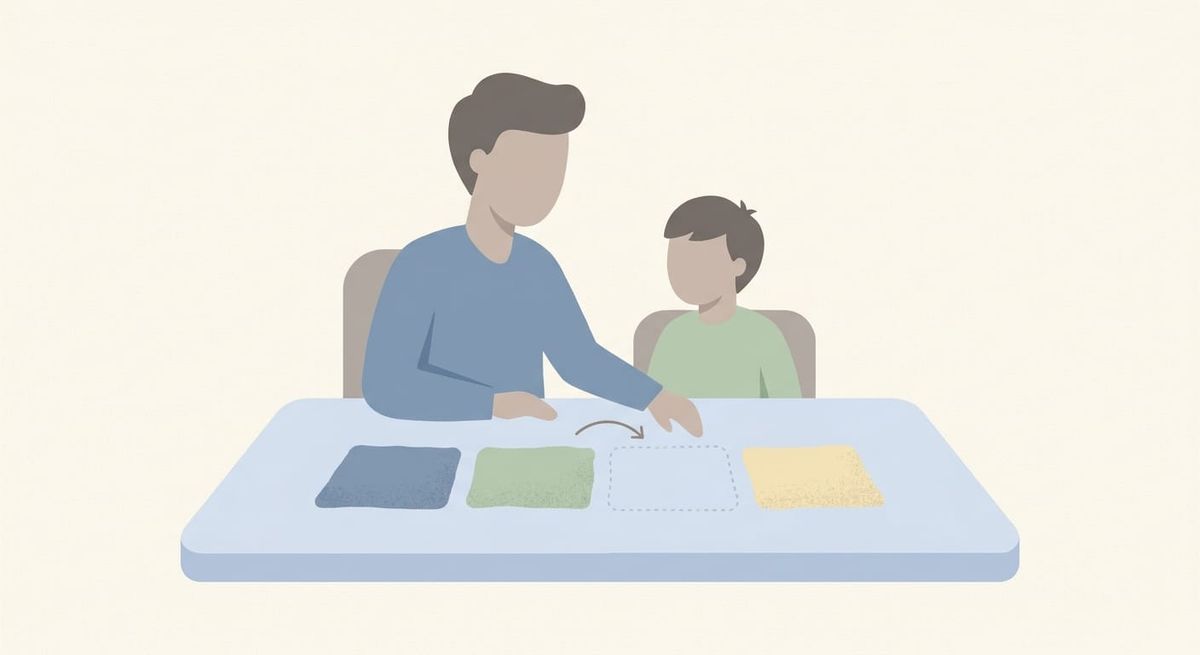
If your child reads a sentence and leaves out words like the, is, or of, you may wonder what is going on. They might know the phonics pattern in a word list, but when it is time to read a passage, they start dropping words, rushing ahead, or changing the sentence without noticing.
That can feel confusing for parents. You do not want to interrupt every few seconds, but you also do not want the habit to stick.
This guide will help you handle skipping words in Orton-Gillingham practice in a way that supports accuracy without making reading feel tense.
Why do kids skip words during reading?
Skipping words usually does not mean a child is being careless. More often, it means reading is taking so much effort that they are trying to lighten the load.
A child may skip words because:
- they are focusing so hard on sounding out one word that they lose their place in the sentence
- they are rushing because slow reading feels uncomfortable
- they are guessing based on meaning instead of tracking each word
- they are tired and trying to get through the passage faster
- small function words do not feel important to them yet
In Orton-Gillingham-style reading, this matters because accuracy comes before fluency. If a child regularly skips words, they are not fully practicing the text in front of them. That can affect comprehension too, especially when the skipped word changes meaning.
Should you correct every skipped word?
Usually, yes, but the correction should be brief and calm.
If skipped words are ignored again and again, the child may start to believe that close reading is optional. At the same time, constant interruption can make practice feel heavy.
A good middle ground is to stop the child, bring them back to the exact spot, and have them reread the sentence correctly. You do not need a long explanation. A simple prompt is enough:
- “Try that sentence again and read every word.”
- “You missed a word. Start here.”
- “Point and read it again.”
The goal is not to lecture. The goal is to build the habit of noticing every word on the page.
What helps most when a child keeps losing their place?
When skipping words in Orton-Gillingham keeps happening, tracking support often helps more than extra phonics review.
Try these supports during passage reading:
Use finger tracking
Have your child slide a finger under each word as they read. Older kids may resist this at first, but it often helps immediately. If finger tracking feels too babyish, let them use the eraser end of a pencil or a reading tracker card.
Cover part of the line
Use an index card to reveal one line at a time. This reduces visual overload and helps the eyes stay anchored.
Shorten the passage
If the text is too long, accuracy may fall apart before the child reaches the end. Read fewer lines and protect success.
Reread one sentence, not the whole page
If a word gets skipped, go back to the sentence, not the entire passage. That keeps the correction manageable.
What does this look like in real life?
Let’s say a child reads this sentence:
The dog ran to the hill.
But they say:
Dog ran the hill.
This child may know all the words in isolation. The problem is not necessarily decoding. The problem may be tracking, pace, or attention to print.
A helpful parent response might sound like this:
“Let’s go back. Put your finger under each word and read the whole sentence again.”
Then the child rereads:
The dog ran to the hill.
That short reset teaches something important. We read the words that are there, not the sentence we think should be there.
Over time, those calm corrections build better habits.
How can you practice this without turning it into a fight?
If your child gets frustrated easily, keep the practice small and predictable.
Here are a few realistic ways to work on it:
- Choose a very short decodable passage instead of a long page
- Tell your child before reading, “Today we are going to focus on reading every word”
- Mark only one goal for the session, such as tracking with a finger
- End after one successful reread instead of pushing too long
This matters because children improve faster when they know what the target is. “Read better” feels vague. “Read every word” is clear.
Simple tips for parents
If you want a quick plan, start here:
- Correct skipped words right away so the habit does not slide by.
- Use a finger, card, or pencil for tracking during passage reading.
- Keep reading practice short if skipping increases when your child is tired.
- Praise accurate rereading by saying things like, “Nice job catching every word that time.”
Small adjustments usually work better than bigger lessons.
A useful next step
If word skipping happens alongside rushing or wild word substitutions, the issue may also involve guessing.
You might also find this helpful: How to Correct Guessing in Orton-Gillingham
Conclusion
Skipping words in Orton-Gillingham can be frustrating, but it is usually a sign that your child needs more support with tracking, pacing, and accurate reading in connected text.
You do not need to turn every mistake into a big correction. A calm stop, a quick reread, and the right support can go a long way.
If you want extra help at home, ReadGenie gives children structured, decodable reading practice based on Orton-Gillingham principles and the Science of Reading. It is designed to make practice feel clear, repeatable, and manageable for families. You can explore it here: App Store and Google Play.



