How to Stop Guessing Words in Orton-Gillingham
If your child keeps guessing at words instead of reading through them, you are not alone. This guide shows parents how to respond in a calm, practical way that helps children slow down and use the skills they are learning in Orton-Gillingham.

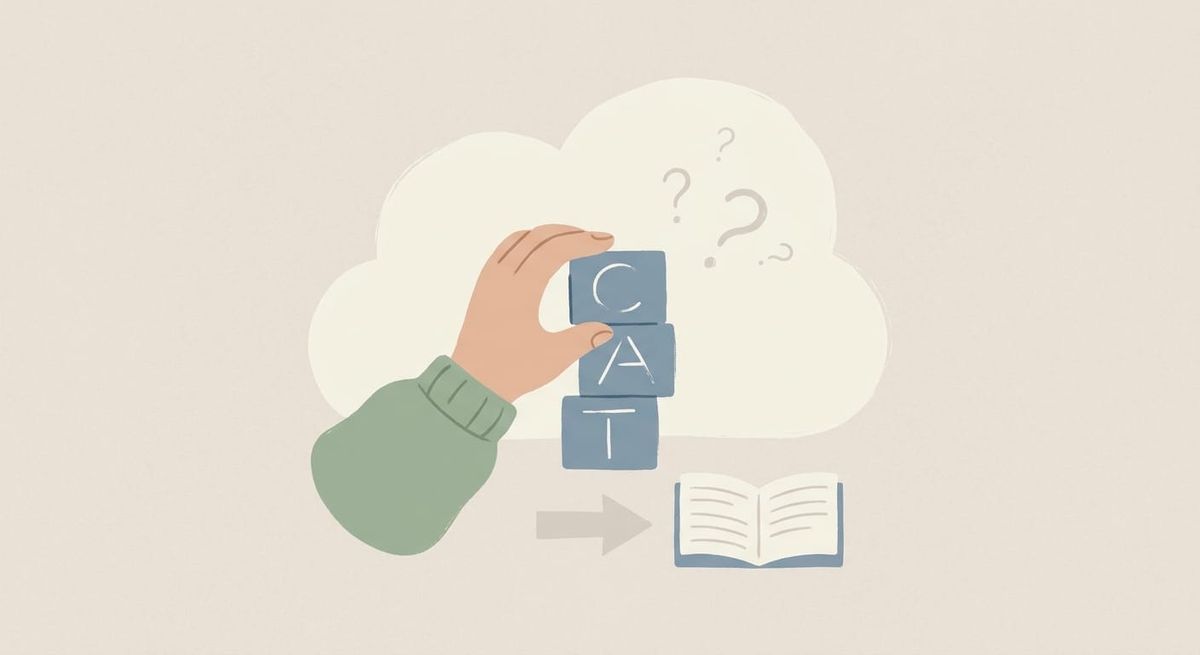
If your child looks at the first letter of a word and blurts out something that makes no sense, it can be hard to know what to do next. Many parents see this and wonder, Are they being lazy, rushing, or just not getting it?
Usually, guessing is not about laziness. It is often a sign that reading feels hard, the child is trying to move too fast, or they have not yet built the habit of working through the whole word. The good news is that you can help.
This guide will show you how to stop guessing words in Orton-Gillingham practice by noticing the pattern, changing how you respond, and giving your child a clearer path to accurate reading.
Why do children guess at words?
Guessing is common in struggling readers, especially when they are tired or unsure. A child may look at the first sound, glance at the picture, or think about what word would make sense in the sentence and then take a shot.
That happens for a few reasons:
- They want to avoid the effort of sounding out a hard word
- They are used to reading for speed instead of accuracy
- The word pattern is not secure yet
- They feel pressure and panic when they get stuck
- The text is a little too hard for independent practice
In Orton-Gillingham, the goal is not to guess better. The goal is to read through the word in a structured way. When a child starts relying on guessing, it usually means they need more support with the process, not more reminders to “try harder.”
What does guessing look like during Orton-Gillingham practice?
Sometimes guessing is obvious. Your child sees stamp and says stop. Other times it is more subtle.
You may notice that your child:
- Says a word before looking at all the letters
- Replaces the word with one that starts the same way
- Skips over the middle of the word
- Changes the ending to something easier
- Reads quickly but cannot explain how they got the word
Those clues matter because they tell you where the breakdown is happening. If your child keeps reading only the first sound, they may need help slowing down. If they skip the middle, they may need more practice blending all the way through.
What should you say when your child guesses?
Your response in the moment matters a lot. If you jump in with the right word too fast, your child loses the chance to practice decoding. If you say nothing, the guessing habit can keep growing.
Try a short prompt that brings them back to the word:
- “Start at the beginning.”
- “Check every sound.”
- “Slide through the whole word.”
- “Try that again and do not skip the middle.”
- “Point and read each part.”
Keep your tone calm and neutral. The goal is to redirect, not to scold. When parents sound frustrated, children often guess even more because they want to escape the moment.
It also helps to pause before correcting. Give your child a second to notice the mismatch. If they read ship for shop, you can say, “Look again at the middle sound.” That kind of prompt teaches more than simply saying, “No, that says shop.”
A real example of how this can change
Let’s say Maya is in fourth grade and has started guessing through decodable passages at home. She sees the word split and says slide. She sees frog and says from. Her dad keeps correcting her, but she is getting more upset each day.
Instead of giving her the word, he changes the routine. He covers the sentence around the word so Maya focuses only on the letters. He asks her to point under each sound and say them slowly. Then he has her blend the word all the way through before reading the sentence again.
At first, this feels slower. But after a week, Maya starts catching herself. She pauses more often, looks through the middle of the word, and makes fewer wild guesses. The reading is not perfect, but it is more accurate. That is real progress.
How can you stop guessing words in Orton-Gillingham at home?
You do not need a complicated system. A few small changes can make home practice much more effective.
1. Use text your child can actually decode
If the passage has too many unknown patterns, your child is more likely to guess. Practice works best when the text mostly matches what they have already learned.
2. Slow the pace down
If your child rushes, build in a slower routine. Have them point under the word, tap sounds if needed, and blend before saying the whole word.
3. Prompt the process, not just the answer
Try to avoid saying the word right away. Use prompts that remind your child what to do with the letters in front of them.
4. Go back to word-level practice
If guessing shows up a lot in passage reading, step back for a few minutes. Read words in isolation first. That can reduce pressure and help your child focus on decoding.
Simple things to try this week
Here are a few realistic ways to work on this at home:
- Choose one short decodable passage instead of a longer book
- Stop after a guessed word and ask your child to read through all the sounds
- Praise accurate effort, even if it is slow
- End practice before frustration builds too high
You are trying to build a new habit: look carefully, decode fully, then read the word. That habit takes time, especially for children who have been guessing for a while.
One more helpful resource
You might also find this helpful: How to Correct Mistakes During Orton-Gillingham Practice
That post goes deeper into how to step in during errors without making reading practice feel tense or discouraging.
Conclusion
If your child keeps guessing at words, it does not mean Orton-Gillingham is not working. It usually means they need more support with pacing, prompting, and text that matches their current skill level.
Small changes in how you respond can help your child move from guessing to decoding. And that shift matters, because accurate reading is what helps skills stick.
If you want extra support at home, ReadGenie gives children structured practice with phonics patterns, repetition, and decodable reading in a way that feels manageable. You can explore it here: App Store or Google Play.



