How to Stop Guessing in Orton-Gillingham
If your child skips sounds, blurts out random words, or guesses from the first letter, this guide shows how to stop guessing in Orton-Gillingham with calm, practical steps.

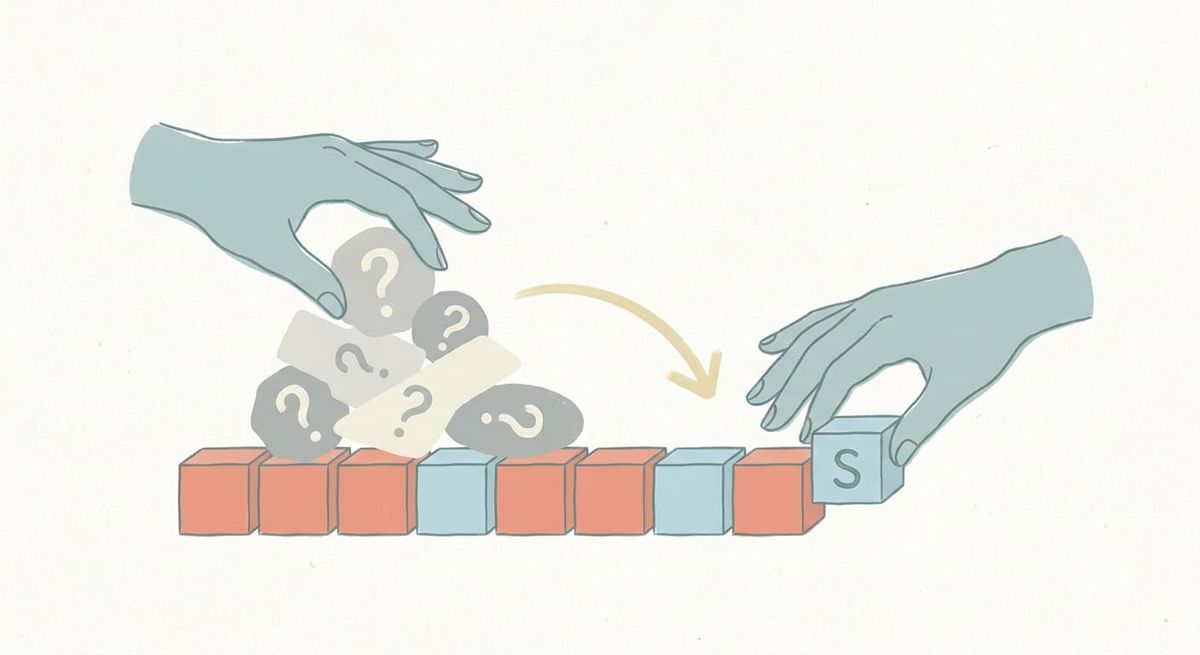
If your child looks at a word for one second and then blurts out something completely different, you are not alone. Guessing is one of the most common things parents notice during reading practice. It can look like rushing, skipping sounds, or saying a word that only matches the first letter.
The hard part is that guessing does not always mean your child is not trying. Often, it means the habit of decoding is not solid yet, or the word is just a little too hard in that moment.
If you are trying to stop guessing in Orton-Gillingham practice at home, this post will help you figure out what is going on and what to do instead.
Why do kids guess instead of decode?
Most children do not guess because they are being careless. They guess because guessing feels faster and easier than working through the word.
A child may guess when:
- they are not secure with the phonics pattern yet
- they have been asked to read too many new words at once
- they are used to using pictures or context to fill in the blanks
- they feel pressure to get the word quickly
- they are tired and trying to escape the effort of sounding it out
In Orton-Gillingham, the goal is to build the habit of looking closely at every part of the word. That means we want to slow the process down enough for your child to notice the letters, say the sounds, and blend them in order.
What does guessing look like during Orton-Gillingham practice?
Sometimes guessing is obvious. Your child sees ship and says shoe. But sometimes it is more subtle.
Watch for signs like these:
- saying a word based only on the first letter or first sound
- skipping the middle of the word
- changing endings like -ed, -ing, or -s
- looking away before finishing the word
- refusing to try and saying, "I do not know" right away
- reading quickly but inaccurately
These patterns matter because they tell you where the breakdown is happening. A child who always misses the vowel needs a different kind of help than a child who rushes through the whole word.
How do you stop guessing in the moment?
The biggest shift is this: do not correct by giving the word too quickly.
If you say the word right away, your child may get through the page, but they do not practice decoding. Instead, pause and guide them back to the print.
Try prompts like:
- "Start at the left. What sound?"
- "Read every part."
- "Try the vowel again."
- "Touch each sound and blend it."
- "Look at the ending too."
Keep your tone calm and matter-of-fact. The goal is not to make your child feel wrong. The goal is to help them use a better process.
If the word still falls apart after one or two tries, step in with support. You can cover part of the word, read one sound at a time together, or go back and review that pattern before continuing.
Fix the lesson, not just the mistake
If your child guesses over and over, the issue is usually bigger than one word. It often means something in the lesson needs to change.
Here are a few useful adjustments:
Use fewer new words
Too many unfamiliar words can push a child into survival mode. Cut the list down and give more practice with the same pattern.
Review before reading
Before reading words or a passage, quickly review the target sound or pattern. A one-minute refresher can make decoding much easier.
Choose controlled text
If the passage includes too many patterns your child has not learned well, guessing will spike. Decodable text gives them a fair chance to apply what they know.
Slow the pace
A rushed lesson invites rushed reading. It is better to read five words carefully than twenty words through guessing.
A real-world example
Let’s say Mia is reading the word stamp. She glances at it and says, "step."
Her mom used to respond, "No, it says stamp," and move on.
Now she tries a different approach. She says, "Let’s look at every part." Mia taps the sounds: /s/ /t/ /a/ /m/ /p/. Then she blends them slowly: stamp.
On the next word, Mia guesses again. This time her mom notices a pattern. Mia is skipping the middle vowel whenever the word feels long. Instead of pushing through the whole list, they stop and review short vowel words with blends for a few minutes.
That small change makes the next part of the lesson go much more smoothly.
Simple things parents can try this week
If you want to stop guessing in Orton-Gillingham practice, start small.
- Pick just 5 to 8 words for practice instead of a long list.
- Prompt your child to read from left to right before offering help.
- Review one target pattern before reading a passage.
- Stop the lesson early if guessing increases as your child gets tired.
These changes may seem simple, but they often make practice feel much more successful.
What if my child guesses on every word?
If guessing is happening on nearly every word, the lesson may be too difficult right now. That does not mean Orton-Gillingham is not working. It usually means your child needs more review, a smaller step, or a more controlled reading task.
You might also find this helpful: What to Do When Orton-Gillingham Is Too Hard
Conclusion
Guessing is not just a bad habit. It is usually a sign that your child needs more support, more review, or a slower path through the word. When you respond calmly and guide your child back to decoding, you help build the reading habits that actually stick.
If you want extra support at home, ReadGenie gives kids structured phonics practice with decodable reading and built-in repetition based on Orton-Gillingham principles. You can check it out here: App Store or Google Play.



