7 Orton-Gillingham Activities for Home That Help Struggling Readers
If you want to support your child’s reading at home but need ideas that are simple and actually helpful, these Orton-Gillingham-style activities can give you a clear place to start.

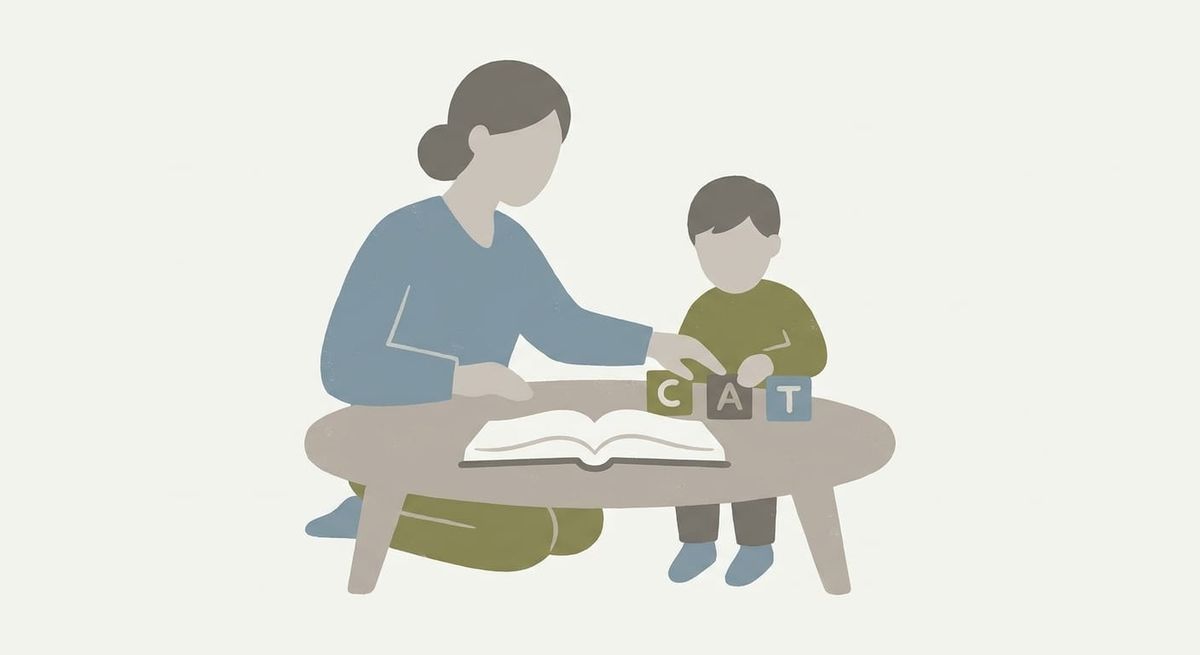
If reading homework ends in frustration, you are not alone. Many parents want to help but are not sure what will actually make a difference. They do not want more worksheets, more guessing, or another argument at the kitchen table.
The good news is that you do not need to recreate school at home. A few simple Orton-Gillingham activities for home can give your child extra practice in a way that feels clear, structured, and doable. In this post, you will learn which activities help most, why they work, and how to keep practice short enough that your child can stick with it.
What makes an activity feel Orton-Gillingham?
Orton-Gillingham is not just a list of phonics drills. It is a structured way of teaching reading that is explicit, step by step, and multisensory. That means your child is not being asked to guess words from pictures or memorize random lists.
At home, that usually looks like:
- working on one small skill at a time
- saying sounds out loud
- seeing, hearing, and writing the pattern
- practicing with words your child can actually decode
- repeating skills enough that they start to stick
That matters for older kids too. A fourth grader or sixth grader may not want babyish practice, but they still benefit from direct work on sound patterns, spelling, and fluent reading.
Which Orton-Gillingham activities for home help most?
You do not need a long lesson plan. Start with one or two of these and keep them consistent.
1. Sound tapping with fingers
Say a word like ship or blast and have your child tap one finger for each sound, then say the whole word. This helps them hear how sounds map to print.
You can also reverse it. Show the written word, tap the sounds together, and then blend.
Why it helps: It builds phonemic awareness and supports accurate decoding.
2. Dictation with short word lists
Pick 3 to 5 words with the same pattern, like ship, shop, shut or train, chain, stain. Say each word out loud. Have your child repeat it, tap the sounds if needed, and write it.
After the word list, do one sentence that uses one or two of the same patterns.
Why it helps: Dictation connects reading, spelling, and sound-symbol knowledge in one activity.
3. Word building with letter tiles
Use magnetic letters, paper tiles, or even index cards. Build one word, then change one sound at a time.
For example:
- map
- mop
- mope
- hope
- hoped
Ask, "What changed?" and "Which sound do you hear now?"
Why it helps: It makes patterns visible and helps kids notice how small changes affect the whole word.
4. Decodable phrase reading
Instead of jumping right into a full passage, write a few short phrases your child can decode, such as:
- crash in the mud
- the best snack
- a bright green plant
Then have your child read the phrases twice.
Why it helps: This gives practice with connected text without overwhelming a child who still gets stuck word by word.
5. Marking up bigger words
If your child is in grades 3 to 6, this one is especially useful. Write a longer word like sunset, fantastic, or hopeless. Have your child scoop syllables, underline vowel teams, or circle prefixes and suffixes they know.
Then read the parts and blend the whole word.
Why it helps: Older struggling readers often need direct support breaking larger words into manageable parts.
6. Rereading a decodable paragraph
Choose a short decodable paragraph at the right level. Have your child read it once for accuracy, then again for smoother reading.
Keep it brief. One paragraph is enough.
Why it helps: Repeated reading builds fluency when the text matches the child’s decoding skills.
7. Quick review cards for tricky patterns
Make a small stack of review cards with patterns your child has already learned, such as sh, ch, ea, or igh. Show one card at a time and ask for the sound and a word that uses it.
Why it helps: Review is a big part of retention. Kids with dyslexia often need more repetition than parents expect.
What if my child hates reading practice?
That is often the real problem. A child who has struggled for years may hear "Let’s practice" and immediately brace for failure.
This is where delivery matters as much as the activity.
Try to keep practice:
- under 10 to 15 minutes
- predictable
- focused on one skill
- calm and neutral
- easy enough that your child gets some wins
You do not need to correct every mistake. If the goal is reviewing vowel teams, stay on that goal. Let the session end before your child is exhausted.
A lot of parents find that short practice done four times a week works better than one long session on Sunday.
A real-world example
Maya was in fifth grade and could get through easy books, but longer words slowed her down so much that she avoided reading whenever she could. Her mom tried having her read chapter books aloud, but it usually ended in tears.
What helped was making practice smaller and more targeted. They started doing 10 minutes after school, four days a week. First they used letter tiles to build and change words with vowel teams. Then Maya read two decodable phrases and one short paragraph with the same pattern.
After a few weeks, Maya was still not reading everything effortlessly, but she was less likely to freeze on words like boat, coast, and floating because those patterns no longer felt new every time.
That is often what progress looks like at home. Not instant transformation. More accuracy, less panic, and skills that start to hold.
Simple tips to make home practice work
Here are a few ways to make these Orton-Gillingham activities for home feel more realistic:
Keep materials simple
You do not need a full tutoring setup. Start with paper, a pencil, index cards, and letter tiles.
Use your child’s current level, not grade level
If the text is too hard, practice turns into guessing. Pick words and passages your child can mostly decode with support.
Repeat familiar patterns before adding new ones
Children with dyslexia usually need more review than parents think. Repetition is not a sign something is failing. It is part of how learning sticks.
Stop while it is still going well
It is better to end after eight good minutes than push to twenty and lose your child for the rest of the week.
When should you do these activities?
The best time is the time your child is least likely to resist. For some families that is right after school. For others it is after dinner or before screen time.
What matters more than the exact time is consistency. A short routine your child can predict often works better than trying to fit in extra reading whenever there is a free moment.
You do not have to do everything
If you are trying to support a struggling reader at home, start small. Choose one activity for word reading, one for spelling, and one for short connected text. That is enough to build a simple routine.
You might also find this helpful: How to Use Orton-Gillingham at Home Without Overwhelming Your Child
Home practice does not need to be perfect to help. When it is structured, specific, and short, it can give your child the extra repetition they need without making reading feel heavier.
If you want more guided practice, ReadGenie gives children structured phonics support with decodable reading and built-in repetition designed for struggling readers. You can explore it here: App Store or Google Play.



