How to Help a 3rd or 4th Grader With Dyslexia Read R-Controlled Vowels Without Guessing
If your child keeps guessing words with er, ir, ur, ar, or, this guide shows how to slow down, teach the pattern clearly, and build real retention at home.

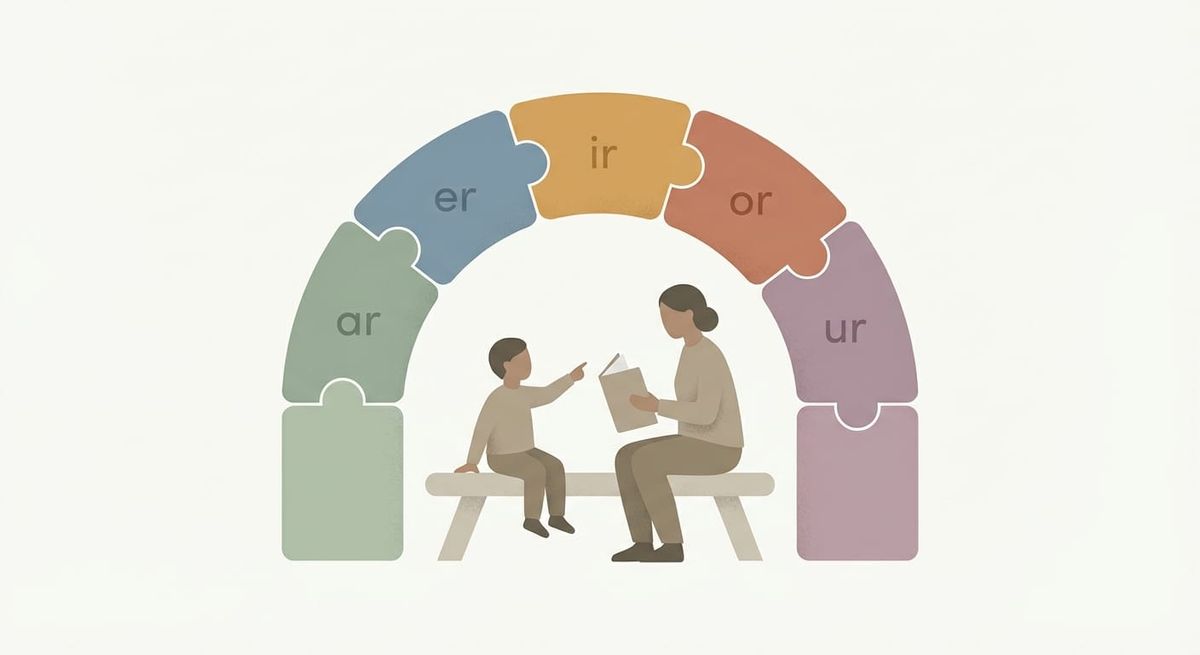
If your child reads car as cat, horn as home, or freezes on words like shirt and turn, you are not imagining a pattern. R-controlled vowels are a very common sticking point for kids with dyslexia, especially in 3rd and 4th grade when reading starts to move faster and texts get harder.
The frustrating part is that your child may seem to know the pattern one day and forget it the next. That usually does not mean they are not trying. It often means they need more direct practice, more repetition, and reading practice that lets them apply the pattern in real words instead of guessing from the first letter.
If you are wondering how to help a child with dyslexia read r controlled vowels, this post will walk you through what is going wrong and what to do at home.
Why r-controlled vowels cause so much trouble
R-controlled vowels are tricky because the vowel sound changes when it is followed by r. Instead of reading the vowel in the usual way, your child has to learn a new sound pattern.
Common examples include:
- ar in car, park, sharp
- or in horn, storm, fork
- er in her, fern, sister
- ir in bird, shirt, third
- ur in turn, hurt, curl
For many struggling readers, these patterns blur together. A child may know that r changes the vowel, but still not be able to quickly tell whether a word says ar, or, or er/ir/ur. That is when guessing starts.
A helpful takeaway: if your child mixes these patterns up, treat that as a skill gap, not carelessness.
Why does my child keep guessing instead of reading the whole word?
Guessing usually happens when a child is trying to compensate for weak automatic pattern recognition. They may look at the first sound, notice the r, and then fill in the rest from memory or context.
So bird becomes برد? No, that would be incorrect. More likely:
- bird becomes brand or bed
- fork becomes from
- turn becomes truck
They are not being lazy. They are often moving too fast for what their decoding skills can actually handle.
One simple shift helps a lot: have your child stop and read the vowel team with the r together, not one letter at a time.
For example:
- in shark, read sh + ar + k
- in fork, read f + or + k
- in turn, read t + ur + n
That small change teaches them to notice the pattern inside the word instead of jumping to a guess.
Teach one pattern at a time, not all five at once
A common mistake is reviewing ar, or, er, ir, ur all together before a child is ready. That can overload working memory and make the patterns harder to store.
Instead, pick one pattern and stay with it for several days.
A simple sequence might look like this:
- Start with ar words only
- Read a short word list
- Practice reading and spelling the same pattern
- Read a short decodable passage using mostly ar words
- Review again the next day
Then move to or. Save er, ir, ur for later, since those often sound alike and need extra review.
Try using word lists like these:
ar
- car
- star
- park
- hard
- sharp
or
- for
- fork
- storm
- horn
- short
ir
- bird
- shirt
- third
- chirp
ur
- turn
- hurt
- curl
- burst
er
- her
- fern
- germ
- term
Practical takeaway: keep the practice narrow enough that your child can actually succeed.
What does good home practice look like?
The goal is not to memorize a list for one day. The goal is to help your child recognize the pattern again and again in reading.
A short practice routine works better than a long one. Ten to fifteen minutes is enough.
Here is a simple home plan:
1. Read 5 to 8 words with the same pattern
Have your child read them slowly. If they guess, cover the word and uncover one chunk at a time.
2. Sort words by pattern
Write a few words on index cards and sort them under ar, or, ir, ur, or er. This helps your child notice what is the same and what is different.
3. Spell 3 of the words out loud or on paper
Say the word, tap the sounds if that helps, and write the pattern deliberately. Reading and spelling together usually sticks better than reading alone.
4. Read a decodable sentence or short passage
This is where retention starts to build. Your child needs connected text, not just isolated words.
For example:
- The bird sat on the branch.
- Mark drove the cart to the farm.
- The storm hurt the corn crop.
Practical takeaway: repeat the same pattern across words, spelling, and short text over a few days.
A real example of what improvement can look like
A 4th grader might read the word shirt correctly during a lesson, then call it short the next day in a story. That can make a parent feel like nothing is sticking.
But often the issue is not total forgetting. It is that the child has not had enough repeated practice to recognize the pattern automatically in new text.
For example, a child who keeps mixing up ir and or may start with just five ir words: bird, girl, shirt, third, chirp. For three or four days, they read the same list, spell a few words, and then read a short passage using those words.
At first, they stop on every word. By the end of the week, they may still read slowly, but they stop guessing and start noticing ir on sight. That is real progress. Accuracy comes before speed.
Simple things to try at home this week
If you want a place to start, keep it simple.
- Choose one r-controlled vowel pattern and work on it for several days before switching.
- Use short, repeatable word lists instead of random worksheets.
- Have your child read decodable text with that exact pattern, not books that force them to guess from context.
- Correct gently but clearly by pointing to the chunk: “Try the middle. What does ur say?”
These small changes can make practice feel less frustrating for both of you.
Final thoughts
If your child keeps guessing words with er, ir, ur, ar, or or, it does not mean they are not capable. It usually means they need more explicit practice with fewer patterns at a time and more chances to read those patterns in connected text.
When you slow it down, focus on one pattern, and build in repetition, r-controlled vowels usually become much more manageable.
If you want extra support at home, ReadGenie gives kids structured phonics practice with repetition and decodable reading based on Orton-Gillingham and Science of Reading principles. It can be a helpful way to reinforce the exact skills that tend to break down, including r-controlled vowels. ReadGenie is available on iOS through the Apple App Store, and on Android and Chromebooks through Google Play.