How to Help a Dyslexic Child Read Word Problems
If your child understands math but shuts down when the problem is written in sentences, the issue may be reading load, not math ability. Here is how to help.

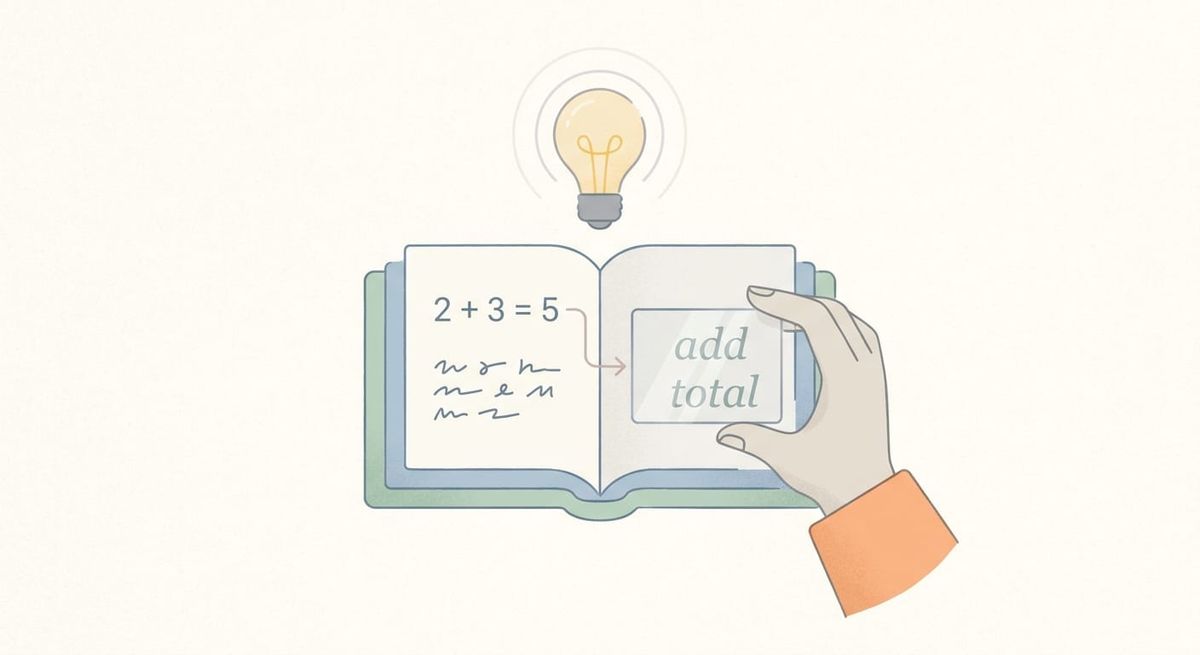
If your child knows how to add, subtract, multiply, or divide but falls apart the second a word problem shows up, you are not imagining it. For many children with dyslexia, word problems are hard because they mix two jobs at once: reading and math.
A child may understand the math concept perfectly and still miss the question, skip an important detail, or guess because the reading feels too heavy. The good news is that you can help without turning homework into a battle.
Why are word problems so hard for dyslexic kids?
Word problems ask a child to do several things in a row. They have to read the sentences accurately, hold the information in memory, figure out what matters, and then choose the math. That is a lot.
A dyslexic child may get stuck on small function words, lose track of numbers in the middle of a sentence, or forget the question before they reach the end. Sometimes parents think their child is weak in math when the real issue is language processing.
This is especially common when a problem uses extra wording like how many are left, how much more, or altogether now. If those phrases are not automatic, the whole problem can feel confusing.
Start by separating the reading from the math
One of the most helpful things you can do is figure out which part is actually breaking down.
Try reading the word problem out loud to your child without changing the wording. If your child can solve it once the text is read aloud, that tells you something important. The math may be there, but the reading load is blocking access.
You can also cover everything except one sentence at a time. This helps children who get overwhelmed by a full page of text. After each sentence, pause and ask, "What did we just learn?"
Keep the goal simple:
- read one chunk
- say the important fact
- underline the numbers
- restate the question in plain language
That short routine helps many children stay organized.
What should your child underline in a word problem?
A lot of kids are told to underline everything important, but that can quickly turn into a page full of marks. Instead, teach your child to look for just three things:
- The numbers
- The action clue like left, shared, each, or total
- The actual question
You can model this with very short problems first.
For example:
Lena had 12 stickers. She gave 5 to her friend. How many stickers does she have left?
A child might underline 12, 5, and how many left. That is enough. They do not need to decode every word perfectly before they begin to make sense of the problem.
Over time, this teaches them to find the structure instead of staring at a wall of text.
Teach the language patterns that show up again and again
Some children are not confused by the math. They are confused by the wording. Word problems often reuse the same phrases, and those phrases can be taught directly.
Make a small list of common problem phrases your child sees at school. For example:
- in all
- left
- how many more
- each
- shared equally
- altogether
- difference between
Pick one or two at a time and practice them outside homework. You can say, "When we see in all, that usually means we are putting amounts together." Keep it concrete and brief.
This matters because many dyslexic children need repeated exposure to language patterns before they become automatic.
A real-world example
Ethan, a fifth grader, could solve multiplication facts quickly when they were written as number problems. But when homework said, There are 6 bags with 4 marbles in each bag. How many marbles are there in all? he froze.
His mom noticed that he kept rereading the sentence and then guessing. So they changed the routine. First, she had him circle 6 and 4. Then he underlined each and in all. Next, he said the problem back in his own words: "There are 6 groups of 4. I need the total."
Once the language was clearer, he solved it easily.
What changed was not his math skill. It was the support around reading the problem.
Practical things to try at home
Here are a few simple ways to help a dyslexic child read word problems with less frustration:
1. Read the problem aloud once
If decoding is draining your child’s energy, read it aloud first and let them focus on understanding. This can show whether the main obstacle is reading or math.
2. Use a highlighter routine
Have your child mark numbers in one color and question words in another. Keeping the job visual can make the problem feel smaller.
3. Rewrite the question in simpler words
After reading, ask your child to say what the problem is asking in plain language. For example, "So I need to find how many are left." That step often clears up confusion.
4. Practice with short problems first
Do not start with long multi-step problems if your child is already tired. Use one- or two-sentence problems and build from there.
If your child panics, slow the routine down
Many children with dyslexia have had enough hard school moments that they tense up as soon as they see a word problem. If that sounds familiar, go slower than you think you need to.
You do not have to finish every problem on the page. It is often better to do two problems with calm support than ten problems through tears.
Keep your language steady and simple:
- "Let’s read one line."
- "Tell me what this part says."
- "What is the question asking?"
- "Do we know enough to start?"
That kind of structure helps your child feel less lost.
You might also find this helpful: How to Help a Dyslexic Child Read Directions
If your child gets overwhelmed by written instructions in general, this post can help you spot the same breakdown in a different setting and support it more clearly.
Final thoughts
Word problems can make a capable child look like they do not understand math, when really they are getting stuck on the reading. Once you reduce the language load and teach your child how to pull out the key parts, many problems become much more manageable.
Progress may look small at first, but it adds up. A calmer routine, clearer wording, and a little repetition can make word problems feel less intimidating.
If you want extra reading practice that is structured, supportive, and built for struggling readers, ReadGenie can help. The app uses systematic phonics, repetition, and decodable reading practice to build stronger skills over time. You can check it out here: App Store and Google Play.



