How to Help With Guessing in Orton-Gillingham
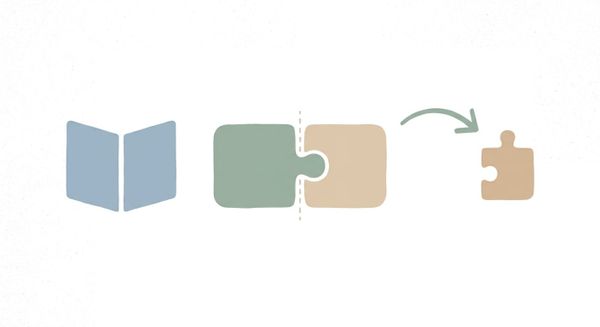
If your child keeps guessing at words during reading practice, it can be hard to know whether to stop them every time or let it go. This guide shows parents how to handle guessing in Orton-Gillingham in a calm, practical way.

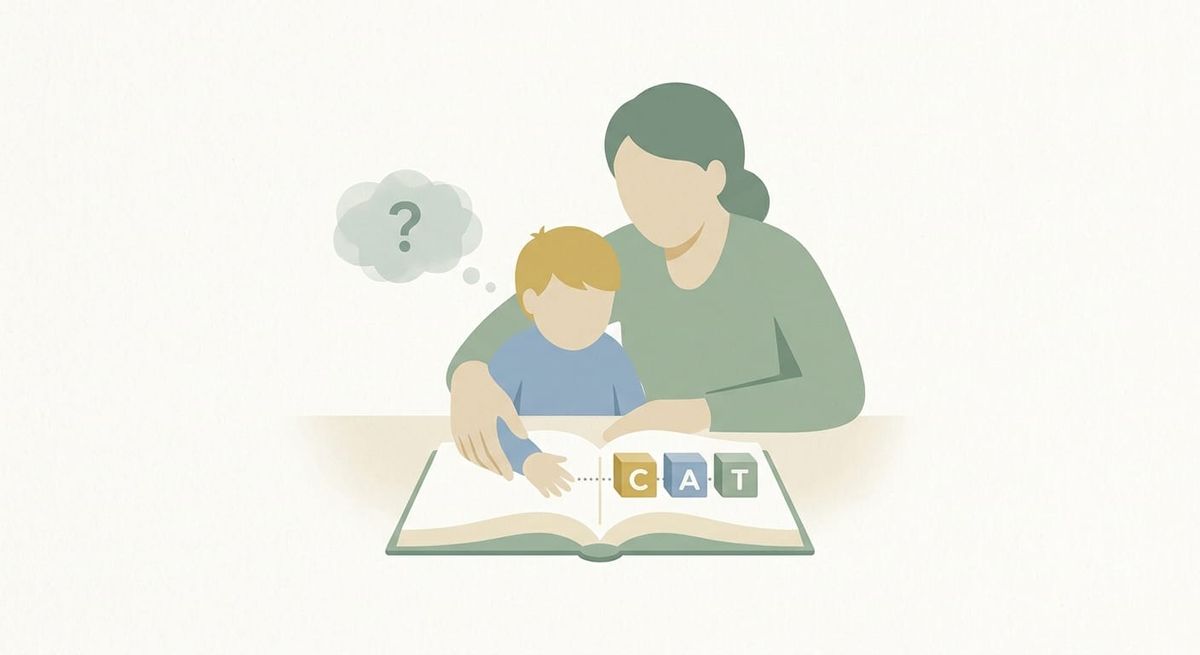
If your child looks at the first letter, glances at the picture, and blurts out a word that is completely wrong, you are not imagining the problem. Guessing can become a real habit for struggling readers, especially when they are used to reading by memory, context, or speed instead of decoding.
The good news is that guessing words in Orton-Gillingham can be addressed. You do not need to turn every mistake into a lecture. What helps most is teaching your child to slow down, look through the whole word, and use the sound patterns they already know.
Why guessing happens during reading practice
Guessing is usually not laziness. It is often a sign that a child is trying to get through the word as fast as possible without fully processing it.
A child might guess because:
- they notice only the first letter
- they are relying on pictures or sentence context
- they feel pressure to read quickly
- the word is a little harder than what they can decode automatically
- they have learned to hide uncertainty by saying something fast
In Orton-Gillingham-style practice, the goal is not to get through the page quickly. The goal is to read accurately enough that the brain starts to trust the print.
Should you stop guessing every time?
Most of the time, yes, but calmly.
If a child guesses and keeps going, the habit gets stronger. But if you interrupt in a sharp or frustrated way, practice can start to feel tense. A better approach is to pause the moment, bring attention back to the word, and guide your child toward decoding.
You can say things like:
- "Try that again and look at all the letters."
- "Start at the beginning and say each sound."
- "Does that guess match the middle of the word?"
- "Point under the word and read what you see."
The key is to redirect, not scold.
What to do instead of letting your child guess
When guessing words in Orton-Gillingham shows up often, your child usually needs more structure in the moment.
Try this simple sequence:
- Cover the picture if there is one. This reduces the urge to use visual clues instead of print.
- Point to each sound or chunk in the word.
- Have your child say the sounds slowly.
- Blend the word together.
- Reread the full sentence once the word is correct.
If the word is longer, guide your child to notice chunks they already know, such as a base word, suffix, or syllable pattern. This helps the word feel solvable instead of random.
What if your child guesses even on easy words?
This usually means the habit is bigger than the word itself.
Some children guess because they have learned that fast reading looks like successful reading. Others guess because slowing down makes them feel exposed. If that is happening, go back to very controlled practice for a few days.
That might look like:
- reading single words before reading sentences
- using decodable text instead of more open-ended books
- practicing sound-by-sound reading with shorter word lists
- asking for accuracy before asking for speed
This is not a step backward. It is often the fastest way to rebuild a better habit.
A real-world example
Let’s say your child sees the word stamp and says stop.
That guess makes sense in one way. The first sound is right, and the child is moving quickly. But they did not read through the whole word.
Instead of saying, "No, that is wrong," you could say, "Check the middle. Let’s read all the way through."
Then guide them through s-t-a-m-p and blend it together.
When they read stamp correctly, have them go back and reread the sentence. That last step matters because it helps the correct reading stick in context.
Simple ways to reduce guessing at home
Here are a few practical things parents can try:
Use your finger or a card under the word
This helps your child slow down and attend to print from left to right.
Praise accurate effort, not fast reading
Say, "I like how you looked at the whole word," instead of, "Good job, you read that fast."
Keep text decodable when possible
If the reading material is too unpredictable, guessing becomes more tempting.
Build in rereads
After correcting a guessed word, have your child reread the word or sentence correctly right away.
When guessing may be a sign to slow down instruction
If guessing happens constantly, even with support, your child may be working above their current decoding level. That does not mean they cannot learn it. It may just mean they need more review, more repetition, or a smaller step between skills.
In Orton-Gillingham, accuracy comes before independence. If your child keeps guessing, it is often a sign to tighten the structure, not push ahead faster.
You might also find this helpful: How to Correct Mistakes During Orton-Gillingham
Conclusion
Guessing can look like a small reading habit, but it often blocks real progress. The goal is not to make your child feel wrong. It is to help them trust the letters on the page and use a process that actually works.
With calm correction, decodable practice, and a steady routine, guessing words in Orton-Gillingham can improve over time.
If you want extra support at home, ReadGenie gives children structured, decodable reading practice built on Orton-Gillingham principles and the Science of Reading. You can explore it here: App Store or Google Play.