Can a School Psychologist Diagnose Dyslexia?
If the school mentions testing but no one will clearly say whether your child has dyslexia, it can feel confusing fast. This guide explains what a school psychologist can do, where school evaluations stop, and how to move forward.

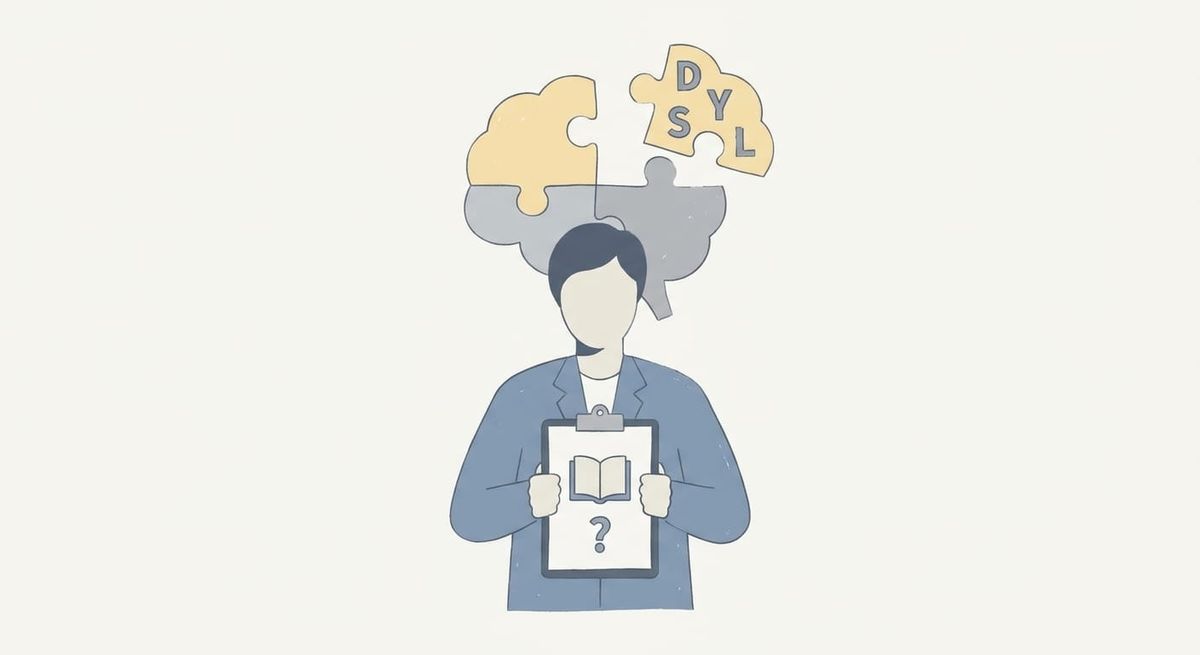
If your child is struggling to read and the school mentions testing, you may assume the answer is simple: the school psychologist will evaluate your child and tell you whether it is dyslexia. But many parents come away from that process more confused than before.
One person says the school can identify reading disabilities. Another says the school cannot diagnose dyslexia. Then a report uses terms like specific learning disability without clearly answering the question you actually asked.
If you have been wondering can a school psychologist diagnose dyslexia, this post will help you understand what that role usually includes, what school testing can tell you, and what to do if you still do not have clear answers.
What does a school psychologist actually do?
A school psychologist is usually part of the team that evaluates why a child is struggling in school. That may include looking at reading, writing, language, attention, memory, academic skills, and how your child is functioning in the classroom.
In a school setting, the goal is often to decide whether your child qualifies for services or accommodations. That is different from a full private clinical evaluation, which may focus more directly on diagnosis.
A school psychologist may:
- review your child’s school history
- gather teacher input
- give cognitive or academic tests
- look at patterns of reading strengths and weaknesses
- help determine whether your child qualifies for special education support
So yes, a school psychologist may play a major role in identifying dyslexia-related learning patterns. But whether they can formally diagnose dyslexia depends on the school system, state rules, and how the evaluation is framed.
Can a school psychologist diagnose dyslexia?
Sometimes, but not always.
This is where parents get tripped up. In many public schools, the evaluation process is built around educational eligibility, not medical diagnosis. That means the report may say your child has a specific learning disability in reading rather than using the word dyslexia, even if dyslexia is strongly suspected.
In some districts, school psychologists are comfortable using the word dyslexia in reports. In others, they avoid it and stick to broader special education language. That does not always mean they disagree that dyslexia is the issue. It may simply reflect school policy or the purpose of the evaluation.
A helpful way to think about it is this:
- School evaluation: asks whether your child has a learning disability that affects school performance and support eligibility
- Private diagnostic evaluation: often asks whether your child meets criteria for dyslexia and what type of intervention is needed
If your main question is whether your child qualifies for help at school, the school psychologist’s evaluation may be enough to get the process moving. If your main question is whether your child has a formal dyslexia diagnosis, you may still need a private evaluation.
Why would a school report avoid the word dyslexia?
This is frustrating, but it is common.
Schools often use broader disability categories because that is how special education eligibility is organized. A child may clearly struggle with phonological processing, decoding, spelling, and reading fluency, but the report may still describe the issue without naming dyslexia directly.
That can leave parents feeling like they got half an answer.
If this happens, look past the label and read the actual findings. Ask:
- Does the evaluation show weaknesses in decoding or word reading?
- Were phonological skills measured?
- Is reading fluency part of the concern?
- Does the report explain why reading is unusually hard for your child?
- Do the recommendations match a structured literacy approach?
Even when the word dyslexia is missing, the pattern of results may still point strongly in that direction.
What should parents ask after school testing?
If you just received a school report, do not be afraid to ask plain, direct questions.
You might say:
- Does this testing suggest dyslexia, even if the report does not use that word?
- What reading skills were specifically measured?
- What kind of intervention does my child need now?
- Is this enough information, or should we seek a private dyslexia evaluation too?
These questions often lead to clearer answers than the written report alone.
It also helps to remember that the label matters less than the support. If your child is struggling with decoding, spelling, fluency, and accurate word reading, they need structured, explicit reading intervention whether the report says dyslexia or specific learning disability in reading.
A real-world example
Maria’s son, Evan, was in 4th grade and falling behind in reading even though he was bright and worked hard. The school psychologist completed testing and the report said he qualified under specific learning disability. But nowhere did it clearly say dyslexia.
Maria left the meeting unsure what that meant. Did he have dyslexia or not?
When she looked more closely, the report showed weak phonological processing, poor decoding, slow reading fluency, and spelling difficulty. Those findings gave her a much clearer picture than the label alone. She used the school evaluation to start services, then chose a private evaluation later because she wanted a fuller explanation and clearer long-term recommendations.
That combination helped her move from confusion to action.
What can you do if you still do not have a clear answer?
If the school evaluation feels vague, here are a few practical next steps:
- Request a meeting to review the report in plain language. Ask someone to explain the reading findings skill by skill.
- Ask for the intervention plan in writing. You want to know what support your child will actually receive, how often, and with what program or method.
- Keep a copy of all testing and progress data. This makes it easier if you later pursue outside evaluation or advocacy.
- Consider a private dyslexia evaluation if needed. This can help if you want a more direct diagnostic answer or a deeper picture of your child’s reading profile.
So, is school testing still worth doing?
Yes, absolutely.
Even if a school psychologist does not give a formal dyslexia diagnosis, school testing can still be an important first step. It can document your child’s struggles, open the door to services, and show which reading skills need support most.
For many families, the best path is not choosing school or private testing right away. It is starting with school data, then deciding whether more evaluation is needed.
You might also find this helpful
You might also find this helpful: Who Diagnoses Dyslexia in a Child? A Clear Guide for Parents
Conclusion
If you have been asking can a school psychologist diagnose dyslexia, the most honest answer is: sometimes, but school evaluations are often focused more on eligibility and support than on formal diagnosis.
The good news is that you do not need to wait for perfect wording to start getting help. What matters most is understanding your child’s reading profile and making sure the right support follows.
If you are working on reading skills at home too, ReadGenie offers structured, supportive practice built around phonics, repetition, and decodable reading. You can explore it here: App Store or Google Play.



