How to Help a 4th Grader With Dyslexia Read Chunked Phrases Instead of One Word at a Time
If your child sounds out every word but reading still feels slow and robotic, phrase reading may be the missing piece. Here is how to help at home.

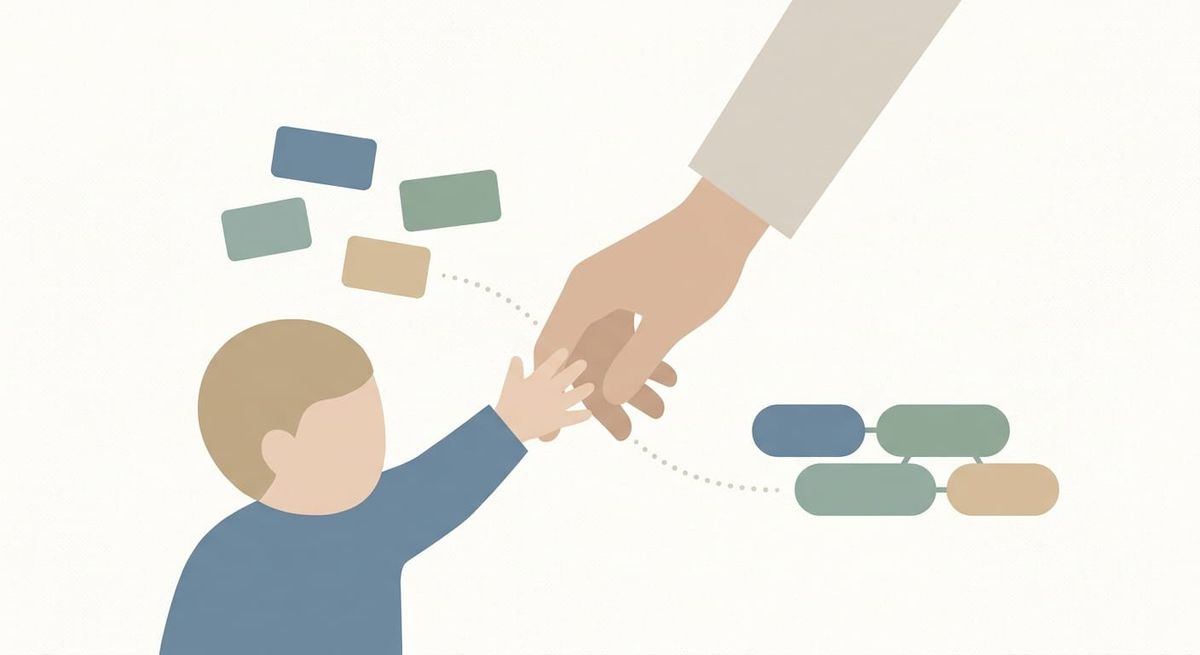
If your child reads like this, you probably know the feeling:
The dog… ran… to… the… yard.
They are getting many of the words right, but it still sounds slow, flat, and exhausting. You may wonder why reading is still so hard when they can technically decode the words.
If your 4th grader reads one word at a time, the issue is often not effort. It is usually that their brain is using so much energy to decode each word that there is not much left for smooth phrasing. The good news is that phrase reading can be taught. With a few simple routines, you can help your child start grouping words together in a way that makes reading feel more natural.
Why does my child read one word at a time?
Word-by-word reading is common in older children with dyslexia. Even when they know many phonics patterns, they may still read in a very cautious way. That happens for a few reasons.
First, they may still be working so hard to figure out each word that they cannot easily look ahead in the sentence.
Second, they may not yet recognize common word groupings like in the yard, on the table, or after school as chunks that belong together.
Third, they may have had so many experiences with getting words wrong that they slow down too much to avoid mistakes.
This is why telling a child to “read more smoothly” usually does not help. Smooth reading is not just about trying harder. It depends on practice that connects decoding, phrasing, and oral language.
What does phrase reading actually look like?
Phrase reading means your child stops treating every word like it stands alone.
Instead of reading:
The dog / ran / to / the / yard
They begin to read:
The dog / ran to the yard
Later, it may sound even smoother:
The dog ran to the yard
The goal is not to rush. The goal is to help your child notice which words naturally go together.
A good starting point is short, simple phrases made of words your child can already decode. If the text is too hard, they will go right back to survival mode and read one word at a time.
Start with easy sentences your child can already read
Parents often try to build fluency using new books or harder passages. That can backfire.
If your child is practicing phrasing, the text should feel controlled and manageable. You want them focusing on grouping words, not fighting through every line.
Try sentences like these:
- The cat is on the bed.
- We went to the park.
- She had a red cup.
- The kids ran after lunch.
Read the sentence aloud first with natural phrasing. Then have your child echo it back. You can lightly mark phrase breaks with a pencil if needed:
- The cat / is on the bed.
- We went / to the park.
- She had / a red cup.
Keep it simple. Too many marks can make the page feel harder.
A real-world example
One parent might say, “My son can read the whole page, but it sounds like he is climbing a hill one word at a time.” That is a very common stage.
Imagine a 4th grader reading the sentence We looked for the lost puppy in the rain. He decodes every word correctly, but reads it like this:
We… looked… for… the… lost… puppy… in… the… rain.
After a few days of echo reading short sentences and practicing phrase chunks, he starts reading it more like this:
We looked for / the lost puppy / in the rain.
He is not suddenly a fluent reader overnight. But the sentence begins to sound connected. That shift matters because it supports both comprehension and confidence.
How can I practice phrase reading at home?
You do not need long lessons. Five to ten minutes is enough.
1. Echo read one sentence at a time
Read a short sentence aloud with natural expression. Then ask your child to repeat it the same way. This gives them a model without putting all the pressure on them to figure out pacing alone.
2. Scoop short phrases lightly
Use a finger or pencil to show small groups of words that belong together. Keep the chunks short. For example:
- in the car
- after dinner
- on the floor
- the red hat
This helps your child see that reading is not always one word, stop, one word, stop.
3. Repeat the same sentence two or three times
The first read may sound choppy. The second often gets easier. By the third read, your child may start to sound more natural. Repeated reading works best when the text is short and not frustrating.
4. Keep accuracy first
If your child starts guessing or skipping words, the text is probably too hard or the pace is too fast. Slow back down. Smooth reading grows from accurate reading, not from pressure.
What should you avoid?
A few common habits can make phrase reading harder.
Do not tell your child to “read faster.” That often makes guessing worse.
Do not use passages packed with unfamiliar words just because they are in 4th grade.
Do not correct every part of the sentence in the moment. If the goal is phrase reading, keep the practice focused and calm.
Most of all, do not assume word-by-word reading means your child is lazy or not paying attention. Many kids with dyslexia are working incredibly hard just to get through the line.
Small signs that phrase reading is improving
Progress can be easy to miss if you are only looking for perfect fluency.
Look for signs like:
- fewer long pauses between words
- better expression on familiar sentences
- improved understanding of what was read
- less visible effort during short passages
Those are meaningful wins. They show your child is starting to free up mental energy for smoother reading.
Practical things to try this week
- Pick 4 to 6 short sentences your child can already decode.
- Read each one aloud first, then have your child echo it.
- Lightly mark 1 or 2 phrase breaks in longer sentences.
- Reread the same sentences across a few days instead of switching texts too quickly.
You might also find this helpful: Why Your 4th or 5th Grader Still Can’t Read Decodable Text Fluently
If your 4th grader reads one word at a time, that does not mean they are stuck there forever. Many older struggling readers need direct practice hearing and reading phrases, not just sounding out single words. Small, steady practice can make reading feel smoother and less tiring over time.
If you want extra support at home, ReadGenie gives kids structured phonics practice, repetition, and decodable reading designed to build real reading skill step by step. You can check it out here: App Store or Google Play.



