How to Know If You Should Go Back in Orton-Gillingham
If your child was doing fine and then suddenly starts guessing, forgetting, or shutting down, you may be wondering whether to keep going or go back. This guide helps parents tell when an earlier reading skill needs more work and how to revisit it without turning practice into a setback.

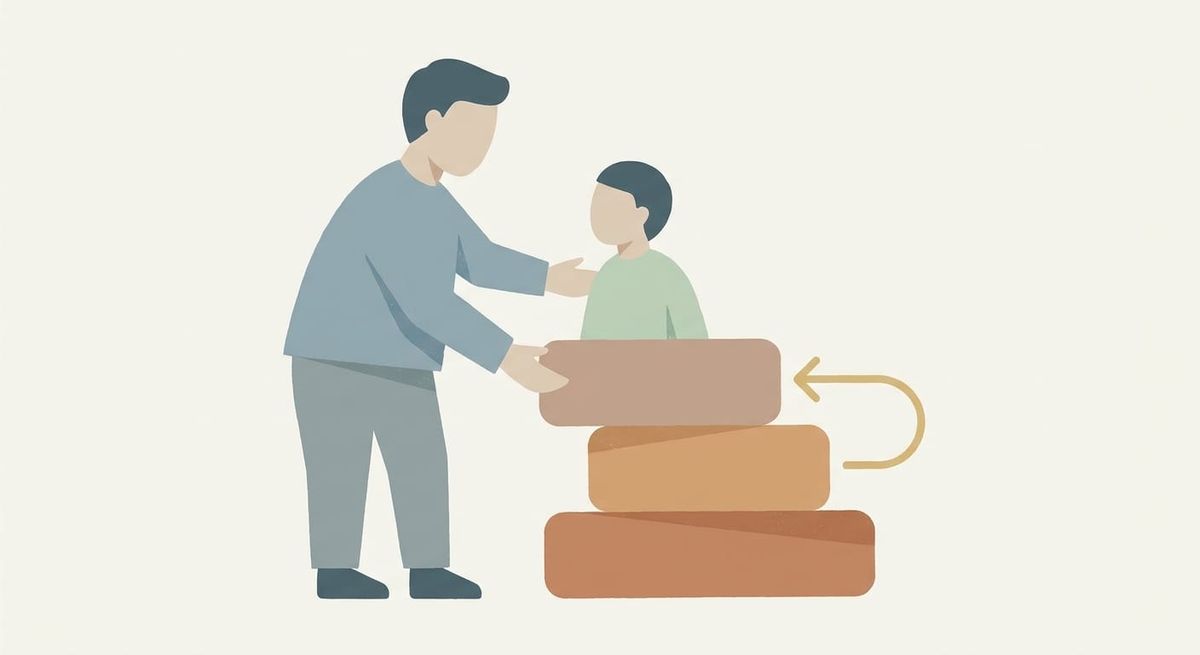
If your child seemed to get a skill one week and then falls apart the next, it is hard to know what to do. You may wonder if they just need more practice, if the new lesson was too fast, or if you should go back in Orton-Gillingham.
That question comes up for a lot of parents, especially when reading practice starts to feel tense. The good news is that going back is not a sign that your child is failing. In many cases, it is exactly what helps things click.
This guide will help you figure out when to go back in Orton-Gillingham, what signs to watch for, and how to reteach an earlier skill in a calm, useful way.
Going back is often part of real progress
Parents sometimes worry that reviewing an older skill means something is wrong. Usually, it means your child is showing you where the foundation still feels shaky.
In Orton-Gillingham, skills build on each other. If a child is not solid with short vowels, blends, or syllable patterns, a newer concept can start to wobble fast. What looks like resistance or careless mistakes is often overload.
Going back does not mean starting over from scratch. It means finding the point where things stopped feeling secure and rebuilding from there.
A simple way to think about it is this: if the new skill keeps breaking down, the problem may be underneath it, not inside it.
What signs mean you should go back?
A child usually does not say, "I have a weak foundation in this skill." They show it in other ways.
Here are a few signs that it may be time to go back in Orton-Gillingham:
- your child keeps guessing instead of sounding out
- they can do the skill one day but not the next
- they mix up patterns you thought they knew
- they read accurately in isolation but not in real words or passages
- they get unusually frustrated when a new pattern is introduced
- they need heavy prompting on steps they used to do more independently
One or two mistakes do not always mean you need to back up. But if the same kind of breakdown keeps happening across several practice sessions, that is worth paying attention to.
Should you repeat the current lesson or go back further?
This is where many parents get stuck. If a lesson did not go well, it is tempting to just repeat it again and again. Sometimes that helps. Sometimes it does not.
Repeat the current lesson if your child mostly understands the skill but needs more repetition, slower pacing, or shorter practice.
Go back further if the current lesson depends on an earlier skill your child cannot use reliably.
For example:
- If vowel teams are not sticking, your child may need stronger short vowel and CVCe reading first.
- If syllable division keeps falling apart, they may not yet feel solid with closed and open syllables.
- If dictation feels overwhelming, they may need easier sound-to-symbol work before spelling whole words.
The key question is not, "Did this lesson go badly?" The better question is, "What skill does this lesson depend on, and is that skill really solid yet?"
A real-world example
Let’s say your child is working on vowel teams like ai and oa. At first, they seem to understand. But after a few days, they start reading boat as bot, train as trin, and guessing other long vowel words without looking closely.
It might seem like they need more vowel team drills. But when you slow down, you notice something else. They still hesitate with magic e words like made, home, and cube. They also confuse short and long vowel sounds when reading unfamiliar words.
In that case, the issue may not be vowel teams alone. The earlier long vowel pattern is still shaky. Going back to CVCe words for a few sessions can make the newer vowel team work much easier.
That kind of step back is not lost time. It often saves time.
How to go back without making it feel discouraging
If your child already feels sensitive about reading, you do not want review to sound like, "We have to do this again because you did not get it."
Instead, keep the tone neutral and matter-of-fact. You can say things like:
- "Let’s make this part stronger first."
- "I want this to feel easier for you."
- "We are going to practice the piece that helps the new words make sense."
Then simplify the work.
Go back to a smaller set of words. Use fewer items at one time. Read words, then phrases, then one short decodable passage. Keep success high enough that your child can feel momentum again.
Short review is usually more helpful than long review. Ten calm minutes with the right target is often better than thirty frustrating minutes on a skill that is still too hard.
Practical things to try this week
If you are unsure when to go back in Orton-Gillingham, try this:
- Track the pattern of mistakes
Write down the exact kinds of errors you are seeing for three practice sessions. Look for repetition. If the same weakness keeps showing up, that is a clue. - Ask what the new skill depends on
Before reteaching, name the earlier skill underneath it. That is often where the real gap is. - Review one step down, not five
Do not jump all the way back unless you truly need to. Go back just enough to restore confidence and accuracy. - Keep review short and winnable
End while your child still feels successful. That makes it easier to come back the next day.
You do not have to force forward motion
A lot of parents feel pressure to keep moving because going back looks like losing ground. But in structured reading practice, forcing the next step too early usually creates more confusion.
Sometimes the fastest way forward is to pause, strengthen the weak spot, and then try again.
You might also find this helpful: What to Do Before Vowel Teams in Orton-Gillingham
If your child needs more structured practice without the overwhelm, ReadGenie can help. The app uses Orton-Gillingham principles, systematic phonics, and decodable reading practice to support children with dyslexia in short, manageable sessions. You can explore it here: App Store and Google Play.
When you go back with purpose, you are not lowering the bar. You are giving your child the foundation they need to meet it.



