How to Fix Letter Reversals in Orton-Gillingham
If your child keeps mixing up letters like b and d during reading practice, it can be hard to tell whether to worry or what to do next. This guide shows parents how to handle letter reversals in Orton-Gillingham with clear, practical steps that support reading without adding pressure.

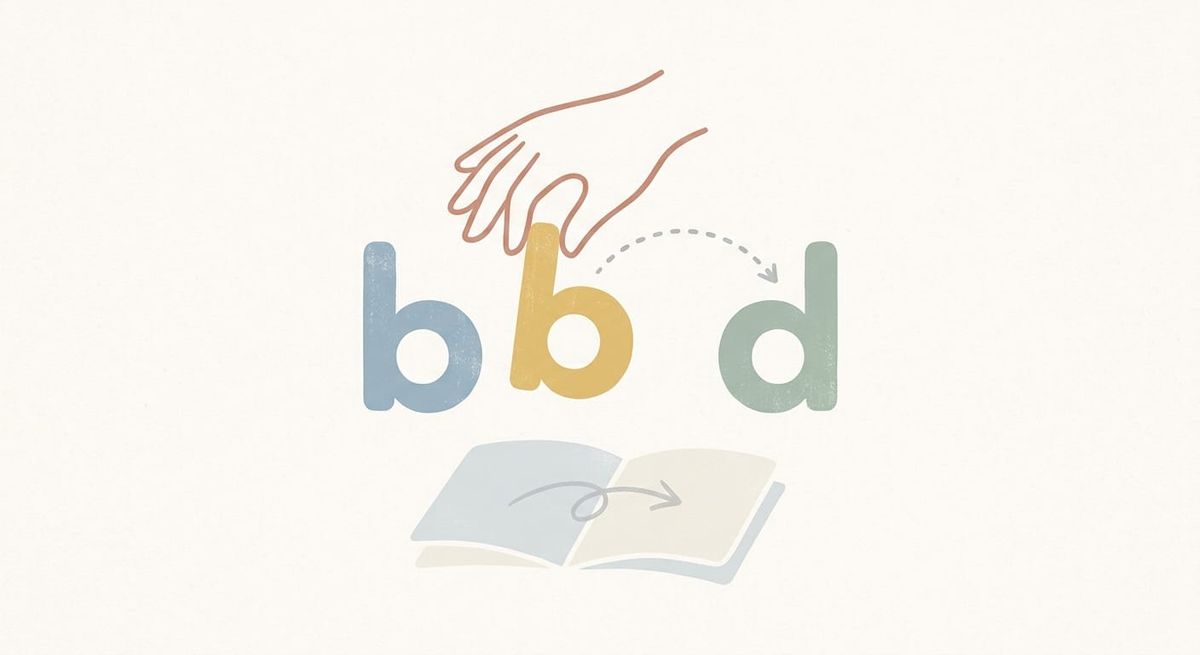
If your child keeps flipping letters like b and d, you are not the only parent wondering what to do. Reversals can make reading and spelling practice feel frustrating fast, especially when your child seems to know the sound one minute and mixes it up the next.
The good news is that letter reversals in Orton-Gillingham can be worked on in a calm, structured way. This does not mean your child is lazy or not paying attention. It usually means the pattern is not secure yet and needs more direct practice.
In this post, you will learn how to respond to reversals during practice, what helps most, and how to make the skill stick over time.
Are letter reversals normal during reading practice?
Sometimes, yes. Many struggling readers mix up letters that look similar, especially when they are still trying to connect sounds, symbols, and directionality all at once. The goal is not to ignore it, but to teach it directly instead of hoping it goes away on its own.
In Orton-Gillingham style practice, that usually means slowing down and making the difference between letters very clear. A child who confuses b and d may need help noticing how the shape, starting point, and mouth cue connect to the sound.
What helps most is consistent correction with the same language each time. If the response changes every day, the pattern stays fuzzy.
What should you do when your child reverses a letter?
Keep the correction short and neutral. Try not to turn it into a lecture or a big moment.
A simple correction routine can sound like this:
- Point to the letter.
- Say the correct sound.
- Have your child trace and say it.
- Compare it with the confusing letter.
- Read the word again.
For example, if your child reads bog as dog, you might say, "This is b. /b/. Trace it and say /b/. Now read the word again."
That short reset works better than saying, "No, look more carefully," which does not tell your child what to notice.
Teach the contrast, not just the letter
One of the most helpful ways to work on letter reversals in Orton-Gillingham is to teach the two confusing letters side by side. If your child mixes up b and d, practice them as a pair.
You can:
- trace each letter while saying its sound
- build each letter with tiles or a finger on the table
- sort words by beginning sound, like bat, bell, dig, dot
- practice quick visual discrimination by asking, "Which one says /b/?"
This helps your child focus on what makes the letters different instead of seeing them as interchangeable.
Keep the set small. It is better to practice b and d for three calm minutes than to do a long worksheet that leads to guessing.
What does this look like in real life?
Let’s say Maya is in fourth grade and still reads dab for bad once in a while. Her mom notices it happens more when Maya is tired or trying to go too fast.
Instead of correcting every mistake with a long explanation, her mom starts using one routine. She points to the letter, has Maya trace b while saying /b/, then rereads the word. They also spend two minutes at the start of practice sorting b and d words into two piles.
After a couple of weeks, Maya still makes occasional reversals, but she catches more of them on her own. That is a real sign of progress. The goal is not perfection overnight. The goal is stronger, more automatic recognition.
Simple things parents can try at home
If reversals keep showing up, try these practical steps:
1. Use the same cue every time
Pick one verbal cue and stick with it. Repetition helps the brain hold onto the pattern.
2. Practice when your child is fresh
Reversals often get worse when kids are tired, rushed, or overloaded.
3. Keep practice short
A few focused minutes usually works better than pushing through frustration.
4. Go back to reading and spelling in words
Do not stop at isolated letter practice. Once the letter is clearer, use it right away in simple words.
When should you slow down?
If your child is reversing the same letters often, guessing through words, or getting upset, it may be a sign to pause new material and strengthen this skill first. That is not going backward. It is making the foundation more solid.
You might also find this helpful: How to Know If Orton-Gillingham Is Working
Conclusion
Letter reversals can feel alarming, but they do not mean your child cannot learn to read well. With clear correction, side-by-side contrast practice, and short structured review, many children become much more accurate over time.
If you want extra support, ReadGenie gives children structured, decodable reading practice based on Orton-Gillingham principles, with repetition built in. You can explore it here: App Store or Google Play.



