Judy Moody Reading Level: Lexile, AR and Guided Reading Guide
Judy Moody Was in a Mood is Lexile 530L, AR level 3.5 and Guided Reading level M, so most kids read it alone in 2nd or 3rd grade. Here's how it works for struggling readers and kids with dyslexia, and which words to practice first.

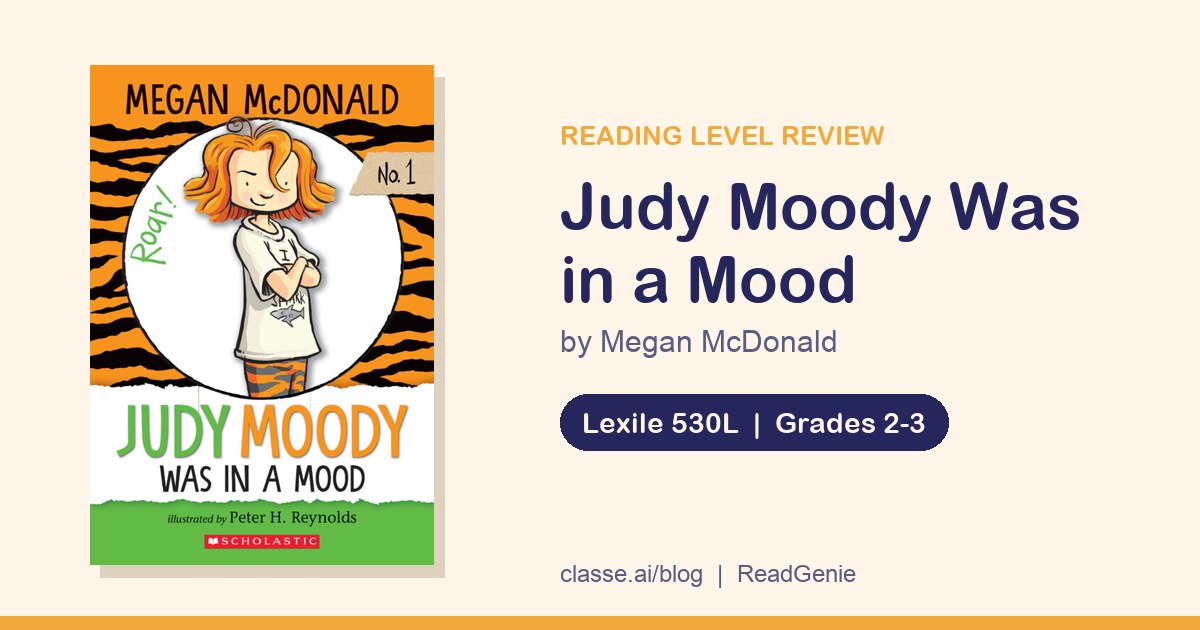
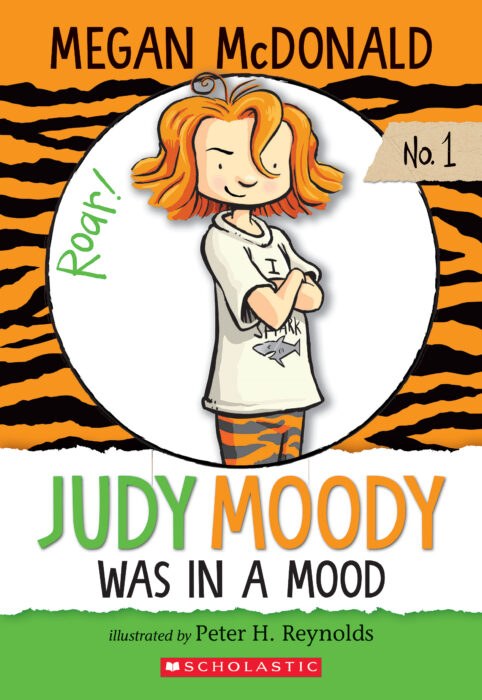
Judy Moody #1, Judy Moody Was in a Mood, has a 530L Lexile measure, an AR (ATOS) book level of 3.5 and a Guided Reading level of M. Most kids can read it on their own somewhere in 2nd or 3rd grade. For a child who finds reading hard, it's a good first longer chapter book. The sentences are short, there are drawings every few pages, and the whole book is only about 11,000 words, so a 3rd or 4th grader reading a little below grade can finish it and feel like they read a real chapter book.
The story starts on the first day of third grade. Judy doesn't want summer to end, she can't find a T-shirt with words on it, and she gets the front-row desk right next to the boy who eats paste. Then her new teacher, Mr. Todd, asks everyone to make a Me collage about what makes them who they are, and Judy's mood starts to shift. Kids like her because she has big feelings and isn't shy about them, and because her little brother Stink is exactly as annoying as a real little brother.
Judy Moody Was in a Mood reading level at a glance
| Lexile measure | 530L (Scholastic Teacher Store) |
|---|---|
| ATOS / AR book level | 3.5 (TeachingBooks) |
| AR points | 1 (TeachingBooks) |
| Guided Reading (Fountas & Pinnell) | M (Scholastic Teacher Store) |
| DRA level | 20-24 (Scholastic Teacher Store) |
| Flesch Reading Ease (0-100) | 91.7 ReadGenie estimate |
| Flesch-Kincaid grade | 2.3 ReadGenie estimate |
| Interest level | Ages 6-9 (Penguin Random House) |
| Approximate grade band | Grades 2-3 (ages 7-9) ReadGenie |
| Length | 160 pages, ~11,049 words |
| Format | Chapter book |
| Good for struggling readers? | ★★★★★ 4/5 |
| Dyslexia-friendly rating | ★★★★★ 4/5 |
We couldn't find a published grade level equivalent for this book.
Scores checked 2026-11-04. Different leveling systems don't always agree, so we show each published value with its source and mark our own estimates. Links to every source are under How we rate books.
Is your child working hard and still getting stuck on words?
ReadGenie helps struggling readers improve their reading, spelling and handwriting with Orton-Gillingham practice at home. Your child reads out loud, the app listens, and it helps with the exact sound they missed. Join today and we'll mail your child Judy Moody Was in a Mood for free.
Try ReadGenie and get your free bookStarts with a free 7-day trial. Book mailed after your first paid month. US only, one per family.
What grade level is Judy Moody?
Book 1 sits at about a 2nd to 3rd grade reading level. A child who reads comfortably in the second half of 2nd grade can usually read it alone, and most 3rd graders find it an easy, fun read.
An AR level of 3.5 means the text is about as hard as what a typical student reads in the middle of 3rd grade. It's only worth 1 AR point, because the book is short for its level. Guided Reading level M is a letter many schools expect around the end of 2nd grade. If your child's teacher says they're reading at level K or L, Judy Moody will be a stretch on their own but a good book to share. DRA 20 to 24 points to the same place.
The Lexile measure of 530L is a little higher than you might expect from the look of the pages. That's because Lexile weighs sentence length and how common the words are, and Judy's world has plenty of school words like collage, invitation and spelling. The sentences themselves are very short. In chapter 1 they average about 7 words each.
The good news for parents is that the series stays at about the same level. The later books we checked have slightly lower Lexile measures, still in the low 500s, with AR levels between 3.2 and 3.6. So a child who can read book 1 can read most of the others, in any order.
Penguin Random House suggests the book for ages 6 to 9 and grades 1 to 4. In practice, 1st graders enjoy it as a read-aloud, 2nd and 3rd graders read it on their own, and 4th graders still like Judy because she's in third grade and doesn't feel little.
Is Judy Moody good for struggling readers?
For most kids, yes. We give it 4 out of 5 for struggling readers.
What makes it work is how much easier it reads than it looks. Most lines are short dialogue, and many sentences are only three or four words long. The pages are roomy, with about 11,000 words spread over 160 to 176 pages depending on the edition, and Peter H. Reynolds' sketchy drawings show up every few pages to give a tired reader a break. Some words are hand-lettered in a bigger, playful style, which kids tend to like.
It also looks like a book for older kids. That matters for a 3rd or 4th grader who is reading below grade and has been stuck with thin early readers. Carrying around a Judy Moody book feels like carrying the same thing everyone else is reading.
There are a few things to watch. Chapters are longer than in first chapter books. Chapter 1 runs about 1,800 words, which can take a slow reader 20 minutes or more. There are some playful made-up words and hyphenated words, like mad-face and troll-eyes, and some names that don't follow regular spelling. And the book is funny in a quiet, everyday way. A kid who only wants monsters and explosions may lose interest, and Dog Man or a Dragon Masters book might pull them along better.
Is Judy Moody good for kids with dyslexia?
Overall: ★★★★★ 4/5
| Factor | Score | Why |
|---|---|---|
| Sentence length | 4/5 | Chapter 1 averages about 7 words a sentence, with lots of short dialogue lines. |
| Vocabulary load | 4/5 | Mostly everyday words about school and family. A few longer ones like collage, invitation and practicing. |
| Decodability | 4/5 | Most words follow common patterns. Proper names and playful compounds like mad-face are the main exceptions. |
| Text density and layout | 4/5 | About 11,000 words over 160 to 176 pages, so pages are roomy, with a friendly typeface and short paragraphs. |
| Pictures that carry meaning | 3/5 | Peter H. Reynolds line drawings every few pages and some hand-lettered words, but the text carries the story. |
| Chapter length | 3/5 | Chapter 1 is about 1,800 words, around 20 to 25 minutes for a slow reader. Each chapter has natural breaks. |
| Engagement for reluctant readers | 4/5 | Funny, relatable school and sibling trouble. Quieter than an action series, so it pulls some kids in more than others. |
| Audiobook / read-along support | 4/5 | Candlewick on Brilliance Audio publishes an audiobook, and libraries carry it on CD and digital. |
We give it 4 out of 5 on our dyslexia-friendly checklist.
Sentence length is the biggest strength. Short sentences and lots of back-and-forth talk mean a dyslexic reader doesn't have to hold a long line in their head while they decode. Most of the words are everyday ones about school, family and pets, and most of them follow the phonics patterns kids learn in 1st and 2nd grade.
The pages help too. There's a lot of white space, the paragraphs are short, and the drawings break up the text often enough that a page rarely looks like a wall of words. The pictures don't tell the story the way they do in a graphic novel, though. A child still has to read the text to follow what's happening.
The harder parts for a dyslexic reader are chapter length and the names. Split chapters into two sittings, and go over the main names before you start. There's also an audiobook from Candlewick on Brilliance Audio that many libraries carry. Listening to a chapter and then reading the next few pages out loud is a good way to keep a child moving without wearing them out. There's no special dyslexia-friendly edition of this book.
Words and phonics patterns to practice first
Chapter 1 is full of patterns that kids practice in structured literacy programs, which makes it a nice book to read right after working on them.
Closed syllables with short vowels are everywhere. Words like desk, bed, bus, stuck, tricks and list are good warm-up words before the first chapter.
Digraphs show up in some of the most important words in the story. Practice shark, shirt, lunch, cheese, teeth and thumb, and point out that the b in thumb is silent.
Silent e words like paste, made, side, date, inside and cupcake are common. If your child is still mixing these up with short vowel words, sort a few pairs first.
Vowel teams come up in mood, school, teeth, toad, peeled and seat. Mood is the word your child will see most, so make sure it's automatic.
R-controlled vowels are a big one in chapter 1. Shark, third, first, card, birthday and party all appear early. A quick sort of ar, ir and ur words helps a lot here.
Endings -ed and -ing appear in printed, cracked, glared, passing, welcoming and practicing. Show your child how to cover the ending, read the base word, then add the ending back.
Some words are best taught as whole words before reading. These are Judy, Moody, Stink, Pearl, Rocky, Jessica, Tucson, Pocahontas, collage and invitation. Write them on a bookmark so your child can check it without stopping to ask.
If your child is stuck on patterns like these, short daily practice helps more than pushing through a hard book. ReadGenie gives kids Orton-Gillingham style practice on exactly these sounds, so books like Judy Moody start to feel easier.
How to read Judy Moody with your child
Before you start, read chapter 1 together. It introduces Judy, Stink, Rocky, Frank Pearl and Mr. Todd, and once your child knows who everyone is, the rest of the book gets easier. You read a page, they read a page is a fine way to do it.
Chapters are about 1,800 words, so split each one into two sittings. Stop at a scene break, not just at the bottom of a page, so your child ends on something they understood.
As you read, talk about Judy's moods. Ask what mood she's in and why, and what mood your child is in today. It's a simple way to check understanding without a quiz, and kids usually have strong opinions about Judy.
After you finish, make a Me collage together, just like Judy's class. It's a fun reward, and choosing pictures for it is a natural way to retell the story.
If your child loves it, keep going. The series stays at about the same level for many books, so the next one won't suddenly feel harder.
Using Judy Moody in the classroom or tutoring
For teachers, the book fits a Guided Reading level M group, and it works especially well in the first weeks of school because it opens on the first day of third grade. Pair it with an all-about-me project, and put the character names and words like collage and invitation on a small chart before chapter 1. Students who are a level or two below can follow along with the audiobook and join the discussion.
For tutors, the everyday text is short and plain, so a page of dialogue makes a good repeated reading passage for expression and phrasing. Chapter 1 has lots of r-controlled words, which makes a quick ar, ir and ur sort. Hyphenated words like mad-face and troll-eyes are also a good chance to show how to read each part on its own and then put them together.
Content notes for parents
Judy is grumpy and sometimes mean to her little brother, and that's the point of the book, since it shows her moods turning around. There's mild name calling and some gross-out humor, like a classmate who eats paste. There are no scary scenes, no romance and no swearing.
Should your child read it?
If your child reads around Guided Reading level L or M, or is in 2nd or 3rd grade and ready for something longer than an early reader, Judy Moody is a great next book. Older kids reading a year or so below grade often love it because it doesn't look young. If your child is still reading below level J on their own, read it aloud together for now, or start with the shorter Judy Moody and Friends books or Mercy Watson. Kids who need more action might do better with Dragon Masters first.
Make the next book easier
Short daily sessions of reading, spelling and handwriting practice, built with Orton-Gillingham teachers. It works alongside tutoring and school support. The first 7 days are free. Join today and we'll mail your child Judy Moody Was in a Mood for free.
Try ReadGenie and get your free bookStarts with a free 7-day trial. Book mailed after your first paid month. US only, one per family.
FAQ
What age is Judy Moody for?
Penguin Random House lists the book for ages 6 to 9. Most kids read it on their own around 7 to 9, in 2nd or 3rd grade. Younger kids enjoy it as a read-aloud, and many 9 and 10 year olds still like it because Judy is in third grade.
What is the AR level of Judy Moody Was in a Mood?
Book 1 has an ATOS book level of 3.5 and is worth 1 AR point. That means it reads at about a mid 3rd grade level, and the quiz is a quick, easy win for kids who use Accelerated Reader.
What is the guided reading level of Judy Moody?
Book 1 is Guided Reading level M, according to both Scholastic and Penguin Random House. Level M is often where schools expect readers to be around the end of 2nd grade.
Are all the Judy Moody books the same reading level?
Close to it. The later books we checked have Lexile measures a little below book 1, still in the low 500s, with AR levels between 3.2 and 3.6. A child who can read the first book can usually read the rest in any order.
Is Judy Moody good for 2nd graders?
Yes, for many of them. A 2nd grader reading at or above grade level can usually read it alone by the second half of the year. Earlier in 2nd grade, or for a child who is still building fluency, it works well as a shared read.
Is Judy Moody a good book for kids with dyslexia?
It's one of the friendlier chapter books for dyslexic readers, with short sentences, roomy pages and drawings every few pages. Pre-teach the names, split the longer chapters, and use the audiobook on harder days.
Get Judy Moody Was in a Mood free
ReadGenie helps struggling readers improve their reading, spelling and handwriting in short daily sessions at home. Join and we'll mail your child this book for free.
Claim your free bookStarts with a free 7-day trial. Book mailed after your first paid month. US only, one per family.
What to read next
- Junie B. Jones and the Stupid Smelly Bus by Barbara Park (easier). Another funny, strong-willed girl at school, at a lower level.
- Stink: The Incredible Shrinking Kid by Megan McDonald (easier). The spin-off about Judy's little brother, shorter and with more pictures.
- Mercy Watson to the Rescue by Kate DiCamillo (easier). A short, heavily illustrated first chapter book for building up to Judy Moody.
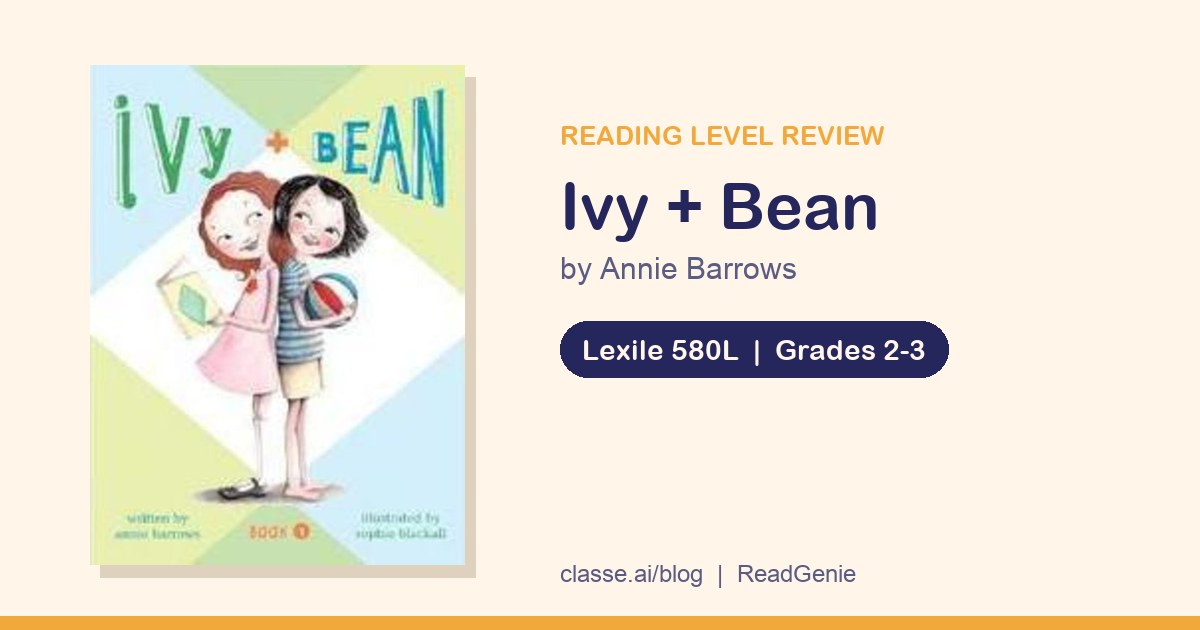
- Ivy + Bean by Annie Barrows (similar). Two friends, lots of mischief and a similar level and length.
- Clementine by Sara Pennypacker (similar). A third grader with big feelings and a funny voice, a little longer.
- Tales of a Fourth Grade Nothing by Judy Blume (harder). More sibling trouble and school humor in a longer, harder book.
Browse all of our reading-level book reviews.
How we rate books
Lexile, ATOS (Accelerated Reader), Guided Reading and DRA levels come from the companies that own them and from publishers. We link to where we found each one, and when a level isn't published we say so. Anything marked "ReadGenie estimate" is our own call, not an official level. Flesch scores come from a short public excerpt when the publisher offers one. The struggling-reader and dyslexia-friendly ratings are our judgment, based on eight things (sentence length, vocabulary, decodability, page layout, pictures, chapter length, how gripping the story is, and audiobook support). Treat them as a starting point. The right book is one your child can read with about 95% accuracy and wants to keep reading.
Sources
- Scholastic Teacher Store: Judy Moody Was in a Mood (paperback) (Lexile, Guided Reading level, DRA, ACR level, ISBN, page count, grade)
- Penguin Random House: Judy Moody (Candlewick paperback) (Lexile, Fountas and Pinnell level, ages, grades, Candlewick page count)
- TeachingBooks: Judy Moody Was in a Mood (ATOS, AR points, Lexile, word count)
- TeachingBooks: Judy Moody, M.D.: The Doctor Is In! (series Lexile and ATOS range)
- TeachingBooks: Judy Moody, Mood Martian (series Lexile and ATOS range)
- TeachingBooks: Judy Moody and the Bucket List (series Lexile and ATOS range)
- Candlewick Press chapter sample (2018 paperback) (readability excerpt, phonics patterns, chapter length, hardcover ISBN)
- Booksource: Judy Moody Was in a Mood (Guided Reading level check, Lexile check, AR check)
- Open Library: Judy Moody audiobook (Candlewick on Brilliance Audio) (audiobook)
- Open Library: Judy Moody está de mal humor, de muy mal humor (Spanish edition)