I Survived Titanic Reading Level: Lexile 590L, AR 3.9, Level Q
I Survived the Sinking of the Titanic, 1912 is Lexile 590L, AR level 3.9 and Guided Reading level Q, so most kids read it alone by late 3rd or 4th grade. Here's how it works for struggling readers and kids with dyslexia, and which words to practice first.

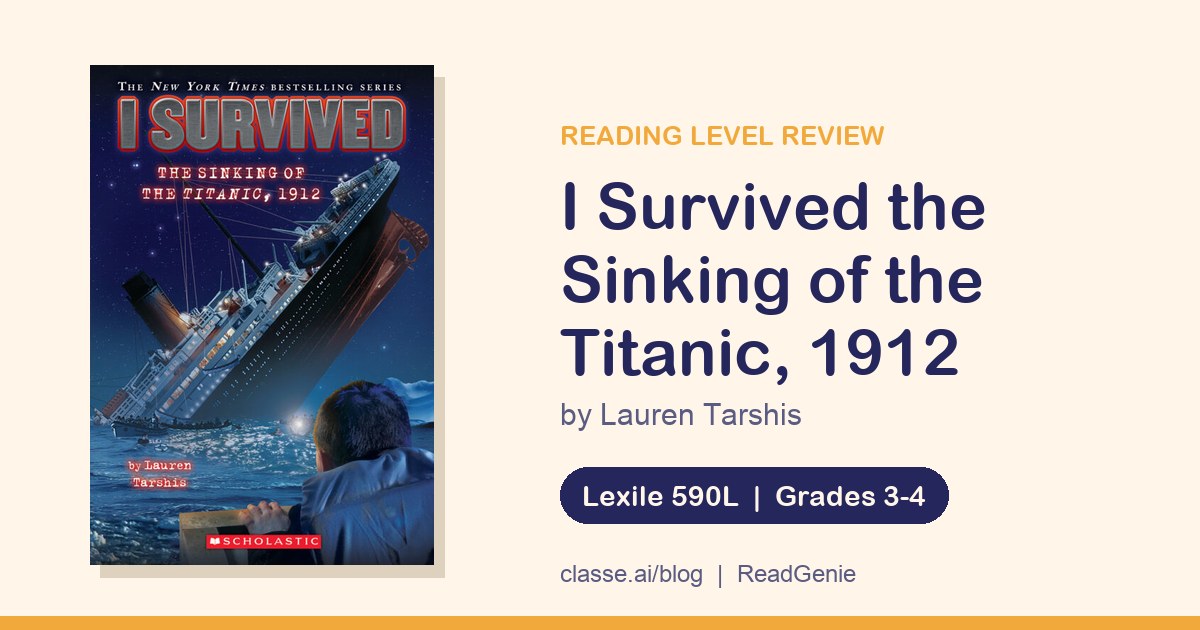
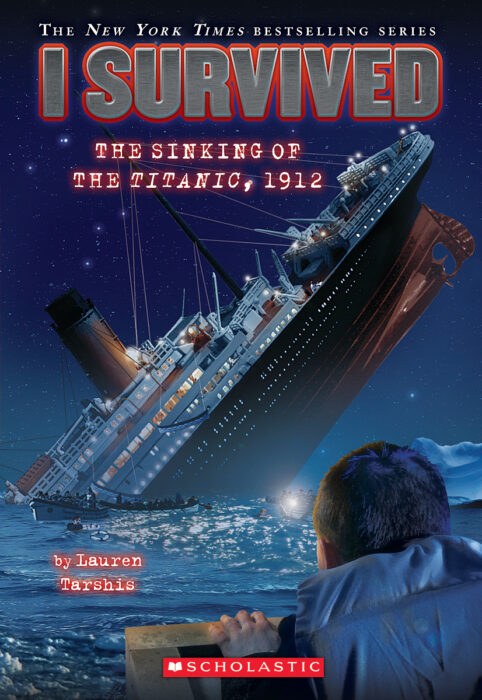
I Survived the Sinking of the Titanic, 1912 by Lauren Tarshis has a 590L Lexile measure, an AR (ATOS) level of 3.9, Guided Reading level Q and a DRA level of 40. Most kids can read it on their own at the end of 3rd grade or in 4th grade. For a struggling reader in grades 4 to 6 it's one of the best books you can hand over, because it's short and fast, and a true disaster story never feels like a little-kid book.
Book 1 of the I Survived series follows ten-year-old George Calder, his eight-year-old sister Phoebe and their Aunt Daisy on their way home to New York after two months in England. George is the kind of kid who can't sit still, and the giant ship is full of places he isn't supposed to go. The first chapter drops you into the night of the sinking, and then the second chapter jumps back 19 hours to a calm Sunday morning on board. Kids know the danger is coming, and that's exactly what keeps them turning pages. Every book in the series puts a fictional child inside a real event, from Pompeii to September 11, which is why so many teachers keep a full shelf of them.
I Survived the Sinking of the Titanic, 1912 reading level at a glance
| Lexile measure | 590L (Scholastic Teacher Store) |
|---|---|
| ATOS / AR book level | 3.9 (TeachingBooks) |
| AR points | 1 (TeachingBooks) |
| Guided Reading (Fountas & Pinnell) | Q (Scholastic Teacher Store) |
| DRA level | 40 (Scholastic Teacher Store) |
| Flesch Reading Ease (0-100) | 90.6 ReadGenie estimate |
| Flesch-Kincaid grade | 3.4 ReadGenie estimate |
| Interest level | Grades 4-6 (Scholastic Teacher Store) |
| Approximate grade band | Grades 3-4 (ages 8-10) ReadGenie |
| Length | 112 pages, ~10,437 words |
| Format | Chapter book |
| Good for struggling readers? | ★★★★★ 5/5 |
| Dyslexia-friendly rating | ★★★★★ 4/5 |
We couldn't find a published grade level equivalent for this book.
Scores checked 2026-11-10. Different leveling systems don't always agree, so we show each published value with its source and mark our own estimates. Links to every source are under How we rate books.
Is your child working hard and still getting stuck on words?
ReadGenie helps struggling readers improve their reading, spelling and handwriting with Orton-Gillingham practice at home. Your child reads out loud, the app listens, and it helps with the exact sound they missed. Join today and we'll mail your child I Survived the Sinking of the Titanic, 1912 for free.
Try ReadGenie and get your free bookStarts with a free 7-day trial. Book mailed after your first paid month. US only, one per family.
What grade level is I Survived the Sinking of the Titanic?
It reads at about a 4th grade level, and many 3rd graders get there by spring. The published levels agree with each other more than they usually do, which makes this an easy book to place.
An AR level of 3.9 means the text is about as hard as what a typical student reads near the end of 3rd grade. It's worth 1 AR point, so the quiz is a quick one. A Lexile of 590L falls in the range most schools expect from readers at the end of 3rd grade and the start of 4th.
Guided Reading level Q is where many schools want students at the start or middle of 4th grade, and DRA 40 points to the same place. So if your child's teacher says they are reading at level O or P, this book is a good stretch to start together. At level Q or above, they can usually read it alone.
Scholastic lists the book for grades 4 to 6, which is the interest level rather than the reading level. That gap is the reason it works so well for older kids who are behind. A 6th grader reading at a 3rd or 4th grade level gets a story about a real event they've heard of, at a length they can finish. The whole book is about 10,400 words across 112 pages. Our computed score from a page of chapter 2 came out close to the AR level, which matches how the book feels to read.
Is I Survived the Sinking of the Titanic good for struggling readers?
Yes. We give it 5 out of 5 for struggling readers, the top of our scale. It's the book that turns a lot of kids who say they hate reading into kids who ask for the next one.
The length is the first win. At about 10,400 words, a slower reader can finish it in a week or two without it dragging on. The chapters are short, and nearly every one ends on a cliffhanger, so there's always a reason to read one more. In a two-page sample from chapter 2, the sentences averaged about 11 words. Some run longer when George looks around the ship, but lots of short lines of dialogue break them up.
The topic is the second win. A child in 5th grade can carry this book around without anyone thinking it's babyish, and the Titanic is a subject many kids already want to know more about. There are more than two dozen books in the series at about the same level, so one good experience can turn into a whole year of reading.
There are a few things to watch for. The book has only a handful of black-and-white illustrations, so a child who is used to a picture on every page will need to build the scene from the words. A few names and period words, like Phoebe and spectacles, can trip a reader up. And the sinking chapters are tense. Kids who are upset by danger or death may need you close by for those parts.
Is I Survived the Sinking of the Titanic good for kids with dyslexia?
Overall: ★★★★★ 4/5
| Factor | Score | Why |
|---|---|---|
| Sentence length | 4/5 | About 11 words per sentence in the sample, with a mix of short punchy lines and some longer descriptive ones. |
| Vocabulary load | 4/5 | Mostly everyday words. Only about 3% of words in the sample have three or more syllables, with a few period words like spectacles. |
| Decodability | 3/5 | Regular words for the most part, but names like Phoebe and Titanic and words like knelt and eight don't follow the usual patterns. |
| Text density and layout | 4/5 | Small trim size with fairly large serif type, short paragraphs and lots of white space from dialogue. Not a dyslexia font. |
| Pictures that carry meaning | 2/5 | A handful of black-and-white illustrations in the book, so most pages are text only. |
| Chapter length | 4/5 | Short chapters of several pages each, about 5 to 10 minutes for a slower reader. |
| Engagement for reluctant readers | 5/5 | Opens in the freezing water and then jumps back in time, so kids know the danger is coming from page one. |
| Audiobook / read-along support | 5/5 | Unabridged Scholastic Audio audiobook, about 1 hour 18 minutes, narrated by Lauren Fortgang. |
We give it 4 out of 5 on our dyslexia-friendly scale. The short chapters, the gripping story and the audiobook are its biggest strengths. The official Scholastic audiobook is unabridged, runs about an hour and 18 minutes and is narrated by Lauren Fortgang. Your child could listen to the whole thing over two evenings and then read it with much less effort, already knowing what happens.
The vocabulary is friendly. In our sample, only about 3 out of every 100 words had three or more syllables, and most were everyday words a reader can sound out. The harder spots are names like Phoebe and Titanic, and a few words with silent letters or odd spellings, like knelt and eight. These are worth practicing before you start.
The pages are open, with short paragraphs and plenty of white space from dialogue. The type is a standard serif font, not a dyslexia font, and the small paperback size means fewer words on each line. What the book doesn't have is much picture support, so a child with dyslexia is reading most of the meaning from the text. That's the main reason it isn't a 5. We didn't find a large print or dyslexia-friendly edition. If the regular paperback is too much at first, the graphic novel version tells the same story with far fewer words, and it's an easier first step.
Words and phonics patterns to practice first
If your child is in an Orton-Gillingham or structured literacy program, this book fits well once they have closed syllables, silent e and r-controlled vowels. These are the patterns we saw most in the opening pages of chapter 2.
Closed syllables and blends show up in spent, chop, squid, smile, sister and England. These are a warm-up for most kids at this level.
Digraphs come up often, as in ship, chores, chop, then, fifth and with. The word fifth is a nice one to slow down on, since it ends with two sounds that are easy to blur.
Silent e words include woke, smile, time and like.
R-controlled vowels are everywhere in early, morning, curtains, birthday, farm and world. Point out that ear in early and or in world both sound like er.
The suffixes -ed and -ing appear in nearly every line, in remembered, expecting, calling, heading, peering and standing. Practice reading the base word first and then adding the ending.
Vowel teams and diphthongs show up in round, out, brown, sea, greatest and always.
Before you start, practice these words on their own: Titanic, Phoebe, Calder, spectacles, practically, squid, knelt, eight, ocean and surprise. Phoebe trips up a lot of readers because the ph and the oe both break the usual rules, so say it together a few times. ReadGenie's lessons practice these same patterns in short daily sessions, so a book like this gets easier the more your child practices.
How to read I Survived the Sinking of the Titanic with your child
Read chapter 1 out loud together. It starts in the middle of the disaster and then chapter 2 goes back in time, which can confuse a child who isn't expecting it. Stop after chapter 1 and talk about what just happened and what the jump back in time means.
Learn the three main characters before you go further. George, Phoebe and Aunt Daisy are on nearly every page, and a reader who already knows the names can spend their energy on the rest of the sentence.
Two chapters a night is a good pace. At that rate most kids finish in about a week, which feels like a real accomplishment for a child who doesn't usually finish chapter books.
If the sinking chapters feel scary or slow, switch to the audiobook for that stretch and listen together, then have your child read a page or two of it back to you. When you finish, ask what George could have done differently, and whether they want to read about another disaster next. Most kids do.
Using I Survived the Sinking of the Titanic in the classroom or tutoring
For teachers, it fits a guided-reading group at level P or Q, two chapters per session. Pair it with a short nonfiction article about the real Titanic and ask students to sort what the author kept true from what she made up. Mapping the ship as George moves around it is a good way to keep a group on track through the middle chapters.
For tutors, pre-teach Phoebe, spectacles, practically and knelt before the first session. The opening of chapter 2 is full of -ed and -ing words, so it works well for suffix practice with remembered, expecting, calling, peering and standing. You can also pull r-controlled words like early, morning, curtains and farm and have your student sort them by spelling.
Content notes for parents
This is a book about a real disaster, told by a child who lives through it. There's cold water, panic and fear, and many people on the ship die. George is separated from the people he loves for part of the night. There's no gore, the tone never gets graphic, and the ending is hopeful. Most kids in 3rd grade and up handle it well, but a sensitive younger child may do better hearing it read aloud first so you can talk about it as you go.
Should your child read it?
If your child is in 3rd to 6th grade, reads at about a 3rd or 4th grade level and likes history, action or true stories, yes. It's especially good for a 5th or 6th grader who is behind and needs a book that looks grown-up but reads easier. If your child is still sounding out most words, start with Dinosaurs Before Dark or Rise of the Earth Dragon, or try the graphic novel first. Strong readers in 5th grade and up who want a longer survival story can move on to Hatchet.
Make the next book easier
Short daily sessions of reading, spelling and handwriting practice, built with Orton-Gillingham teachers. It works alongside tutoring and school support. The first 7 days are free. Join today and we'll mail your child I Survived the Sinking of the Titanic, 1912 for free.
Try ReadGenie and get your free bookStarts with a free 7-day trial. Book mailed after your first paid month. US only, one per family.
FAQ
What reading level is I Survived the Sinking of the Titanic?
It has a Lexile measure of 590L, an AR level of 3.9, Guided Reading level Q and DRA level 40. Together those point to late 3rd grade and 4th grade for reading alone.
What age is the I Survived series for?
Scholastic lists the series for grades 4 to 6, which is about ages 9 to 12. Most kids can read book 1 by themselves around ages 8 to 10, and older kids who find reading hard like it too because the stories are about real events.
What is the AR level of I Survived the Sinking of the Titanic?
The book has an AR (ATOS) level of 3.9 and is worth 1 AR point. That's about the level of a typical reader near the end of 3rd grade.
What Fountas and Pinnell level is I Survived?
Scholastic lists book 1 at Guided Reading level Q, which many schools expect around the start of 4th grade.
Is the I Survived Titanic graphic novel easier to read?
Yes. The graphic novel tells the same story in fewer than half the words, with pictures carrying much of it. It's a good way in for a child who isn't ready for the chapter book, and it makes the chapter book easier to read afterward.
How long does it take to read I Survived the Sinking of the Titanic?
It's about 10,400 words in 112 pages. At two chapters a night most kids finish in about a week, and the audiobook runs about an hour and 18 minutes.
Get I Survived the Sinking of the Titanic, 1912 free
ReadGenie helps struggling readers improve their reading, spelling and handwriting in short daily sessions at home. Join and we'll mail your child this book for free.
Claim your free bookStarts with a free 7-day trial. Book mailed after your first paid month. US only, one per family.
What to read next
- Dinosaurs Before Dark by Mary Pope Osborne (easier). Magic Tree House has the same short-chapter adventure feel at an easier level, and one later book visits the Titanic.
- Rise of the Earth Dragon by Tracey West (easier). Dragon Masters is a shorter, heavily illustrated chapter book series for kids not ready for I Survived yet.
- Rescue on the Oregon Trail by Kate Messner (similar). Ranger in Time is another Scholastic historical adventure series about kids in real events, at a similar length.
- Hatchet by Gary Paulsen (harder). A longer survival story to read once I Survived feels easy.
Browse all of our reading-level book reviews.
How we rate books
Lexile, ATOS (Accelerated Reader), Guided Reading and DRA levels come from the companies that own them and from publishers. We link to where we found each one, and when a level isn't published we say so. Anything marked "ReadGenie estimate" is our own call, not an official level. Flesch scores come from a short public excerpt when the publisher offers one. The struggling-reader and dyslexia-friendly ratings are our judgment, based on eight things (sentence length, vocabulary, decodability, page layout, pictures, chapter length, how gripping the story is, and audiobook support). Treat them as a starting point. The right book is one your child can read with about 95% accuracy and wants to keep reading.
Sources
- Scholastic Teacher Store: I Survived the Sinking of the Titanic, 1912 (#1) (Lexile, Guided Reading, DRA, ACR check, grades, pages, ISBN)
- TeachingBooks: I Survived the Sinking of the Titanic, 1912 (ATOS, AR points, word count, Lexile check)
- Booksource: I Survived the Sinking of the Titanic, 1912 (Lexile check, Guided Reading check, AR check, interest level)
- Scholastic product image: I Survived the Sinking of the Titanic interior pages (excerpt, layout, phonics patterns)
- TeachingBooks: I Survived the Sinking of the Titanic, 1912: The Graphic Novel (graphic novel edition)
- AudiobooksNow: I Survived the Sinking of the Titanic, 1912 audiobook (audiobook narrator, audiobook length)
- Open Library: I Survived the Sinking of the Titanic, 1912 (ISBNs, editions)