Henry and Mudge Reading Level: Lexile 460L, AR 2.7, Guided Reading J
Henry and Mudge: The First Book by Cynthia Rylant is Lexile 460L, AR level 2.7 with 0.5 AR points and Guided Reading J. Most kids read it alone at the end of 1st grade or early in 2nd, and its short chapters and pictures on every page make it a great early pick for struggling readers.

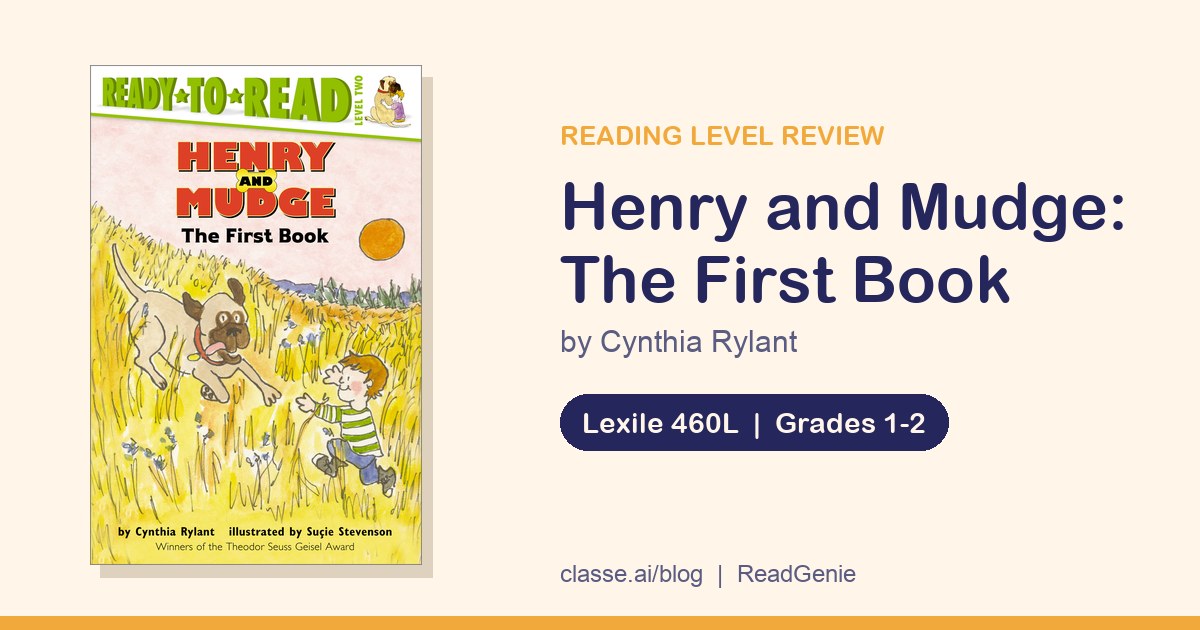
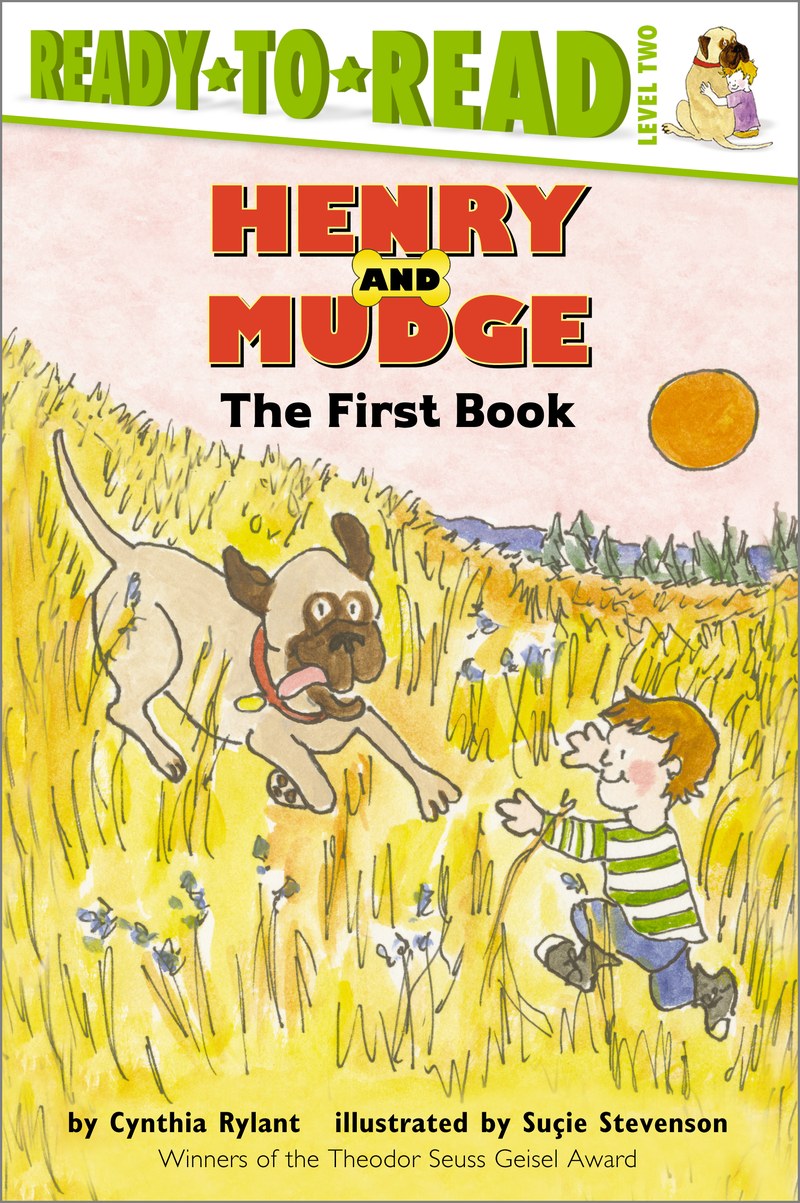
Henry and Mudge: The First Book by Cynthia Rylant has a Lexile measure of 460L, an AR (ATOS) book level of 2.7 worth 0.5 AR points and a Guided Reading level of J. Most kids can read it on their own at the end of 1st grade or early in 2nd grade. For a child who is behind in reading, it is a warm, low-pressure early reader, with only about 815 words, short chapters and a picture on every page.
Henry is lonely. He has no brothers or sisters, and no other kids live on his street. So he asks his parents for a dog, and they say yes. He picks Mudge, a puppy who grows and grows until he has gone through seven collars and weighs 180 pounds. The two go everywhere together, until the day Mudge wanders off and gets lost. Kids who love dogs fall for Mudge right away, and the book starts a series of 28, which is why so many parents look up the level before buying a stack.
Henry and Mudge: The First Book reading level at a glance
| Lexile measure | 460L (Simon & Schuster) |
|---|---|
| ATOS / AR book level | 2.7 (TeachingBooks) |
| AR points | 0.5 (TeachingBooks) |
| Guided Reading (Fountas & Pinnell) | J (MARINet libraries) |
| Interest level | Grades K-2 (ages 5-7) (Simon & Schuster) Also listed as Grades 1-3 |
| Approximate grade band | Grades 1-2 (ages 6-8) ReadGenie |
| Length | 40 pages, ~815 words |
| Format | Early reader |
| Good for struggling readers? | ★★★★★ 4/5 |
| Dyslexia-friendly rating | ★★★★★ 4/5 |
We couldn't find a published DRA level, grade level equivalent or Flesch score for this book.
Is Henry and Mudge: The First Book a struggle for your child right now? ReadGenie gives struggling readers short daily Orton-Gillingham practice at home, out loud, with help on the exact sound they missed.
Try ReadGenie and get this book freeScores checked 2026-11-26. Different leveling systems don't always agree, so we show each published value with its source and mark our own estimates. Links to every source are under How we rate books.
What grade level is Henry and Mudge?
Henry and Mudge: The First Book sits at about a late 1st grade to early 2nd grade reading level. Most children can read it independently somewhere in that window, and a younger reader can handle it with a parent sitting close by.
An AR level of 2.7 means the text is about as hard as what a typical student reads in the seventh month of 2nd grade. That is a little higher than the other two numbers suggest. Guided Reading level J is usually taught at the end of 1st grade or the start of 2nd, and a 460L Lexile falls in the same early 2nd grade range on most charts. The AR number runs higher because ATOS weighs average word length and the few longer words, like brothers and collars, pull it up. The book is short and the sentences are simple, so in practice it reads closer to the Guided Reading level.
Length is a big part of why it works for new readers. At 0.5 AR points and about 815 words across 40 pages, it is short. Most pages hold only a few lines of text under a drawing. A child gets to finish a whole book with chapters, which is a big deal at this stage.
The rest of the series stays close to this level. That is one of the best things about it. A child who can read book 1 can keep reading Henry and Mudge books for months without a sudden jump in difficulty.
Is Henry and Mudge good for struggling readers?
Yes. We rate it 4 out of 5 for struggling readers. It is short, kind and well supported by pictures. The only real catch is the look, which can feel young to older kids.
The pages are calm and uncrowded. Each spread has a soft color drawing by Suçie Stevenson and a short block of text in large type. If a child loses a word, the picture usually shows what is going on. The chapters are short, so there are natural places to stop before a tired reader starts guessing.
Rylant writes in a plain, steady voice. She repeats names and sentence shapes, so Henry, Mudge, dog and street come back again and again. The first time through, a child works at those words. By the end of the book they read them without stopping, and that quiet success is what a struggling reader needs most.
There are a few things to watch for.
- A handful of longer words, like brothers, sisters, collars and pounds, can stall a careful decoder
- The story is gentle and has little action, which can lose kids who want jokes or adventure
- The early reader format can look young to 3rd and 4th graders
For a 1st or 2nd grader who is behind, this is a great pick. For an older struggling reader who is self-conscious about younger-looking books, try Dog Man or The Bad Guys, which have big pictures and short bursts of text but look older.
Is Henry and Mudge good for kids with dyslexia?
Overall: ★★★★★ 4/5
| Factor | Score | Why |
|---|---|---|
| Sentence length | 4/5 | Mostly short sentences, with a few longer ones joined by and that read like someone talking. |
| Vocabulary load | 4/5 | Everyday words about a boy, his family and his dog. A handful of two-syllable words like puppy and collars, explained by the pictures. |
| Decodability | 4/5 | Many short-vowel and blend words a beginning reader can sound out. Mudge itself is a great -dge word, and the red words are the usual ones like said and could. |
| Text density and layout | 4/5 | Ready-to-Read Level 2 layout with large type, short lines and white space around a few lines per page. The type has serifs, which some dyslexic readers find a little harder. |
| Pictures that carry meaning | 4/5 | Suçie Stevenson's soft color drawings sit on every spread and show each step of the story. |
| Chapter length | 5/5 | Each chapter takes a few minutes and ends cleanly, so a child can read one in a sitting. |
| Engagement for reluctant readers | 4/5 | A huge, drooly, loving dog wins most kids over. The plot is gentle, with the lost-dog chapter as the one moment of real worry. |
| Audiobook / read-along support | 4/5 | Recorded Books publishes an unabridged audiobook read by George Guidall, which many libraries lend through Libby. |
We rate it 4 out of 5 for dyslexic readers. Short chapters, a picture on every spread and a steady, repetitive style all help. The serif type and a few longer words are the main bumps.
The layout is the book's strongest point. It is part of Simon & Schuster's Ready-to-Read Level 2 line, so the type is large, the lines are short and there is plenty of white space. A child never faces a full page of print. The one drawback is the font, which has serifs. Most dyslexic readers manage it fine at this size, but if your child struggles with letter shapes, a finger or a reading strip under the line helps.
The words are mostly short and everyday. The main characters' names are easy to sound out once you point out that Mudge ends in -dge. There are no invented words, no long place names and no tricky dialect. The red words are the common ones every early reader meets, like said, could and would.
Recorded Books publishes an unabridged audiobook read by George Guidall, and many libraries lend it through Libby. A child can listen to the whole story first, then read it with the sound of the sentences already in their ears. For a dyslexic reader that one listen often takes the fear out of the print.
Words and phonics patterns to practice first
Henry and Mudge: The First Book suits a child who knows short vowels and common blends and is starting to read two-syllable words.
Closed syllables with short vowels carry much of the text, in words like dog, big, lost, until and Henry. Henry splits into Hen and ry, which is a nice first look at a y that says long e.
The name Mudge is a perfect -dge lesson. After a short vowel, the j sound is usually spelled dge. Teach it with Mudge, then build a quick word chain with words like edge, badge and fudge so the pattern sticks beyond this book.
Consonant blends show up in street, grew, just and stop. Street has three consonants in a row, so tap out s, t, r before blending.
Digraphs are everywhere, in brothers, with, then, when and much. Remind your child that th, wh and ch each make one sound.
R-controlled vowels appear in sisters, collars, parents, after and her. Point out that er and ar change the vowel sound, so they don't sound like the short vowel your child expects.
Pre-teach these words before reading: Mudge, said, could, would, brothers, pounds, school, walked, they and were. If your child keeps tripping on patterns like -dge and r-controlled vowels, short daily Orton-Gillingham practice with ReadGenie on exactly those patterns can make a book like this one feel easy.
How to read Henry and Mudge with your child
Before you start, look at the cover together and practice the name Mudge. It is on almost every page, and getting it right from the start saves a lot of stops later.
Read the first chapter aloud yourself, with your child following along. Then hand over the second chapter. The whole book is short enough to finish in one or two evenings, so your child gets to say they read a whole chapter book.
Talk about how Henry feels at the beginning, with no other kids on his street, and how that changes once Mudge comes home. It is an easy way to check understanding without a quiz.
The lost-dog chapter is the one tense moment. Stop before the end and ask where your child thinks Mudge might be. A guess keeps a worried reader turning pages, and it ends happily.
If your child likes it, borrow the next few books from the library right away. Reading a whole series at one level is one of the best ways to build fluency, and with Henry and Mudge there are plenty to choose from.
Using Henry and Mudge in the classroom or tutoring
For teachers, it fits a Guided Reading level J group and appears on the Common Core list of text exemplars for grades 2 and 3. Henry's loneliness at the start and his happiness at the end make a clear, simple lesson on how a character changes. You can also pair it with a later Henry and Mudge book and have students compare what Mudge gets into each time.
For tutors, use Mudge to open a -dge lesson, then chain to edge, badge and fudge. Because the chapters are short, they work well for repeated reading. Time a first read and a second read of the same chapter so the student hears their own progress. Before the student reads, split brothers, collars and pounds into syllables so those words don't break their flow.
Content notes for parents
This is a very gentle book. The only worry comes when Mudge wanders off and is lost for a little while, and it ends happily with the two back together. There is no violence, no scary scenes, no potty humor and no romance. Rylant later won the Newbery Medal for another book, and a later book in the series won the Theodor Seuss Geisel Award for beginning readers. It works as a bedtime read-aloud for kids as young as 4 or 5.
Should your child read it?
If your child is in 1st or 2nd grade and ready to move from very short readers to books with chapters, this is a wonderful place to start. A child still reading at the earliest levels can enjoy it as a read-together book now. If it feels like too much, try Biscuit Goes to School or Hi! Fly Guy first. When Henry and Mudge feels easy, Frog and Toad Are Friends, Mercy Watson to the Rescue and Nate the Great are good next steps.
Make the next book easier
Short daily sessions of reading, spelling and handwriting practice, built with Orton-Gillingham teachers. It works alongside tutoring and school support. The first 7 days are free. Join today and we'll mail your child Henry and Mudge: The First Book for free.
Try ReadGenie and get your free bookStarts with a free 7-day trial. Book mailed after your first paid month. US only, one per family.
FAQ
What is the Henry and Mudge AR level?
Henry and Mudge: The First Book has an AR (ATOS) book level of 2.7 and is worth 0.5 AR points. At about 815 words, most kids finish it and take the quiz in a day or two.
What is the Henry and Mudge Lexile level?
The first book has a Lexile measure of 460L, which the publisher says is certified by MetaMetrics. That is a typical early 2nd grade level, and the other books in the series sit close to it.
What is the Henry and Mudge Guided Reading level?
A public library leveling list places Henry and Mudge: The First Book at Fountas and Pinnell level J. That level is usually taught at the end of 1st grade or the start of 2nd grade.
What age group is Henry and Mudge for?
The publisher lists the book for ages 5 to 7, grades K to 2. Most children read it on their own around ages 6 to 8, and younger kids enjoy it as a read-aloud.
How many Henry and Mudge books are there?
There are 28 Henry and Mudge books, starting with The First Book in 1987. They stay at about the same reading level, so a child who can read one can usually read them all.
Get Henry and Mudge: The First Book free
ReadGenie helps struggling readers improve their reading, spelling and handwriting in short daily sessions at home. Join and we'll mail your child this book for free.
Claim your free bookStarts with a free 7-day trial. Book mailed after your first paid month. US only, one per family.
What to read next
- Biscuit Goes to School by Alyssa Satin Capucilli (easier). Another sweet dog story with far fewer words per page, for kids not ready for chapters.
- Hi! Fly Guy by Tedd Arnold (easier). A sillier boy-and-pet story with short chapters and a picture on every page.
- Mr. Putter & Tabby Pour the Tea by Cynthia Rylant (similar). Rylant's other gentle pet series, at about the same level with the same warm tone.
- Frog and Toad Are Friends by Arnold Lobel (harder). Five short friendship stories with a little more text, a natural next step.
- Mercy Watson to the Rescue by Kate DiCamillo (harder). A funny first chapter book with longer chapters and full-color pictures.
- Nate the Great by Marjorie Weinman Sharmat (harder). A boy and his dog solve a mystery, with a bit more plot to follow.
Browse all of our reading-level book reviews.
How we rate books
Lexile, ATOS (Accelerated Reader), Guided Reading and DRA levels come from the companies that own them and from publishers. We link to where we found each one, and when a level isn't published we say so. Anything marked "ReadGenie estimate" is our own call, not an official level. Flesch scores come from a short public excerpt when the publisher offers one. The struggling-reader and dyslexia-friendly ratings are our judgment, based on eight things (sentence length, vocabulary, decodability, page layout, pictures, chapter length, how gripping the story is, and audiobook support). Treat them as a starting point. The right book is one your child can read with about 95% accuracy and wants to keep reading.
Sources
- Simon & Schuster: Henry and Mudge, The First Book (paperback) (Lexile, grades and ages, pages, ISBN, publisher)
- Simon & Schuster: Henry and Mudge, The First Book (hardcover) (Lexile check, series list)
- TeachingBooks: Henry and Mudge, The First Book of Their Adventures (ATOS, AR points, word count, Lexile check, Common Core text exemplar list, series ATOS and Lexile range)
- MARINet libraries: Fountas & Pinnell Guided Reading Level I and J Books (Guided Reading level)
- RIF Literacy Central: Henry and Mudge, The First Book (Lexile check, grades)
- OverDrive: Henry and Mudge audiobook (Recorded Books) (audiobook narrator and publisher)
- Simon & Schuster: Henry y Mudge, El Primer Libro (Spanish edition)
- Wikipedia: Henry and Mudge (series list and count, publication years)