Hatchet Reading Level: Gary Paulsen Lexile, AR and Dyslexia Guide
Hatchet by Gary Paulsen is Lexile 1020L, AR level 5.7 and Guided Reading level V, so most kids can read it alone in 5th or 6th grade. Plain sentences and a gripping survival story make it a good pick for struggling readers in grades 6 to 8, best with the audiobook.

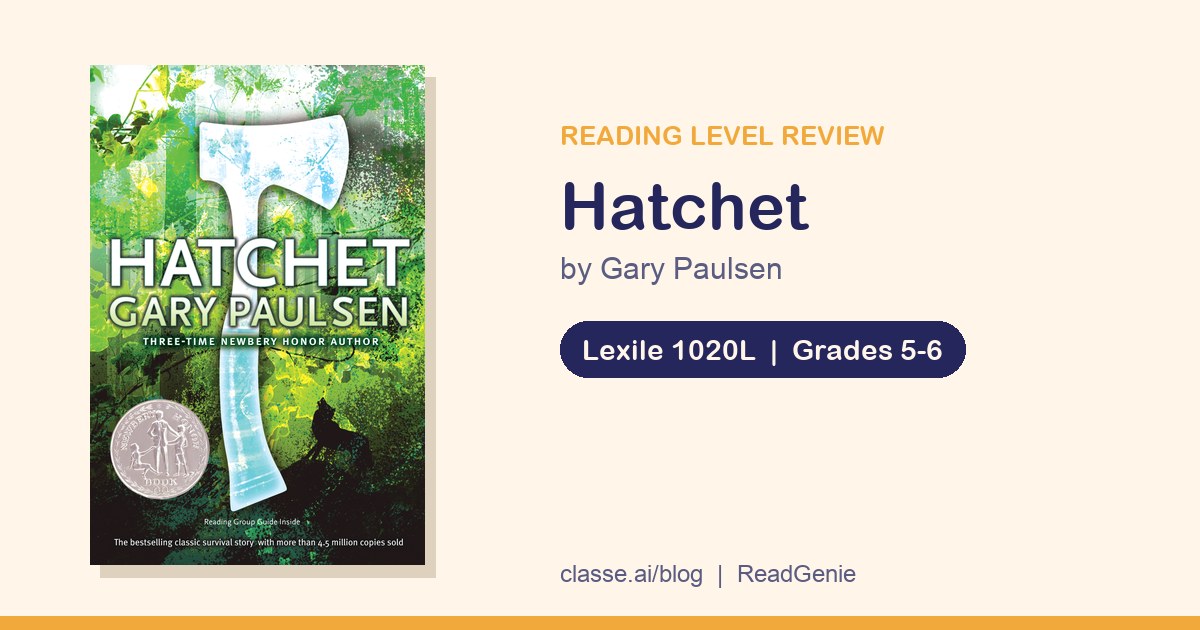
Hatchet by Gary Paulsen has a 1020L Lexile measure, an AR (ATOS) book level of 5.7 and a Guided Reading level of V. Most kids can read it on their own in 5th or 6th grade. The Lexile looks high, but the sentences are plain and the words are mostly short, and the survival story keeps reluctant readers turning pages. That makes it a good pick for struggling readers in grades 6 to 8, especially with the audiobook, while a child still reading below a 5th grade level should read it with an adult or listen along.
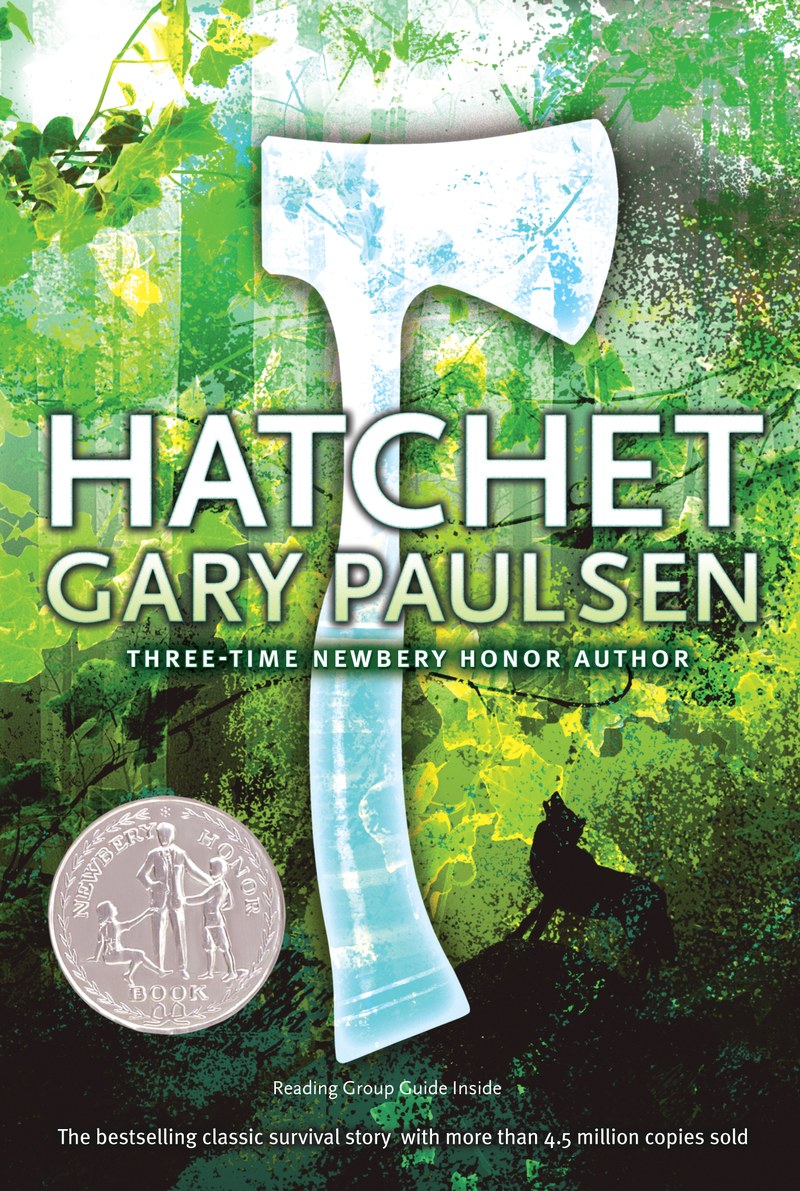
Brian Robeson is 13 and flying alone with a bush pilot to visit his father in Canada when the pilot has a heart attack. The plane goes down in a lake in the northern woods, and Brian has his clothes, a torn windbreaker and the hatchet his mother gave him before he left. He has to work out fire, shelter and food by trial and a lot of error. Kids love how real the problems are, from mosquitoes to a hungry bear, and how every small win feels earned. It is a Newbery Honor book and one of the most taught novels in middle school.
Hatchet reading level at a glance
| Lexile measure | 1020L (Simon & Schuster) |
|---|---|
| ATOS / AR book level | 5.7 (TeachingBooks) |
| AR points | 7 (TeachingBooks) |
| Guided Reading (Fountas & Pinnell) | V (Simon & Schuster) Also listed as R |
| Grade level equivalent | 6 (Booksource) |
| Flesch Reading Ease (0-100) | 88.0 ReadGenie estimate |
| Flesch-Kincaid grade | 4.2 ReadGenie estimate |
| Interest level | Grades 5-9 (Simon & Schuster) |
| Approximate grade band | Grades 5-6 (ages 10-12) ReadGenie |
| Length | 192 pages, ~42,328 words |
| Format | Middle grade novel |
| Good for struggling readers? | ★★★★★ 3/5 |
| Dyslexia-friendly rating | ★★★★★ 3/5 |
We couldn't find a published DRA level for this book.
Scores checked 2026-11-11. Different leveling systems don't always agree, so we show each published value with its source and mark our own estimates. Links to every source are under How we rate books.
Is your child working hard and still getting stuck on words?
ReadGenie helps struggling readers improve their reading, spelling and handwriting with Orton-Gillingham practice at home. Your child reads out loud, the app listens, and it helps with the exact sound they missed. Join today and we'll mail your child Hatchet for free.
Try ReadGenie and get your free bookStarts with a free 7-day trial. Book mailed after your first paid month. US only, one per family.
What grade level is Hatchet?
Hatchet reads at about a 5th to 6th grade level, and the publisher lists it for grades 5 to 9. The three main measures don't agree as neatly as they do for most books, and the reason says a lot about how this book reads.
An AR level of 5.7 means the text is about as hard as what a typical student reads late in 5th grade. Guided Reading level V usually sits in 5th grade on school charts too. The Lexile of 1020L is the odd one out. On most charts that number lands in 6th to 8th grade, so parents who look only at the Lexile can decide the book is too hard.
Here is why the Lexile runs high. Paulsen writes the tense scenes in long, rolling sentences that pile one thought on the next, with lots of "and" in between. Lexile weighs sentence length heavily, so those run-ons push the number up. Right next to them are lines of a single word, and the words themselves are mostly short and common. Our own readability check on chapter 1 came out at about a 4th grade level, because the average word is short even when the sentence is long.
Length is the other thing to plan for. The book runs about 42,000 words and is worth 7 AR points. A 5th or 6th grader reading on grade level can handle it alone. An older kid reading a year or two behind can read it too, but will likely need a push through the longer chapters.
Is Hatchet good for struggling readers?
Often, yes. We give it 3 out of 5 for struggling readers, and the audiobook moves it closer to a 4.
The hook comes fast. The pilot's heart attack happens at the end of chapter 1, and from there the book never really lets up. Brian is a teenager with real problems, so a 7th or 8th grader never feels like they're reading a kid's book. For a child who usually can't keep up with the class novel, being able to talk about the moose scene with everyone else counts for a lot.
The plain style helps too. There are very few names to keep straight, almost no made-up words, and the vocabulary is the kind of everyday language a 10-year-old hears at home. Paulsen also uses short, punchy lines when something big happens, and those are easy wins for a slow reader.
What holds it back is chapter length and the lack of pictures. There are 19 chapters and an epilogue, so the average chapter runs over 2,000 words. For a child who reads slowly, that is a 15 to 20 minute stretch with no break. Brian is also alone for nearly the whole book, which means long passages happen inside his head with no dialogue to break up the page.
Here is who it fits and who it may frustrate.
- Great for 6th to 8th graders reading at about a 5th grade level who want a real middle school book.
- Great for 5th and 6th graders reading on grade level who like action, animals and the outdoors.
- Harder for kids still reading below a 5th grade level on their own. Read it aloud or use the audiobook.
- Harder for readers who lean on dialogue or pictures to follow what is happening.
Is Hatchet good for kids with dyslexia?
Overall: ★★★★★ 3/5
| Factor | Score | Why |
|---|---|---|
| Sentence length | 3/5 | About 13 words per sentence in chapter 1. One-word and fragment sentences sit next to long, rolling sentences in the action scenes. |
| Vocabulary load | 3/5 | Mostly everyday words. Under 4 percent of words in chapter 1 have three or more syllables, but plane and wilderness words like altitude, rudder and bushplane need a quick preview. |
| Decodability | 4/5 | Few names and almost no invented words. Cessna, Robeson and a handful of irregular words are the main snags. |
| Text density and layout | 2/5 | Standard novel type with full pages, about 220 words per page in the 192-page paperback. |
| Pictures that carry meaning | 1/5 | No illustrations in the standard paperback, so the words carry all of the meaning. |
| Chapter length | 3/5 | About 42,000 words in 19 chapters and an epilogue, a little over 2,000 words each, or 15 to 20 minutes for a slower reader. |
| Engagement for reluctant readers | 5/5 | A crash, a moose, a bear, a porcupine and a tornado, with real stakes on almost every page. |
| Audiobook / read-along support | 5/5 | Unabridged audiobook read by Peter Coyote (Listening Library), widely held by libraries on CD and as a download. |
We give it 3 out of 5 on our dyslexia-friendly scale. It scores highest for engagement and audio support, and lowest for pictures and page layout.
The words are the good news. Fewer than 4 in every 100 words in chapter 1 have three or more syllables, which is low for a book at this level. The words that do trip kids up tend to be about planes and the woods, like altitude, rudder, instruments and wilderness. Teach those four before you start and most of the opening gets easier.
Decoding is fairly friendly too. Brian Robeson and the Cessna bush plane are the only real name snags early on, and the rest of the book uses regular words that follow common patterns.
The page layout is harder. The standard paperback fits about 220 words on a page in normal novel type, with long paragraphs during the action. For a dyslexic reader that can feel like a wall of text. Reading with a finger or a card under the line helps, and so does stopping at a scene break instead of pushing through a whole chapter.
Audio support is strong. Listening Library publishes an unabridged audiobook read by Peter Coyote, and it runs under four hours. Following the print while listening lets a dyslexic child keep up with the story and still see every word. There is no dyslexia-friendly edition. A 30th anniversary edition adds illustrations by Drew Willis, which can give a reader a few more pictures to hold on to.
Words and phonics patterns to practice first
Hatchet reads smoothly once a child is comfortable with blends, r-controlled vowels, vowel teams and the -ing ending. These patterns come up again and again in the opening chapter.
- Closed syllables and blends, like plane, blink, crash, lifted and pressed.
- R-controlled vowels in northern, turned, burned, forty and corner.
- The -ing ending, as in roaring, staring, flying, wandering and thinking.
- Vowel teams in green, streams, teeth, seeping and screamed.
- Compound words like bushplane, countryside, forehead and dashboard.
- The -tion ending in conversation, vibration and visitation.
The -ing ending is worth extra time, because Paulsen strings these words together in his long action sentences. When a child reads wandering or flickering without stalling, those run-on sentences stop feeling so long. Compound words are an easy win. Have your child find the two smaller words first, then put them back together.
Pre-teach Brian, Robeson and Cessna, plus altitude, rudder and wilderness. Patterns like these are what ReadGenie practices with a child each day. Your child reads aloud, the app listens and helps with the exact sound they missed, so a long survival novel gets a little less tiring page by page.
How to read Hatchet with your child
Read chapter 1 together. It sets up Brian's secret about his parents and ends with the pilot's heart attack, which is the moment most kids decide they have to know what happens. Stop there and ask what Brian should do first.
After that, about one chapter a night takes three weeks. On busy nights, play one chapter of the audiobook and read the next one together. Mixing the two keeps the pace up without wearing a slow reader out.
Keep a running list of what Brian has. It starts with a hatchet and a windbreaker and grows as he finds berries, makes fire and builds tools. Before each chapter, guess what he will need next. It keeps kids thinking about the story when the reading gets hard.
Read ahead of your child in the chapter after a search plane flies over and misses him. Brian loses hope there, and you'll want to be ready to talk about it. Then save the epilogue to read together at the end, because it explains what Brian's 54 days changed.
Using Hatchet in the classroom or tutoring
For teachers, Hatchet fits a Guided Reading level V group or a whole-class novel in grades 5 to 7. A two-column chart of Brian's mistakes and what each one taught him works well across the whole book and makes the theme of patience easy to see. Simon & Schuster offers a free teacher's guide for Hatchet and Dogsong with discussion questions. Short nonfiction on fire starting, northern forests or bush planes pairs well with the early chapters.
For tutors, pre-teach Cessna, rudder, altitude and wilderness before chapter 1. Pull -ing words from the first pages into a quick drill. Have the student read Paulsen's short one-word lines aloud with expression, then use the audiobook to finish the long middle stretch of a chapter so the session doesn't stall.
Content notes for parents
The pilot dies of a heart attack at the controls, and later Brian finds his body in the sunken plane. Brian knows his mother has been seeing another man, and that secret drives a lot of his anger about the divorce. After a search plane misses him, he becomes so hopeless that he hurts himself with the hatchet and wants to die, though he decides to keep going. There are attacks by a moose and a porcupine, hunting and cleaning fish and birds, hunger and food poisoning. None of it is graphic, but sensitive readers may want a parent nearby for the darker chapters.
Should your child read it?
If your child is in grades 5 to 8 and reading at about a 5th grade level or above, Hatchet is a great pick, and even better with the audiobook. If they're reading below that, read it aloud together, or start with a shorter survival story like I Survived the Sinking of the Titanic, 1912 or The Wild Robot. When they finish, Brian's Winter and My Side of the Mountain are good next reads at about the same level.
Make the next book easier
Short daily sessions of reading, spelling and handwriting practice, built with Orton-Gillingham teachers. It works alongside tutoring and school support. The first 7 days are free. Join today and we'll mail your child Hatchet for free.
Try ReadGenie and get your free bookStarts with a free 7-day trial. Book mailed after your first paid month. US only, one per family.
FAQ
What age is Hatchet for?
The publisher lists Hatchet for ages 10 to 14 and grades 5 to 9. Most kids can read it on their own between about 10 and 12. Because Brian is 13 and the story is serious, it also works well for older middle schoolers who read below grade level.
What is the AR level of Hatchet?
Hatchet has an ATOS book level of 5.7 and is worth 7 AR points. The level reflects mostly short, common words, and the point value reflects the book's length.
What is the Lexile level of Hatchet?
Hatchet has a Lexile measure of 1020L. That number usually points to 6th grade or above, but it runs high here because of Paulsen's long action sentences. The words themselves are easier than the Lexile suggests.
What is the guided reading level of Hatchet?
The publisher lists Hatchet at Fountas and Pinnell level V, which most schools expect around 5th grade. A few teacher sites list it at level R, but they don't cite a source.
Is Hatchet appropriate for a 9 year old?
A strong 9-year-old reader can handle most of the words, but the length, the pilot's death and Brian's darkest moment make it a better fit for most kids at 10 or 11. If a younger child is keen, read it together so you can talk through the hard parts.
How many chapters are in Hatchet?
Hatchet has 19 chapters plus a short epilogue. The chapters are fairly long, a little over 2,000 words on average, so it is fine to split one across two sittings.
Get Hatchet free
ReadGenie helps struggling readers improve their reading, spelling and handwriting in short daily sessions at home. Join and we'll mail your child this book for free.
Claim your free bookStarts with a free 7-day trial. Book mailed after your first paid month. US only, one per family.
What to read next
- I Survived the Sinking of the Titanic, 1912 by Lauren Tarshis (easier). A short, fast survival story with pictures, a good warm-up for a reader not ready for Hatchet yet.
- The Wild Robot by Peter Brown (easier). Another story of learning to survive alone in the wild, in very short chapters with drawings.
- Holes by Louis Sachar (easier). A boy in a harsh outdoor place, told in 50 short chapters with plenty of humor.
- My Side of the Mountain by Jean Craighead George (similar). A boy who chooses to live alone in the woods and learns to find food and make a home in a tree.
- Brian's Winter by Gary Paulsen (similar). The what-if sequel where Brian is not rescued and has to survive the northern winter.
Browse all of our reading-level book reviews.
How we rate books
Lexile, ATOS (Accelerated Reader), Guided Reading and DRA levels come from the companies that own them and from publishers. We link to where we found each one, and when a level isn't published we say so. Anything marked "ReadGenie estimate" is our own call, not an official level. Flesch scores come from a short public excerpt when the publisher offers one. The struggling-reader and dyslexia-friendly ratings are our judgment, based on eight things (sentence length, vocabulary, decodability, page layout, pictures, chapter length, how gripping the story is, and audiobook support). Treat them as a starting point. The right book is one your child can read with about 95% accuracy and wants to keep reading.
Sources
- Simon & Schuster: Hatchet (trade paperback) (Lexile, F&P level, grades, ages, ISBN, pages, awards)
- Simon & Schuster: Hatchet (30th anniversary edition), excerpt (excerpt, Flesch scores, phonics patterns)
- TeachingBooks: Hatchet (ATOS, AR points, AR quiz, word count, Lexile check)
- Booksource: Hatchet (Grade Level Equivalent, Guided Reading check, Lexile check, AR check, interest level)
- Simon & Schuster: Hatchet and Dogsong teacher's guide (PDF) (teaching tips)