Frog and Toad Reading Level: Lexile, AR and Guided Reading Guide
Frog and Toad Are Friends is 400L, AR level 2.9 and Guided Reading level K, so most kids read it alone in late 1st or 2nd grade. Here's why its five short stories suit struggling readers, and who may find it too young.

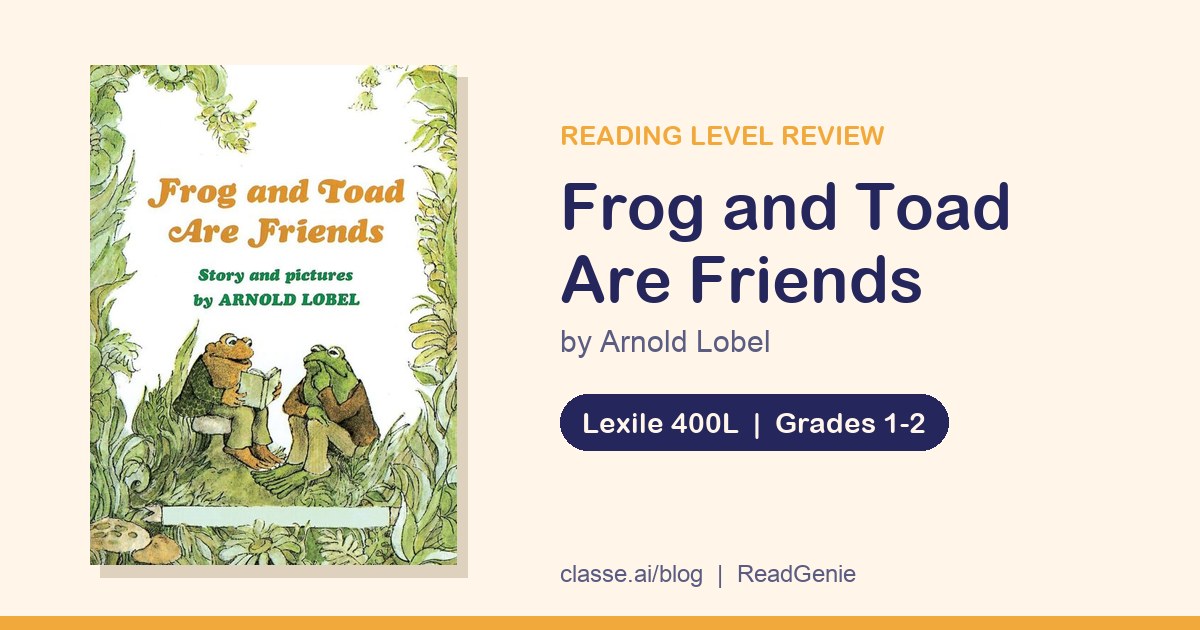
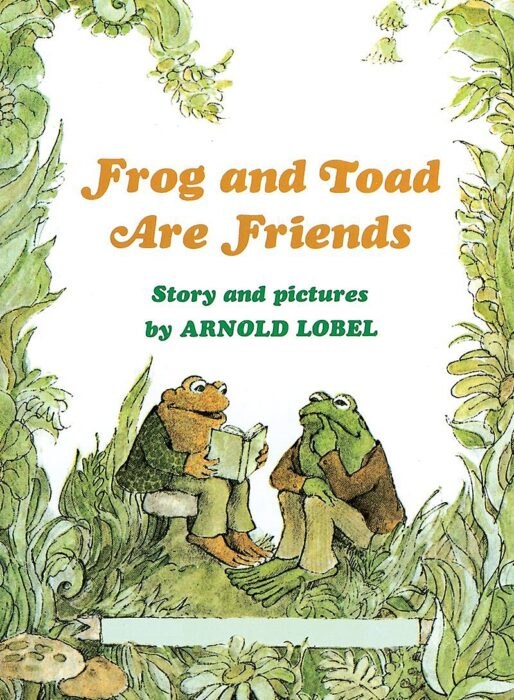
Frog and Toad Are Friends by Arnold Lobel has a 400L Lexile measure, an AR (ATOS) book level of 2.9, Guided Reading level K and DRA 16 to 18. Most kids can read it on their own toward the end of 1st grade or in 2nd grade. For a child who finds reading hard, it's one of the kindest first "real" books you can hand them, because it's split into five short stories and every sentence is plain. The only real risk is that an older child may decide it looks too young.
The book is a set of five little episodes about two best friends who are very different. Frog is cheerful and practical. Toad is grumpy, sleepy and easily worried. Frog tries to get Toad out of bed for spring, Toad can't think of a story to tell a sick Frog, they search the woods for a lost button, Toad goes swimming and doesn't want anyone to see his bathing suit, and Frog finds a way to cheer up Toad, who never gets any mail. It was a Caldecott Honor book in 1971 and has been in classrooms ever since. Kids like it because Toad acts the way they sometimes feel, and Frog always shows up for him.
Frog and Toad Are Friends reading level at a glance
| Lexile measure | 400L (Scholastic Teacher Store) Also listed as 470L (OverDrive listing for the 2008 HarperCollins audiobook) |
|---|---|
| ATOS / AR book level | 2.9 (TeachingBooks) |
| AR points | 0.5 (TeachingBooks) |
| Guided Reading (Fountas & Pinnell) | K (Scholastic Teacher Store) |
| DRA level | 16-18 (Scholastic Teacher Store) |
| Interest level | Grades K-2 (Scholastic Teacher Store) |
| Approximate grade band | Grades 1-2 (ages 6-8) ReadGenie |
| Length | 64 pages, ~2,281 words |
| Format | Early reader |
| Good for struggling readers? | ★★★★★ 4/5 |
| Dyslexia-friendly rating | ★★★★★ 4/5 |
We couldn't find a published grade level equivalent or Flesch score for this book.
Scores checked 2026-11-03. Different leveling systems don't always agree, so we show each published value with its source and mark our own estimates. Links to every source are under How we rate books.
Is your child working hard and still getting stuck on words?
ReadGenie helps struggling readers improve their reading, spelling and handwriting with Orton-Gillingham practice at home. Your child reads out loud, the app listens, and it helps with the exact sound they missed. Join today and we'll mail your child Frog and Toad Are Friends for free.
Try ReadGenie and get your free bookStarts with a free 7-day trial. Book mailed after your first paid month. US only, one per family.
What grade level is Frog and Toad?
Frog and Toad Are Friends sits right at the line between 1st and 2nd grade. An AR level of 2.9 means the text is about as hard as what a typical student reads near the end of 2nd grade, while Guided Reading level K and DRA 16 to 18 are levels many schools aim for at the end of 1st grade. The Lexile of 400L lands in between.
Why do the numbers spread out? AR and Lexile are formulas based on sentence length and how common the words are. Frog and Toad's sentences are short, but the book is longer than most early readers, about 2,300 words in all, and it uses a few long words like envelope and calendar. Guided Reading and DRA levels are set by people who look at the whole book, including the pictures, the layout and how much the story asks of the reader. They see a well-supported book with large type and lots of white space, so they place it a bit lower.
In practice, here's how to think about it. A child reading at level K or DRA 16 can usually read one story at a time with a little help on the longer words. A child reading at level H or I will do better reading it with you, taking turns page by page. And a kindergartner who loves the characters can enjoy every story as a read-aloud.
The other three books in the series, Frog and Toad Together, Frog and Toad All Year and Days with Frog and Toad, are written the same way and sit at about the same stage. Each title has its own official numbers, so check the one your child is reading, but a child who can read the first book can usually move straight through the rest.
Is Frog and Toad good for struggling readers?
Yes, especially for kids in 1st through 3rd grade. We give it 4 out of 5 for struggling readers.
The structure is the biggest help. Each of the five stories has its own beginning, middle and end, and each one is only a few hundred words long. A child who can't face a whole chapter book can face one Frog and Toad story. Finishing it gives them a complete win, and the next story is waiting tomorrow. That rhythm of one story, one sitting is hard to find in books at this level.
The writing helps too. Lobel uses short sentences and repeats the same small set of words. Frog, Toad, said, house and friend show up over and over. A reader who works hard on the first few pages finds the rest of the book getting easier, which is exactly what a struggling reader needs to feel.
The pictures back up the text without taking over. Nearly every page has a drawing that shows what's happening, so a child who misreads a word can often catch it by looking. The art is soft greens and browns, calm and uncluttered, which some kids find easier to look at than busy, bright pages.
There are a few things to watch for.
- The humor is quiet. Kids raised on louder, faster books may not laugh out loud and may lose interest.
- Two animal friends drawn in a 1970 style can look young to a 3rd or 4th grader, who may not want to be seen with it.
- Some stories turn on feelings, like Toad's sadness about the mail, so a child can read every word and still miss the point. Talk about it.
For a 2nd or 3rd grader reading about a year behind, this book is a strong fit if they pick it themselves. For a 4th grader at the same reading level, offer it alongside something that looks older and let them choose.
Is Frog and Toad good for kids with dyslexia?
Overall: ★★★★★ 4/5
| Factor | Score | Why |
|---|---|---|
| Sentence length | 5/5 | Most sentences are short, and dialogue is set up with a simple said line. |
| Vocabulary load | 4/5 | Mostly everyday words. A few, like button, envelope and calendar, are longer but explained by the pictures. |
| Decodability | 4/5 | Many short-vowel and blend words a beginning reader can sound out, plus a handful of red words like said, there and could. |
| Text density and layout | 4/5 | I Can Read Level 2 layout: large type, short lines and plenty of white space. The type is a serif font, which some dyslexic readers find a bit harder than sans-serif. |
| Pictures that carry meaning | 4/5 | Lobel's soft green and brown drawings appear on nearly every page and show each step of the story. |
| Chapter length | 5/5 | Each of the five stories takes most readers just a few minutes, with a clear ending. |
| Engagement for reluctant readers | 3/5 | Warm and funny in a quiet way. Kids who like gentle humor love it. Kids who want action may drift. |
| Audiobook / read-along support | 5/5 | HarperCollins sells an unabridged audiobook read by Arnold Lobel, and many libraries lend it through OverDrive and Hoopla. |
We rate it 4 out of 5 on our dyslexia-friendly scale. It does best on sentence length, chapter length and audio support, and it's solid almost everywhere else.
Sentence length is where it shines. Many sentences are under eight words, and dialogue is set up the same way each time, with a name and said. A dyslexic reader doesn't have to hold a long, twisting sentence in their head while they decode it.
The short stories matter just as much. Reading takes a lot of energy for a child with dyslexia, and they often run out before the chapter does. Here, each story ends well before most kids hit that wall.
Decoding is good but not perfect. A lot of the words follow patterns an Orton-Gillingham student learns early, like closed syllables (swim, lost, sick) and blends (spring, friends). Others are irregular and come up a lot, like said, there, could and friend. Treat those as heart words and practice them before you start. The longer words, envelope, calendar and November, are best broken into syllables ahead of time.
Layout is friendly overall. The I Can Read format has large type, short lines and wide margins. The type is a serif font rather than a plain sans-serif, which a few dyslexic readers find slightly harder. A reading guide or a finger under the line helps.
Audio support is excellent. HarperCollins sells an unabridged audiobook read by Arnold Lobel himself, and many libraries lend it through OverDrive and Hoopla. Listening to one story first and then reading the same story is one of the best ways to help a dyslexic child with this book. The words they hear become words they recognize on the page.
Words and phonics patterns to practice first
Frog and Toad Are Friends works well for kids who have learned closed syllables and blends and are starting vowel teams. These are the patterns your child will meet most.
- Closed syllables with short vowels, like Frog, swim, lost, sick, dress and bed.
- Blends at the start of words, in spring, swim, friends, snail and sleep.
- The vowel teams oa and ai, in Toad, road, snail, mail and wait. Toad's name is the perfect first oa word.
- R-controlled vowels, in porch, story, hard, turtle and morning.
- Digraphs sh, th, ch and wh, in words like shut, think, much, what and when.
- Longer words to chunk by syllable, like but-ton, let-ter, win-dow, en-ve-lope, cal-en-dar and No-vem-ber.
The words to pre-teach are said, there, could, friend, because, laughed and through. None of them sound the way they're spelled, so practice them as heart words on a card before the first story. Envelope, calendar and November are long but regular once you split them. Clap the syllables together, then read each part.
This is the kind of practice ReadGenie does every day. Your child reads aloud, the app listens and helps with the exact sound they missed, so patterns like oa and r-controlled vowels are already familiar when they open a book like this one.
How to read Frog and Toad with your child
Plan on one story a day. There are five, so the book fills a school week without anyone getting tired of it.
Before each story, read the title together and ask what your child thinks will happen. Then practice the two or three words that story leans on. For the button story, that's button and found. For the letter story, it's letter, mail and envelope.
Take turns. You read Frog's lines and your child reads Toad's, or switch every page. Taking turns keeps the pace up and lets your child rest between pages, which matters more than it sounds for a tired reader.
If you have the audiobook, try listening to a story at breakfast and reading the same story at bedtime. It isn't cheating. Hearing the words first gives your child a model of how the sentences should sound.
After the last story, talk about the friendship. What did Frog do to help Toad? What would your child do for a friend who was sad? Then write a short letter together and mail it to a friend or grandparent. It's a natural way to end the book and it gives your child a reason to write.
Using Frog and Toad in the classroom or tutoring
For teachers, the book fits a Guided Reading level K group and is a favorite for lessons on characters and feelings. After the first two stories, have students fill in a two-column chart comparing Frog and Toad. After the button story, students can sort the buttons Frog and Toad find by how each one is different from Toad's, then retell the story in order. Because each story stands alone, it's easy to assign one story per group and have groups teach each other.
For tutors, it's good connected text once closed syllables, blends and the oa team are in place. Pre-teach envelope, calendar and November by syllables and the red words as whole words. Each story is short enough for a cold read on day one and a timed reread on day two, so you can show the student real progress in fluency within the same week.
Content notes for parents
There's nothing scary or rude in this book. The closest thing to conflict is when the other animals laugh at Toad in his bathing suit, and Frog stays on his side. Toad gets sad and frustrated sometimes, and Frog helps him through it, which makes the book a gentle way to talk about feelings and friendship.
Should your child read it?
If your child is in 1st or 2nd grade and reading is a struggle, this is a great choice. Read it together first, one story at a time, and let them take over more of each story as the week goes on. If they're not yet reading around level H, start with something shorter like Hi! Fly Guy and come back to Frog and Toad in a few months. If your child is older and wants something that looks less young, try Mercy Watson to the Rescue or Nate the Great, which are a step up and still friendly to struggling readers.
Make the next book easier
Short daily sessions of reading, spelling and handwriting practice, built with Orton-Gillingham teachers. It works alongside tutoring and school support. The first 7 days are free. Join today and we'll mail your child Frog and Toad Are Friends for free.
Try ReadGenie and get your free bookStarts with a free 7-day trial. Book mailed after your first paid month. US only, one per family.
FAQ
What age is Frog and Toad for?
Most kids read Frog and Toad Are Friends on their own around ages 6 to 8, in late 1st or 2nd grade. Scholastic sells it for grades K to 2, and younger children enjoy it as a read-aloud.
What is the AR level of Frog and Toad Are Friends?
It has an ATOS book level of 2.9 and is worth 0.5 AR points. The other Frog and Toad books have their own AR levels, so check the specific title your child is reading.
What is the Frog and Toad guided reading level?
Frog and Toad Are Friends is listed at Guided Reading level K and DRA 16 to 18. Many schools expect students to reach that level around the end of 1st grade.
Why do I see different Lexile levels for Frog and Toad?
Scholastic and TeachingBooks list 400L for the book, and one audiobook listing shows 470. Different editions and listings sometimes carry different numbers. Use the publisher's number for the print book.
Is Frog and Toad good for kids with dyslexia?
It's a good fit for many young readers with dyslexia. The sentences are short, each story is brief and there's an audiobook read by the author. Pre-teach the irregular words like said, could and friend, and break longer words into syllables first.
What should my child read after Frog and Toad?
The other three Frog and Toad books are the easiest next step. After those, Nate the Great and Mercy Watson to the Rescue are a little harder and keep the short chapters and pictures.
Get Frog and Toad Are Friends free
ReadGenie helps struggling readers improve their reading, spelling and handwriting in short daily sessions at home. Join and we'll mail your child this book for free.
Claim your free bookStarts with a free 7-day trial. Book mailed after your first paid month. US only, one per family.
What to read next
- Hi! Fly Guy by Tedd Arnold (easier). Shorter and sillier, with a picture on every page. A good warm-up before Frog and Toad.
- Henry and Mudge: The First Book by Cynthia Rylant (easier). Another gentle friendship series told in short chapters, a little easier to read.
- Little Bear by Else Holmelund Minarik (easier). An I Can Read classic with four short, cozy stories, slightly simpler than Frog and Toad.
- Mr. Putter & Tabby Pour the Tea by Cynthia Rylant (similar). Quiet humor and kindness at about the same level, with short chapters.
- Amelia Bedelia by Peggy Parish (similar). Another I Can Read Level 2 classic, with sillier, joke-a-page humor.
- Nate the Great by Marjorie Weinman Sharmat (harder). A short, funny early reader with a little more plot, good for the next step.
- Mercy Watson to the Rescue by Kate DiCamillo (harder). A first chapter book with short chapters and color pictures, a natural step up.
Browse all of our reading-level book reviews.
How we rate books
Lexile, ATOS (Accelerated Reader), Guided Reading and DRA levels come from the companies that own them and from publishers. We link to where we found each one, and when a level isn't published we say so. Anything marked "ReadGenie estimate" is our own call, not an official level. Flesch scores come from a short public excerpt when the publisher offers one. The struggling-reader and dyslexia-friendly ratings are our judgment, based on eight things (sentence length, vocabulary, decodability, page layout, pictures, chapter length, how gripping the story is, and audiobook support). Treat them as a starting point. The right book is one your child can read with about 95% accuracy and wants to keep reading.
Sources
- Scholastic Teacher Store: Frog and Toad Are Friends (Lexile, Guided Reading level, DRA, ACR level, grades, ISBN, page count)
- TeachingBooks: Frog and Toad Are Friends (ATOS, AR points, Lexile, word count, year published)
- Mind Resources: Frog and Toad are Friends (Guided Reading level, Lexile, ATOS)
- OverDrive: Frog and Toad Are Friends (HarperCollins audiobook) (audiobook, AR interest level, 470L listing (conflict))
- Open Library (first publication year, ISBNs)