Fish in a Tree Reading Level: Lexile, AR and Dyslexia Guide
Fish in a Tree is Lexile 550L, AR level 3.7 and Guided Reading level W, so most kids can read it alone in 4th or 5th grade. Its hero has dyslexia, which makes it a favorite for struggling readers. Here's how to make a 320-page novel work for your child.

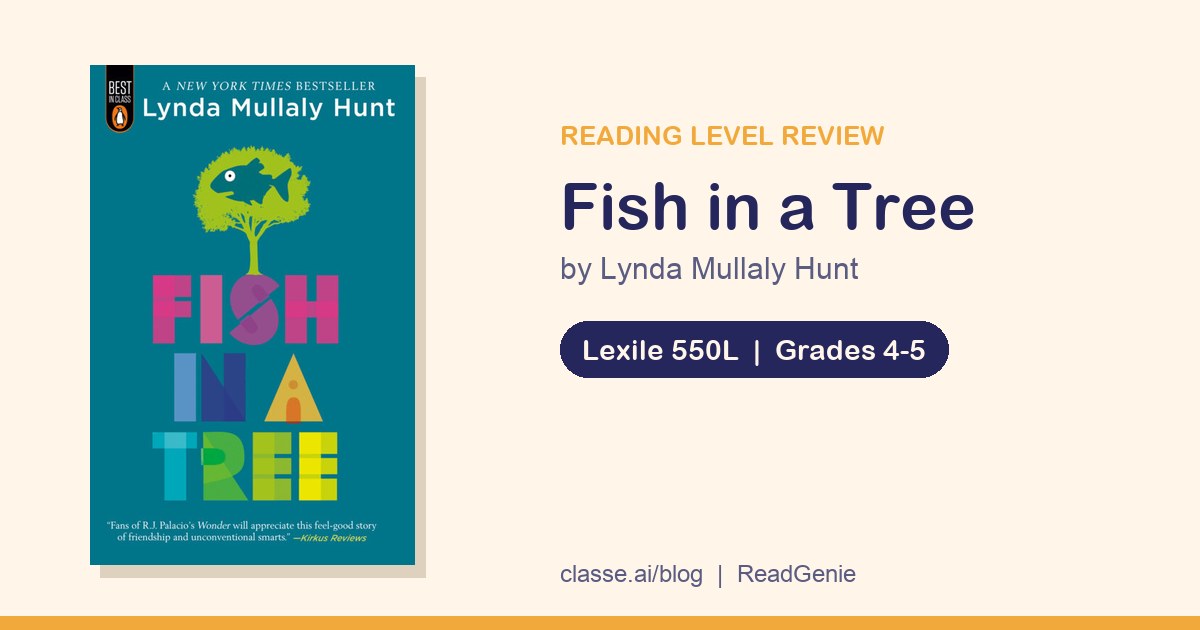
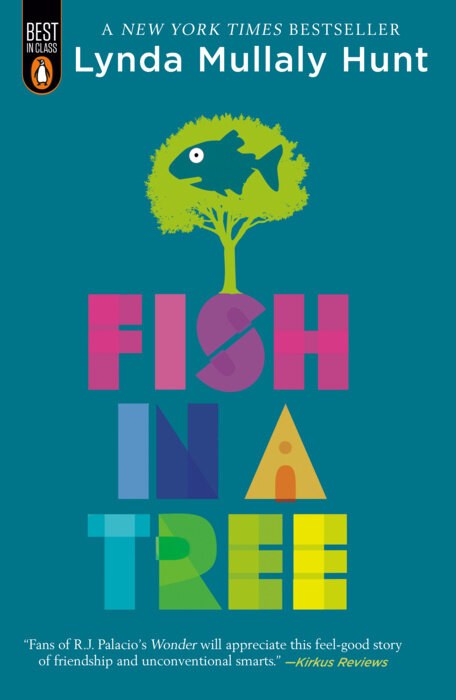
Fish in a Tree by Lynda Mullaly Hunt has a 550L Lexile measure, an AR (ATOS) book level of 3.7 and a Guided Reading level of W. Most kids can read it on their own in 4th or 5th grade. The sentences are short and plain, and the main character is a sixth grader with dyslexia, which makes it one of the best novels you can hand a struggling reader in grades 5 to 7. It runs 320 pages, so a child who tires quickly will do better with the audiobook alongside.
Ally Nickerson has been to seven schools in seven years, and in every one she has kept the same secret. She can't read. She covers for it with jokes, distractions and trips to the principal's office, and most of her teachers decide she's a troublemaker. Then a new teacher, Mr. Daniels, starts to see what's really going on. With his help and two new friends, Keisha and Albert, Ally finds out that her brain works differently and that different is not the same as dumb. Kids who struggle with reading often say this is the first book where they recognized themselves.
Fish in a Tree reading level at a glance
| Lexile measure | 550L (Penguin Random House) |
|---|---|
| ATOS / AR book level | 3.7 (Booksource) |
| AR points | 7 (Booksource) |
| Guided Reading (Fountas & Pinnell) | W (Booksource) |
| Flesch Reading Ease (0-100) | 92.0 ReadGenie estimate |
| Flesch-Kincaid grade | 2.5 ReadGenie estimate |
| Interest level | Ages 10 and up (grade 5 and up) (Penguin Random House) |
| Approximate grade band | Grades 4-5 (ages 9-11) ReadGenie |
| Length | 320 pages |
| Format | Middle grade novel |
| Good for struggling readers? | ★★★★★ 4/5 |
| Dyslexia-friendly rating | ★★★★★ 4/5 |
We couldn't find a published DRA level or grade level equivalent for this book.
Scores checked 2026-11-06. Different leveling systems don't always agree, so we show each published value with its source and mark our own estimates. Links to every source are under How we rate books.
Is your child working hard and still getting stuck on words?
ReadGenie helps struggling readers improve their reading, spelling and handwriting with Orton-Gillingham practice at home. Your child reads out loud, the app listens, and it helps with the exact sound they missed. Join today and we'll mail your child Fish in a Tree for free.
Try ReadGenie and get your free bookStarts with a free 7-day trial. Book mailed after your first paid month. US only, one per family.
What grade level is Fish in a Tree?
Fish in a Tree reads at about a 4th to 5th grade level, but the different measures tell slightly different stories, and it helps to know why.
An AR level of 3.7 means the text is roughly as hard as what a typical student reads in the spring of 3rd grade. The Lexile of 550L sits in a similar spot. Both measures mostly weigh sentence length and how common the words are, and Hunt writes in short, everyday sentences with a lot of dialogue. In the first chapter we looked at, sentences average just over 8 words. On those measures alone the book could pass for a 3rd grade read.
Guided Reading level W is much higher. It usually lines up with the end of 5th grade. That letter looks at more than sentences. It reflects the length of the book, how much the reader has to keep track of, and the feelings and themes a child needs to follow. Ally's story covers bullying, family worries and what it feels like to hide a learning difference, and that asks for more maturity than the sentences do. The book is also worth 7 AR points, which tells you it is long.
The publisher lists it for ages 10 and up, grade 5 and up. So the words are easier than the topic. A 4th grader reading on grade level can handle the text, and a 6th or 7th grader reading a year or two behind gets a book about kids their own age that they can actually read.
Is Fish in a Tree good for struggling readers?
Yes. We give it 4 out of 5 for struggling readers, and for many kids it is the book that matters most.
The writing is friendly to a child who reads slowly. Sentences are short, lines of dialogue are often only a few words long, and only about 4 in every 100 words have three or more syllables. Pages look lighter than in many novels at this level because the paragraphs are short and people talk a lot. A child decoding at a 3rd or 4th grade level will know most of the words on most pages.
The bigger reason is Ally herself. She is smart, funny and creative. She pictures the world as little movies in her head, she draws, and she is good at math. She also gets headaches from trying to read, and she would rather be sent to the office than let anyone see her struggle. Many children with dyslexia have done exactly what Ally does. Reading about a kid who hides it and then gets real help can change how a struggling reader talks about themselves.
What holds it back from a 5 is length. At 320 pages with no pictures, it's a long haul for a reader who runs out of energy after a few pages. The chapters are short and titled, which helps, but the book as a whole takes weeks for a slow reader.
Here is who it fits and who it may frustrate.
- Great for 5th to 7th graders with dyslexia or other reading struggles who want a hero like them.
- Great for 4th and 5th graders reading on grade level who are ready for a longer novel.
- Harder for kids still reading below a 3rd grade level on their own. Read it aloud together for now.
- Harder for a child who is being teased about reading right now, unless you read it together and talk about it.
Is Fish in a Tree good for kids with dyslexia?
Overall: ★★★★★ 4/5
| Factor | Score | Why |
|---|---|---|
| Sentence length | 4/5 | Chapter 1 averages about 8 words a sentence, with many short lines of dialogue. |
| Vocabulary load | 4/5 | Mostly everyday words, with about 4 in 100 words of three or more syllables. A few longer ones like exaggerated and embarrassed. |
| Decodability | 4/5 | Most words follow common patterns. Names like Ally, Keisha, Albert, Shay and Oliver are easy to sound out. |
| Text density and layout | 3/5 | Standard novel type on 320 pages, broken up by lots of dialogue and short paragraphs. |
| Pictures that carry meaning | 1/5 | Text only. |
| Chapter length | 3/5 | Chapter 1 is about 1,200 words, around 10 to 15 minutes for a slower reader. |
| Engagement for reluctant readers | 5/5 | Funny and moving. Ally's jokes, her mind movies and her new friends pull kids along, and readers who struggle feel seen. |
| Audiobook / read-along support | 5/5 | Unabridged audiobook from Listening Library, read by Kathleen McInerney. |
We give it 4 out of 5 on our dyslexia-friendly scale. It scores highest for engagement and audio, and lowest for pictures, which it doesn't have.
The sentences and words are the strong points. Short sentences mean a dyslexic reader doesn't have to hold a long chain of words in mind while still decoding the end of the line. Most of the words follow common phonics patterns, and the main names are easy to sound out. Ally, Keisha, Albert, Shay and Oliver are all regular, and Nickerson splits neatly into three syllables.
Audio support is excellent. Listening Library publishes an unabridged audiobook read by Kathleen McInerney, and most libraries carry it. Listening while following the print lets a dyslexic child enjoy the story at a natural pace, hear how the harder words sound, and still see every word on the page. For this book in particular, hearing Ally's voice out loud makes her jokes land.
There is no special dyslexia-friendly edition. The paperback uses standard novel type. Lots of white space from dialogue keeps it from feeling dense, but it is still a full page of text every time you turn it.
Then there is the story. Without giving the ending away, the book shows a teacher finding out that a student is bright and has trouble with letters, and then changing how he teaches her. It shows that reading struggles have nothing to do with being smart. For a child with dyslexia, that message from a book they read themselves can mean more than hearing it from an adult.
Words and phonics patterns to practice first
This book works best once a child is comfortable with blends, vowel teams and common suffixes. These are the patterns that come up again and again in the first chapter.
- Closed syllables with short vowels, like desk, lips, trick, drumming, scrub and Ally.
- Consonant blends in Flint, trouble, glancing, scribble, straight and brightness.
- Vowel teams, as in teacher, feet, laughing, thoughts, pointing and please.
- Silent e, as in write, made, home, five and wise.
- The endings -ed, -ing, -ness and -tion in glancing, doodling, embarrassed, brightness, attention and collection.
- Two-syllable words to split, such as trouble, scribble, careless, pushover, pencil and prisoner.
Pre-teach the names before you start, since they appear on almost every page. That means Ally, Nickerson, Keisha, Albert, Mr. Daniels, Shay, Jessica and Oliver. Then add a few longer words from the early chapters, like exaggerated, embarrassed and principal. Kryptonite, Wonderland and Thanksgiving show up too, and it's fine to just tell your child those. Thanksgiving is a nice one for showing how a long word is often two smaller ones stuck together.
Patterns like these are what ReadGenie practices with a child every day. Your child reads aloud, the app listens, and it helps with the exact sound they missed, so suffixes and vowel teams start to feel automatic before a long novel like this one.
How to read Fish in a Tree with your child
Start by reading chapter 1 aloud together. It's short, it opens with Ally trying to get out of a writing assignment, and it shows right away how she hides her reading from her teacher. Stop at the end and ask your child why they think Ally acts that way. Many kids will answer from experience.
Make a small name card with Ally, Keisha, Albert, Mr. Daniels, Shay and Jessica, and keep it in the book as a bookmark. The cast is small, so the card stays short.
After that, read one or two chapters a night. Let your child follow along in print while the audiobook plays, especially for the longer chapters or on tired evenings. At two short chapters a night, most families get through the book in three or four weeks.
Talk about the title. It comes from an old saying about how a fish would feel stupid its whole life if you judged it by how well it climbs a tree. Ask your child what their "climbing a tree" is, and what they're the fish in the water at. It's a gentle way to talk about strengths.
When Mr. Daniels starts to figure out what's going on with Ally, pause and talk about what he does that helps. It gives your child words for what helps them, which is useful at their own school conferences later.
Using Fish in a Tree in the classroom or tutoring
For teachers, it fits a Guided Reading level W group or a whole-class novel in grades 5 and 6, with the audiobook available for students who need it. Penguin publishes a free educator guide with discussion questions and activities. The book is a natural way into a class conversation about learning differences and how each student learns best, and it can make a struggling student feel seen without singling them out.
For tutors, use a few pages a session for fluency rather than a whole chapter. Words like glancing, doodling and embarrassed make a quick suffix drill, and you can have the student find them in the text afterward. The character names are good for syllable division too. Try Nick-er-son, Kei-sha and Dan-iels. For a student with dyslexia, reading Ally's story with a tutor can open up an honest talk about what reading feels like for them.
Content notes for parents
Ally is bullied by a couple of classmates, mostly through name-calling and mean notes, and some scenes sting. Her dad is away with the army, and her grandfather, who she was close to, has died. The book handles all of this gently and ends on a hopeful note. There's no swearing and no romance.
Should your child read it?
If your child is in grades 4 to 7 and reading at about a 3rd or 4th grade level or above, this is a wonderful pick, and even better with the audiobook. If they have dyslexia, it may become a favorite. If they're reading below that level, read it aloud together or start with a shorter dyslexic-hero book like Bookmarks Are People Too or Niagara Falls, or Does It?. When they finish, Because of Mr. Terupt is another classroom story at a similar level, and The Lightning Thief and Wonder are good next steps up.
Make the next book easier
Short daily sessions of reading, spelling and handwriting practice, built with Orton-Gillingham teachers. It works alongside tutoring and school support. The first 7 days are free. Join today and we'll mail your child Fish in a Tree for free.
Try ReadGenie and get your free bookStarts with a free 7-day trial. Book mailed after your first paid month. US only, one per family.
FAQ
What age is Fish in a Tree for?
The publisher lists Fish in a Tree for ages 10 and up, grade 5 and up. Most kids read it on their own between about 9 and 12. Because the text is easier than the topic, it also works well for middle schoolers who are reading below grade level.
What is the AR level of Fish in a Tree?
Fish in a Tree has an ATOS book level of 3.7 and is worth 7 AR points. The level is fairly low because the sentences are short, and the point value is high because the book is long.
What is the Lexile level of Fish in a Tree?
Fish in a Tree has a Lexile measure of 550L. That's lower than its Guided Reading level suggests, because Lexile mostly measures sentence length and word frequency, and the book's sentences are short and plain.
What is the guided reading level of Fish in a Tree?
Fish in a Tree is listed at Guided Reading level W, which most schools expect around the end of 5th grade. The letter reflects the book's length and mature themes more than its sentences.
Is Fish in a Tree appropriate for grade 4?
For most 4th graders, yes. The reading level is within reach, and the themes of bullying and family worries are handled gently. A sensitive 4th grader may want to read it with a parent so they can talk through the harder scenes.
Does the main character in Fish in a Tree have dyslexia?
Yes. Ally Nickerson has dyslexia, though she doesn't have a name for it at the start of the book. Part of the story is her teacher noticing the signs and helping her understand how her brain works.
Get Fish in a Tree free
ReadGenie helps struggling readers improve their reading, spelling and handwriting in short daily sessions at home. Join and we'll mail your child this book for free.
Claim your free bookStarts with a free 7-day trial. Book mailed after your first paid month. US only, one per family.
What to read next
- Bookmarks Are People Too by Henry Winkler & Lin Oliver (easier). A short chapter book about Hank Zipzer, a boy with dyslexia, printed in a dyslexia-friendly font.
- Niagara Falls, or Does It? by Henry Winkler & Lin Oliver (similar). Funny school story about a fourth grader with dyslexia, written by an author who has it.
- Because of Mr. Terupt by Rob Buyea (similar). Another fifth grade classroom changed by one teacher, told in short rotating chapters.
- The Lightning Thief by Rick Riordan (harder). A fantasy adventure whose hero has dyslexia and ADHD and finds out they are part of what makes him strong.
- Wonder by R.J. Palacio (harder). A school story about being different and finding real friends, at a higher level.
Browse all of our reading-level book reviews.
How we rate books
Lexile, ATOS (Accelerated Reader), Guided Reading and DRA levels come from the companies that own them and from publishers. We link to where we found each one, and when a level isn't published we say so. Anything marked "ReadGenie estimate" is our own call, not an official level. Flesch scores come from a short public excerpt when the publisher offers one. The struggling-reader and dyslexia-friendly ratings are our judgment, based on eight things (sentence length, vocabulary, decodability, page layout, pictures, chapter length, how gripping the story is, and audiobook support). Treat them as a starting point. The right book is one your child can read with about 95% accuracy and wants to keep reading.
Sources
- Penguin Random House: Fish in a Tree (Puffin paperback) (Lexile, ISBN, page count, ages and grades, excerpt for Flesch scores, audiobook narrator)
- Booksource: Fish in a Tree (Guided Reading level, ATOS, AR points, Lexile check, interest level)
- Penguin educator's guide to Lynda Mullaly Hunt's novels (grade range of lesson plans, audiobook publisher)